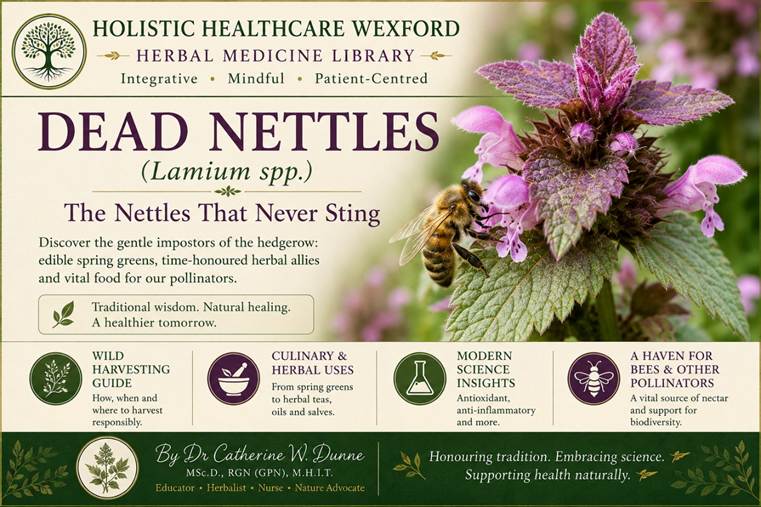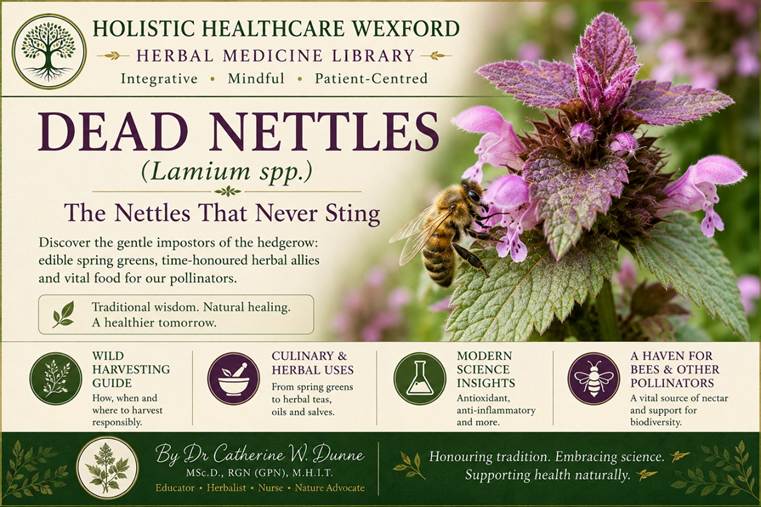
Dead Nettles (Lamium spp.)

The Nettles That Never Sting

Part of the Holistic Healthcare Wexford Herbal Medicine Library

By Dr Catherine W. Dunne, MSc.D., RGN (GPN), M.H.I.T.

Meet the Gentle Impostor

If I were to ask you to reach out and touch a nettle, chances are you would hesitate.

Most of us have learnt from childhood to avoid them. We remember the sharp sting, the burning sensation and the tiny blisters that seem to appear almost instantly. Nettles have earned our respect.

Now imagine walking along an Irish hedgerow in early spring.

You notice another patch of what appears to be young nettles. The leaves are serrated. The stems stand upright. Everything about them says, “Don’t touch.”

Yet curiosity gets the better of you.
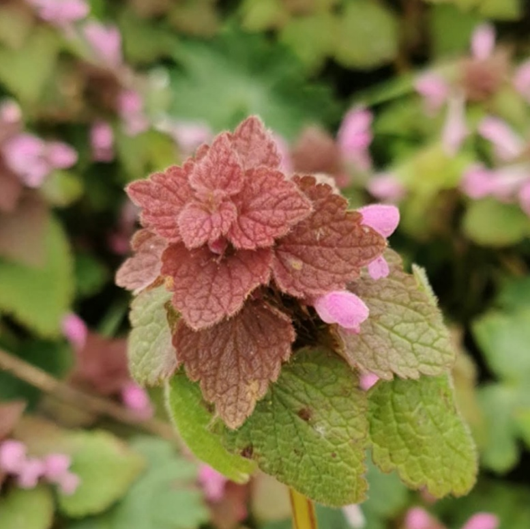
You gently place your fingers on the leaves.

Nothing happens.

No sting.

No burning.

No itching.

Instead, you have just met one of nature’s greatest botanical impostors—the Dead Nettles.

Despite their striking resemblance to the familiar Stinging Nettle, these beautiful wildflowers belong to an entirely different botanical family. They are gentle, colourful, rich in nectar and have quietly accompanied people for centuries as edible spring greens, medicinal herbs and valuable food for pollinating insects.

Their story is one that deserves to be told.

A Plant That Pretends to Be a Nettle

The name Dead Nettle has puzzled generations of walkers, gardeners and herbalists.

Surely a plant called “dead” cannot be very interesting?

In fact, the opposite is true.

The word dead has nothing whatsoever to do with the plant being lifeless or useless. It simply distinguishes these harmless plants from the true Stinging Nettles (Urtica species).

The resemblance is remarkable.

Both possess opposite leaves with sharply serrated edges.

Both favour hedgerows, woodland edges, gardens and disturbed ground.

Both emerge early in the growing season.

Yet botanically they are only distant relatives.

The true nettles belong to the Nettle family (Urticaceae).

Dead Nettles belong to the Mint family (Lamiaceae), one of the largest and most economically important plant families in the world. This is the same family that gives us mint, thyme, sage, rosemary, oregano, basil, lavender and lemon balm.

Once you know this, everything begins to make sense.

The square stems.

The opposite leaves.

The beautiful hooded flowers.

The busy bees.

The absence of any sting.

Dead Nettles are, quite literally, mints disguised as nettles.

Nettle: Dead or Alive… that is the question

One of the pleasures of learning about plants is discovering that appearances can be wonderfully deceptive.

From a distance, many people mistake Purple Dead-nettle for a young Stinging Nettle. Even experienced walkers sometimes need to look twice before the flowers appear.

Your own photographs illustrate this perfectly.

The Stinging Nettle produces elongated pointed leaves armed with countless microscopic stinging hairs. Before flowering, its developing shoots can easily resemble those of Dead Nettles. It is only when the flowers begin to develop that the difference becomes obvious.

Instead of colourful blossoms, Stinging Nettles produce long, green drooping clusters of tiny flowers designed for wind pollination.

Dead Nettles take an entirely different approach.

Their flowers are large, colourful and unmistakably designed to attract insects. White, pink, purple or yellow blooms form in neat whorls around the stem, each flower acting like a tiny landing platform for hungry bees.

Once flowering begins, confusion disappears.

One plant trusts the wind.

The other courts the bees.

That simple difference tells us we are looking at two entirely different families of plants.

Learning to Recognise a Dead Nettle

One of the wonderful things about the Lamium family is that once you learn a handful of identifying features, you begin to recognise them almost everywhere.

Rather than relying upon a single characteristic, experienced botanists look for several clues together.

Square stems

Perhaps the easiest feature to demonstrate—and one beautifully captured in your own photograph—is the square stem.

Most people imagine a stem to be round.

Dead Nettles are different.

Gently roll the stem between your fingers.

Instead of feeling cylindrical, it has four distinct sides.

This square profile is one of the classic hallmarks of the Mint family and immediately narrows the possibilities.

Of course, a square stem alone does not identify a Dead Nettle. Many other familiar herbs share this feature, including thyme, peppermint, sage, rosemary and lemon balm.

It is simply the first clue.

Opposite leaves

The leaves arise in pairs directly opposite one another.

Each successive pair is positioned at right angles to the pair below, creating a beautifully balanced arrangement along the stem.

Once you begin looking for opposite leaves, you will notice this pattern repeated throughout the Mint family.

Two-lipped flowers

Perhaps the most beautiful feature of all is the flower itself.

Botanists describe these flowers as bilabiate, meaning “two-lipped.”

The upper lip forms a protective hood over the reproductive structures.

The lower lip acts as a convenient landing platform for bees.

Nature has engineered the flower with remarkable efficiency.

As the bee enters in search of nectar, pollen is deposited onto its body before being carried to the next flower.

It is an elegant partnership that has evolved over millions of years.

No stinging hairs

Finally, there is the feature everyone appreciates.

Dead Nettles do not sting.

Unlike their notorious cousins, they lack the specialised hollow hairs capable of injecting irritating chemicals into the skin.

They can be safely handled, photographed, studied and harvested with bare hands.

For anyone new to wild plants, that single fact often comes as a delightful surprise.

So, How Do They Compare?

Now that we’ve met the Dead Nettles, let’s place them alongside their better-known cousin, the Stinging Nettle. Although they are often confused at first glance, the differences become surprisingly obvious once you know what to look for.
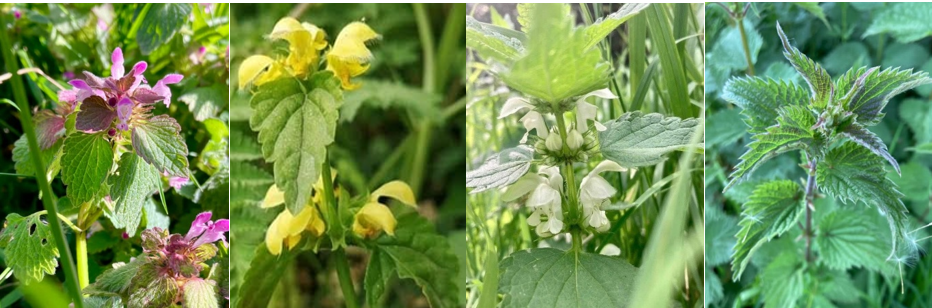
Figure 1. Members of the Dead Nettle family commonly found in Ireland. From left to right: Purple Dead-nettle (Lamium purpureum), Yellow Archangel (Lamium galeobdolon), White Dead-nettle (Lamium album), together with Stinging Nettle (Urtica dioica) for comparison.

Not All Nettles Sting

Despite their similar appearance, Dead Nettles and Stinging Nettles are only distant botanical relatives. Their shared common name reflects the resemblance of their leaves rather than a close family relationship. In fact, Dead Nettles belong to the Mint family (Lamiaceae), whereas Stinging Nettles belong to the Nettle family (Urticaceae).

The easiest way to distinguish them is simply to touch the plant. True nettles are covered with tiny hollow hairs that inject irritating compounds into the skin, producing the familiar burning sensation. Dead Nettles lack these stinging hairs entirely, making them safe to handle with bare hands.

Once you know what to look for, the differences become surprisingly obvious.

CharacteristicDead Nettles (Lamium spp.)Stinging Nettle (Urtica dioica)
Plant FamilyLamiaceae (Mint Family)Urticaceae (Nettle Family)
Stings?❌ No✅ Yes
StemSquareRound to slightly ridged
LeavesOpposite pairs, often softly hairyOpposite pairs with abundant stinging hairs
FlowersShowy white, purple, pink or yellow two-lipped flowersSmall green, inconspicuous flowers hanging in clusters
PollinationMainly bees and other insectsPrimarily wind pollinated
AromaMild, sometimes slightly herbalGreen, earthy scent when crushed
EdibilityYoung leaves and flowers edibleYoung leaves edible after cooking or drying
Traditional UsesFood, herbal medicine, pollinator plantFood, fibre, herbal medicine and traditional textiles

Although they may appear similar when young, they have followed very different evolutionary paths. One evolved to defend itself with stinging hairs and relies largely on the wind to carry its pollen. The other invested in colourful flowers, nectar and partnerships with bees and other pollinating insects.

Meet the Family

Once you become familiar with the Dead Nettles, you’ll begin noticing that they are not a single plant but a fascinating family of closely related species. Each has its own personality, preferred habitat and subtle differences, yet all share the unmistakable characteristics of the Lamium genus.

Three species are particularly familiar to walkers in Ireland and the United Kingdom, while two others are often encountered in gardens or specialised habitats.

Purple Dead-nettle (Lamium purpureum)

The Herald of Spring

If there is one Dead Nettle that announces the arrival of spring, it is Purple Dead-nettle.

Often appearing while winter still lingers, it carpets gardens, roadside verges, cultivated fields and neglected corners with a wash of soft pink flowers and reddish-purple foliage. At a time when few other wildflowers have begun to bloom, it provides an invaluable source of nectar for early bumblebees emerging from hibernation.

One of its most distinctive features is the cluster of reddish or purplish leaves at the top of the plant. These colourful upper leaves surround the flowers like a protective rosette, making the species surprisingly easy to recognise once you know what to look for.

Although many gardeners regard it as little more than another weed, Purple Dead-nettle has long been appreciated by foragers. The young leaves are edible, mild in flavour and rich in vitamins, minerals and naturally occurring plant compounds.

From a botanical perspective, it perfectly demonstrates the defining characteristics of the Mint family: a square stem, opposite leaves and beautiful two-lipped flowers designed for insect pollination.

In the Field

Purple Dead-nettle is usually the first member of the family I notice each year. Long before many other wildflowers appear, these cheerful patches of pink begin lighting up grassy verges and hedgerows. Even before I see the flowers, I often notice the bees.

White Dead-nettle (Lamium album)

The Bumblebees’ Favourite

Where Purple Dead-nettle whispers that spring has arrived, White Dead-nettle seems to celebrate the abundance of summer.

Its elegant white flowers are among the largest within the genus and are arranged in neat whorls around the stem. Unlike the delicate pink flowers of its purple cousin, these creamy white blossoms are bold and unmistakable.

Stand quietly beside a patch on a warm day and you’ll soon hear the gentle hum of bumblebees. White Dead-nettle is one of their favourite nectar plants. Its deep tubularflowers are particularly well suited to long-tongued bumblebees, which effortlessly disappear inside each bloom before emerging dusted with pollen.

Historically, this has been the most respected medicinal member of the genus. Across Europe it was gathered by herbalists to prepare teas, tinctures and poultices for a wide variety of traditional purposes, particularly those relating to women’s health, respiratory wellbeing and minor skin complaints.

To me, however, its greatest gift is perhaps simpler.

It reminds us that some of nature’s most generous plants are those growing quietly at the edge of a field, unnoticed by almost everyone who passes.

🐝 Bee Note

White Dead-nettle is one of the most important early nectar sources for bumblebees in Britain and Ireland. Allowing even a small patch to flower can provide valuable food for pollinating insects.

Yellow Archangel (Lamium galeobdolon)

The Quiet Woodland Cousin

Unlike its colourful relatives that favour open ground and sunny verges, Yellow Archangel prefers the cool tranquillity of woodland.

Here, beneath the dappled shade of mature trees, its bright yellow flowers seem almost to glow against the darker greens of the forest floor.

Many cultivated varieties display attractive silver markings on their leaves, making them popular ornamental ground-cover plants. The wild form, however, possesses a quieter beauty that blends naturally into ancient woodland habitats.

Although it has never achieved the medicinal reputation of White Dead-nettle, it shares the same square stems, opposite leaves and hooded flowers that define the Lamium genus. Historically it was occasionally employed as a mild wound herb and general tonic, though today it is perhaps valued even more for the shelter and nectar it provides to woodland insects.

Whenever I come across Yellow Archangel, it always feels like finding a hidden treasure.

While Purple Dead-nettle cheerfully announces itself from roadside verges, Yellow Archangel waits patiently beneath the trees for those willing to wander a little further.

Henbit Dead-nettle (Lamium amplexicaule)

The Little Wanderer

Henbit is a smaller, more delicate member of the family and often appears in cultivated ground, vegetable gardens and newly disturbed soil.

Its upper leaves clasp the stem—a feature reflected in its botanical name amplexicaule, meaning “stem-embracing”. This simple characteristic makes it surprisingly easy to identify.

Although less well known in European herbal medicine, Henbit has traditionally been gathered as a nutritious spring green and is another welcome source of nectar for early pollinators.

Its modest appearance reminds us that even the smallest wildflowers have an important role within the ecosystem.

Spotted Dead-nettle (Lamium maculatum)

Beauty in the Shade

Spotted Dead-nettle is perhaps the species most familiar to gardeners.

Its striking silver-patterned leaves and pink, purple or white flowers have made it one of the most widely cultivated ground-cover plants in Europe.

Although admired primarily for its ornamental value, it remains every bit as much a member of the Dead Nettle family as its wild cousins. Bees readily visit its flowers, and it shares many of the same traditional herbal associations.

It demonstrates beautifully that medicinal plants and ornamental plants are often one and the same.

Sometimes we simply forget to look beyond the flower bed.

Other Members of the Lamium Family

The Lamium genus contains around 40–50 recognised species, several of which are found elsewhere in Europe and Asia or are commonly grown as ornamental garden plants.

Among these are Henbit Dead-nettle (Lamium amplexicaule), often found in cultivated ground and field margins, and Spotted Dead-nettle (Lamium maculatum), a popular ornamental with attractive silver-marked leaves.

Although both share the characteristic square stems, opposite leaves and two-lipped flowers of the Lamium genus, they are less commonly encountered in my own field observations here in County Wexford. For that reason, this article focuses on the three species I most frequently see growing naturally in Ireland.

Why Are They Called “Dead” Nettles?

Few common plant names have caused as much misunderstanding as Dead Nettle.

To someone unfamiliar with the plant, the word dead almost suggests something lifeless, poisonous or of little value. Yet nothing could be further from the truth.

The name has nothing to do with the health or vitality of the plant. It simply distinguishes these harmless wildflowers from the familiar Stinging Nettle (Urtica dioica).

Unlike true nettles, Dead Nettles possess no stinging hairs. You can run your hand gently over their leaves without experiencing the sharp burning sensation that most of us associate with nettles.

Early herbalists and country folk simply needed an easy way to tell the two apart.

One stung.

One did not.

Over time, the harmless plants became known as Dead Nettles.

The name remained, even though these remarkable members of the Mint family continue to buzz with life throughout spring and summer.

Far from being “dead”, they provide nectar for bees, food for insects, edible greens for people and a long history of traditional medicinal use.

Sometimes, a name tells only part of the story.

How Herbalists Have Used Dead Nettles

For hundreds of years, Dead Nettles have quietly found their place in the herbal traditions of Europe.

Unlike many medicinal plants surrounded by dramatic folklore, Dead Nettles have always been rather modest. They were the herbs growing beside the cottage, along the hedgerow or at the edge of the vegetable garden. Readily available, easy to recognise and free for anyone willing to gather them.

Different species developed different reputations, although White Dead-nettle eventually became the best known medicinal member of the family.

🤍 White Dead-nettle

Traditional European herbalists regarded White Dead-nettle as a gentle but versatile herb.

Infusions prepared from the flowering tops were commonly used to support:

  • respiratory wellbeing
  • urinary comfort
  • minor skin irritations
  • women’s health

Externally, crushed leaves and flowers were made into washes or poultices for minor cuts, abrasions, insect bites and irritated skin.

Many nineteenth-century herbal texts describe it as a mild astringent and soothing herb, reflecting the observations of generations of practitioners.

💜 Purple Dead-nettle

Purple Dead-nettle occupied a slightly different place within traditional herbal practice.

Rather than being gathered solely as a medicine, it was often valued as both food and medicine.

The tender young leaves were added to spring salads, soups and simple broths after the long winter months, providing fresh green nourishment when cultivated vegetables remained scarce.

Traditional herbalists also prepared teas from the flowering tops and occasionally applied the fresh leaves directly to small cuts, scratches and insect bites.

Its reputation centred around supporting the body’s natural healing processes rather than acting as a powerful medicinal herb.

💛 Yellow Archangel

Yellow Archangel has a quieter herbal history.

Although mentioned less frequently in European herbals than White Dead-nettle, it was occasionally employed as a mild tonic and external wound herb.

Today it is perhaps appreciated more for its ecological value than its medicinal reputation.

Growing naturally beneath woodland canopies, it provides nectar for insects in places where relatively few flowering plants thrive.

Sometimes the greatest contribution a plant makes is not in the medicine cabinet but within the ecosystem itself.

A Word About Traditional Herbal Practice

It is important to remember that traditional herbal use represents generations of observation rather than modern clinical evidence.

People noticed patterns.

They observed which plants appeared helpful.

Those observations were passed from one generation to the next, long before laboratories, microscopes or clinical trials existed.

Some of those traditional observations have since gained scientific support.

Others remain largely untested.

Neither diminishes their historical importance.

Instead, they remind us that traditional knowledge and modern science are often partners in the same journey rather than competitors.

What Is Modern Science Discovering?

For centuries, Dead Nettles were gathered because people found them useful. Herbalists observed their effects, shared their knowledge and passed it from one generation to the next. They did not know about flavonoids, antioxidants or inflammatory pathways. They simply learnt from experience.

Today, researchers are beginning to ask why these plants earned their place in traditional herbal medicine.

Rather than simply asking “What was this herb used for?”, scientists are now exploring questions such as:

  • What natural compounds does it contain?
  • How do those compounds behave?
  • Can traditional observations be explained scientifically?

Studies have shown that several species of Lamium contain naturally occurring compounds including flavonoids, phenolic acids, tannins, iridoid glycosides, vitamins and essential minerals. These compounds are not unique to Dead Nettles—they occur in many medicinal plants—but they are known to possess biological activity and continue to attract scientific interest.

Laboratory studies have demonstrated antioxidant, anti-inflammatory and antimicrobial activity in extracts of several Lamium species. These findings are encouraging because they provide possible explanations for some of the traditional uses recorded by herbalists over many generations.

As always, it is worth keeping the findings in perspective. Most of the research has been carried out in laboratories or experimental models, with relatively few human clinical trials completed so far. That does not diminish the value of the plant, but it reminds us that scientific understanding continues to evolve.

One of the things I enjoy most is seeing traditional herbal knowledge and modern research gradually meet in the middle. Sometimes science confirms what herbalists have observed for centuries. Sometimes it asks entirely new questions. Both are valuable.

As both a nurse and herbalist, I find that one of the most rewarding aspects of herbal medicine. The plants themselves have not changed. What continues to grow is our understanding of them.

Catherine’s Nursing Perspective

As a nurse, I often remind patients that traditional herbal knowledge and modern medicine need not compete with one another. One begins with generations of observation, the other with carefully designed scientific studies. Both have something to teach us, and both continue to evolve as our understanding grows.

Harvesting Dead Nettles

Dead Nettles are among the easiest wild herbs to harvest responsibly, provided they are correctly identified and collected from clean, unpolluted environments.

Choose plants growing well away from busy roads, industrial sites, areas treated with herbicides or places frequented by dogs or livestock. As with all wild harvesting, avoid protected sites and never remove an entire colony from one location.

The young leaves and flowering tops are generally considered the most desirable parts for both culinary and traditional herbal use. They are best gathered during spring and early summer while the plants are actively growing and before prolonged periods of hot, dry weather reduce their tenderness.

A small pair of scissors or secateurs makes harvesting simple. Snip only the upper portions of the plant, leaving the roots undisturbed so that the plant can continue to grow and flower naturally throughout the season.

Harvest only what you need.

Dead Nettles are generous plants, but perhaps their greatest gift is not what they provide for us—it is the food they continue to provide for bees long after we have gathered our own small share.

From Hedgerow to Kitchen

Many people are surprised to discover that Dead Nettles are edible.

Because they resemble Stinging Nettles, they are often overlooked as a food plant. Yet the young leaves have a mild flavour and can be enjoyed in much the same way as other spring greens.

Fresh leaves add colour and texture to mixed salads, particularly those of Purple Dead-nettle with their attractive reddish tones.

Lightly cooked, they can be added to soups, stews and vegetable dishes, where they contribute both flavour and nutrition without overwhelming the meal.

Some foragers also enjoy incorporating them into homemade pesto alongside other wild herbs, olive oil, garlic and nuts.

The flowering tops may be infused to make a gentle herbal tea, appreciated more for its pleasant character than for any dramatic medicinal effect.

As always, correct identification is essential before gathering any wild plant for the table.

Herbal Preparations

Throughout history, Dead Nettles have found their way into a variety of traditional herbal preparations.

The flowering tops have been dried for herbal infusions, while fresh material has been incorporated into tinctures, infused oils and soothing skin preparations.

One of the simplest ways to appreciate the plant is as a fresh infusion.

Gather the flowering tops on a dry morning after the dew has lifted, rinse them gently if required, and steep in freshly boiled water for around ten minutes. The resulting infusion has a mild, earthy flavour and reflects centuries of traditional herbal practice.

The flowering tops may also be infused into a good-quality carrier oil for use in balms and salves. As with all fresh herbs used in oil preparations, care should be taken to minimise moisture, reducing the risk of spoilage.

Although these preparations have a long history in traditional herbal medicine, they should be viewed as complementary to, rather than replacements for, appropriate medical care.

Nature’s Chemistry

Although Dead Nettles appear delicate, they are remarkable little chemical factories. Like many members of the Mint family, they produce a wide range of naturally occurring compounds including flavonoids, phenolic acids, tannins and iridoid glycosides. These substances help protect the plant in the wild and are also the focus of much modern herbal research.

Antioxidant Activity

Several Lamium species demonstrate significant antioxidant activity in laboratory studies.

Antioxidants help neutralise unstable molecules known as free radicals, which contribute to oxidative stress. Excessive oxidative stress has been associated with ageing and numerous chronic diseases, including cardiovascular disease, diabetes and neurodegenerative disorders.

Research suggests that the phenolic compounds and flavonoids present in Dead Nettles contribute substantially to this antioxidant capacity.

Anti-inflammatory Potential

Inflammation forms part of the body’s normal defence system, but persistent or excessive inflammation contributes to many chronic conditions.

Experimental studies suggest extracts from several Lamium species may influence inflammatory pathways by reducing the production of inflammatory mediators. While these findings are encouraging, most evidence currently comes from laboratory and animal models rather than large human clinical trials.

Consequently, further research is required before firm clinical recommendations can be made.

Antimicrobial Activity

A number of laboratory investigations have demonstrated that extracts from White Dead-nettle and Purple Dead-nettle possess activity against certain bacteria and fungi under experimental conditions.

Researchers believe that phenolic compounds, flavonoids and tannins contribute to these effects. However, laboratory activity does not necessarily translate directly into clinical effectiveness, and more human studies are needed.

Nutritional Value

Beyond their medicinal reputation, young Dead Nettle leaves are surprisingly nutritious.

They provide dietary fibre together with vitamins and minerals that contribute to a healthy diet. Their early spring emergence has historically made them an important seasonal food, particularly after long winters when fresh greens were scarce.

This nutritional value may itself explain why these plants earned such an enduring place in traditional herbal practice.

What Are the Limitations of the Evidence?

As with many traditional medicinal plants, research into Dead Nettles is still developing. Much of the available evidence comes from laboratory studies rather than large human clinical trials. While the results are encouraging, they should be viewed as adding to our understanding of the plant rather than providing definitive clinical proof of effectiveness.

A Haven for Bees and Other Pollinators

Long before people recognised the medicinal value of Dead Nettles, bees had already discovered their worth.

The distinctive two-lipped flowers of Lamium species are rich in nectar and provide an important food source for honeybees, bumblebees and a wide variety of solitary bees. Many species flower remarkably early in the year, often when few other wildflowers are available, making them an invaluable source of nutrition for pollinating insects emerging from winter.

White Dead-nettle (Lamium album) is particularly prized by bumblebees, whose longer tongues allow them to reach the nectar hidden deep within its tubular flowers. Purple Dead-nettle (Lamium purpureum), one of the earliest spring bloomers, provides essential forage at a time when colonies are beginning to establish themselves for the season ahead.

These plants are also visited by hoverflies, butterflies and other beneficial insects, contributing significantly to local biodiversity. Even small patches growing in gardens, hedgerows or roadside verges can become miniature wildlife havens.

In an era when pollinator populations face increasing pressure from habitat loss, intensive agriculture and pesticide use, allowing Dead Nettles to flourish in suitable areas represents a simple yet meaningful way of supporting local ecosystems.

Sometimes, what appears to be an untidy weed is quietly sustaining an entire community of life.

Catherine’s Field Notes

One of the greatest pleasures of studying plants is learning to notice those that most people simply walk past.

Dead Nettles are a perfect example.

At first glance they resemble their stinging cousins, and many people never give them a second look. Yet pause for a moment and a very different picture begins to emerge.

Purple Dead-nettle is often among the first wildflowers to brighten the landscape after winter, providing welcome colour when little else is in bloom. White Dead-nettle soon follows, its elegant flowers alive with the steady hum of bumblebees, while Yellow Archangel quietly illuminates shaded woodland corners with its golden blossoms.

The more time I spend observing these plants, the more I appreciate their quiet generosity. They ask for nothing, yet they quietly support the wildlife around them, provide edible spring greens and remind us that some of nature’s most valuable plants are often dismissed as weeds.

Sometimes all that is needed is to slow down and take a closer look.

Final Thoughts

Dead Nettles may never enjoy the fame of lavender, chamomile or peppermint, yet they beautifully illustrate why the study of herbal medicine is so rewarding.

They nourish bees when little else is flowering. They provide fresh greens after the long winter months. They have accompanied generations of herbalists, country people and foragers, while modern science continues to explore the remarkable chemistry hidden within these unassuming wildflowers.

Perhaps their greatest lesson, however, is much simpler.

Appearances can be deceptive.

What many people mistake for a Stinging Nettle is, in fact, a gentle member of the Mint family—beautiful, useful and entirely harmless to touch.

The next time you pass a patch of White Dead-nettle or Purple Dead-nettle beside a hedgerow or country path, pause for a moment.

Look closely.

Notice the square stem, the opposite leaves and the elegant flowers. Watch the bees moving patiently from bloom to bloom.

You may never look at a “weed” in quite the same way again.

Because every plant has a story.

Sometimes, all it takes is someone willing to stop and listen.

🌿 Explore the Herbal Medicine Library 🌿

This article forms part of the Holistic Healthcare Wexford Herbal Medicine Library, where each herb is explored through its history, traditional uses, modern understanding and the simple joy of getting to know the remarkable plants growing all around us.

“Every plant has a story. Every story deserves to be told.”

I hope you feel inspired to step outside, notice the remarkable plants growing around you and continue exploring the wonderful world of herbal medicine.

Look after your body, and it will help look after you.

Catherine

CWD | 26 July 2026 | Ireland

Holistic Healthcare Wexford
Integrative · Mindful · Patient-Centred

About the Author

Dr Catherine W. Dunne MSc.D., RGN (GPN), M.H.I.T. is a Registered General Nurse with over 37 years of clinical experience in primary care in Ireland. Alongside her work in General Practice Nursing, she is the founder of Holistic Healthcare Wexford and co-founder of Aumvedas Academy.

With a background that bridges conventional nursing, herbal medicine and holistic practice, Catherine has a particular interest in helping people understand the relationship between traditional botanical knowledge, modern scientific evidence and whole-person wellbeing.

Through a combination of clinical expertise and holistic support, she is passionate about empowering people to make informed choices about their health while respecting both evidence-based medicine and the long tradition of herbal practice.

Based in Wexford, Ireland.

Disclaimer

This article is intended for informational and educational purposes only and should not be considered medical advice. It is not a substitute for consultation with a qualified healthcare professional. Always seek appropriate medical guidance regarding your individual health needs before making changes to your treatment, medication or healthcare plan.

AI-Disclaimer:
About the images: Unless otherwise stated, the photographs used throughout this library are the author’s own. AI-assisted design tools may be used to create educational layouts, improve presentation, and incorporate Holistic Healthcare Wexford branding. The botanical content and educational purpose remain those of the author.
Something Has Changed

Observations from a Rural General Practice Nurse

By Dr Catherine W Dunne MSc.D | M.H.I.T. | Registered Nurse

After nearly four decades of nursing, I’ve learned to trust one thing above almost everything else: observation.

Sometimes it tells you everything is exactly as expected.
Occasionally it whispers that something has changed.

And every so often, something makes you pause.
Not because you have an answer.
But because, after many years of practice, your instinct quietly tells you:

“This doesn’t feel quite the same.”

This year, I have found myself pausing more than once.

It is only June, yet I have the impression that I am seeing more Escherichia coli urinary tract infections than I would normally expect.

That observation alone might not seem remarkable.

What has caught my attention is something else.

Throughout most of my nursing career, E. coli urinary tract infections were largely associated with post-menopausal women. It was a familiar pattern that remained fairly consistent over many years working in General Practice.

This year, however, feels different.

Perhaps colleagues in other parts of Ireland are noticing similar changes. Perhaps they are not. That, in part, is why I decided to write this reflection.

Before publishing this article, I posed a simple question to fellow General Practice colleagues. I wasn’t asking for explanations or theories. I simply asked whether anyone else had noticed an apparent increase in E. coli urinary tract infections, particularly in men over 70 years of age.

The early responses were striking in their consistency. Comments included “Yes,” “Definitely,” and “Yes, men with UTIs were not previously an issue, but now they are.”

These responses are, of course, anecdotal and cannot be interpreted as evidence. They do not demonstrate a national trend, nor do they explain why such a pattern might exist. What they do suggest is that the question itself may be worth asking.

I am also seeing more positive urine cultures in men.

I do not yet know why.

That is perhaps the most important sentence in this article.

And I am comfortable saying so.

As healthcare professionals, we are often expected to have answers. Yet many important discoveries in medicine did not begin with answers.
They began with observation.
Someone noticed a pattern.
Someone recognised that something seemed different.
Someone asked a question.

Nursing has always been rooted in observation. Long before laboratory reports, imaging, and sophisticated diagnostic tests, nurses were taught to watch, to listen, and to notice subtle changes that might otherwise be overlooked.

Although modern medicine has transformed healthcare in countless positive ways, that fundamental skill remains just as important today.

A Different Kind of Rural Community

When people think about urinary tract infections in older adults, they often picture frail individuals living in residential care, people with multiple chronic illnesses, or those taking a long list of medications.

That is not the population I work with.

I am privileged to work in a rural General Practice in County Wexford, where many of our older patients continue to lead remarkably active lives.

Many still farm.

Some climb into large tractors every morning without a second thought.

Others continue to care for dairy herds, beef cattle, sheep, horses or alpacas.

Many maintain vegetable gardens and allotments.

Others fish, golf, walk, cycle or participate actively in retirement groups and community organisations.

Some of my patients in their eighties appear fitter than people thirty years younger.

In fact, it is not uncommon for me to see their adult children attending the surgery more frequently than they do.

That is one of the reasons this observation has stayed with me.

While an ageing population undoubtedly contributes to many health trends, it does not fully explain what has caught my attention within my own practice.

These are, for the most part, people who have remained physically active throughout their lives.

Looking Beyond the Laboratory

General Practice nursing teaches you to notice things that rarely appear in textbooks.

You notice changes in behaviour.

You notice subtle differences in appearance.

You notice when a patient says, “This isn’t like me.”

You also notice patterns that cannot always be explained immediately.

Alongside the apparent increase in E. coli urinary tract infections, I have found myself making other observations over the years.

Patients taking allopurinol, for example, often produce urine with a particularly strong odour, yet their urine cultures are frequently completely normal.

Similarly, it has always interested me that many pregnant women produce surprisingly concentrated, dark amber urine despite having normal urine cultures and otherwise uncomplicated pregnancies.

These are not conclusions.

They are simply observations.

Perhaps they are unrelated.

Perhaps they are entirely insignificant.

Or perhaps they are small pieces of a much larger picture that we do not yet fully understand.

One of the privileges of working within the same community for many years is that you begin to recognise when familiar patterns begin to shift.

Medicine Begins With Questions

Healthcare understandably places great importance on evidence.

It should.

Evidence protects patients, guides treatment and improves outcomes.

But evidence itself has to begin somewhere.

Often, it begins with someone asking a simple question.

“Has anyone else noticed this?”

Many of the advances we now take for granted started because observant clinicians recognised something that did not fit the expected pattern.

Not every observation proves to be important.

Sometimes there is a perfectly straightforward explanation.

Sometimes seasonal variation explains everything.

Sometimes changes in testing practices or referral patterns account for what initially appears unusual.

And sometimes…

Something genuinely has changed.

The challenge is recognising which is which.

Why I Am Paying Attention

I may discover in six months’ time that my observations were simply part of an unusual seasonal fluctuation.

I hope that is the case.

Equally, I may discover that colleagues working in other parts of Ireland have quietly been noticing similar trends.

At this stage, the answer remains uncertain.

What I do know is this:

After nearly four decades of nursing, I have learned to trust the value of careful observation.

It has taught me to remain curious rather than certain.

To ask questions rather than rush towards conclusions.

To keep learning.

Perhaps that is one of the greatest lessons nursing ever teaches us.

Not that we will always have the answers.

But that we should never stop noticing.

Final Thoughts

One of the privileges of spending almost forty years in General Practice is the continuity it provides.

You care for families across generations.

You watch children become parents.

You care for people through illness, recovery and healthy ageing.

And because you see those same familiar faces year after year, you also begin to recognise when something quietly changes.

Whether my observations prove to be significant or not remains to be seen.

For now, I shall simply continue to observe, to ask questions, and to listen.

Every advance in medicine began because someone first noticed something that deserved a closer look.

I would be interested to hear whether other General Practice Nurses, Practice Nurses and General Practitioners are noticing similar patterns in their own communities.

I hope you feel inspired. Look after your body, and it will keep you healthy.

Catherine

CWD | 26 June 2026 | Ireland

Holistic Healthcare Wexford
Integrative · Mindful · Patient-Centred

About the Author

Dr Catherine W. Dunne MSc.D. is a Registered General Nurse with over 37 years of clinical experience in primary care in Ireland. Alongside her work in General Practice Nursing, she is the founder of Holistic Healthcare Wexford and co-founder of Aumvedas Academy.

With a background that bridges conventional medicine and holistic practice, Catherine has a particular interest in the area where patients are often told “everything is normal,” yet still feel unwell. Her work focuses on helping people understand what their body is communicating, especially in relation to energy, stress, metabolic function, and recovery.

Through a combination of clinical knowledge and holistic support, she works with individuals to restore balance, improve resilience, and support long-term wellbeing.

Based in Wexford, Ireland.

Disclaimer

This article is for informational and educational purposes only and is not intended as medical advice. It does not replace consultation with a qualified healthcare professional. Patients should always seek appropriate medical guidance regarding their individual health needs and before making changes to treatment or care.

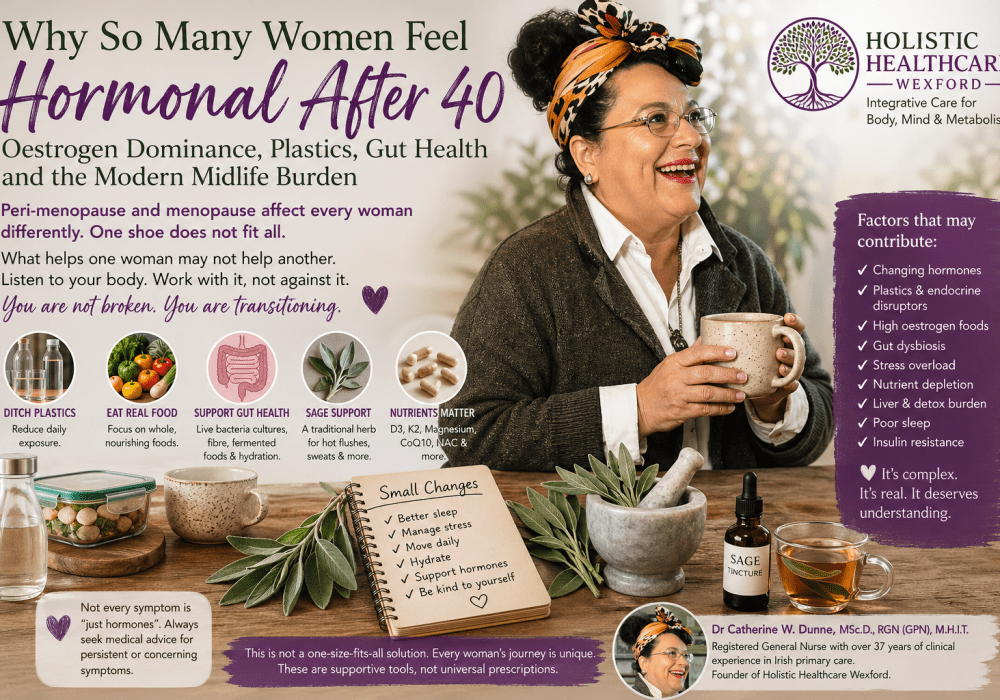
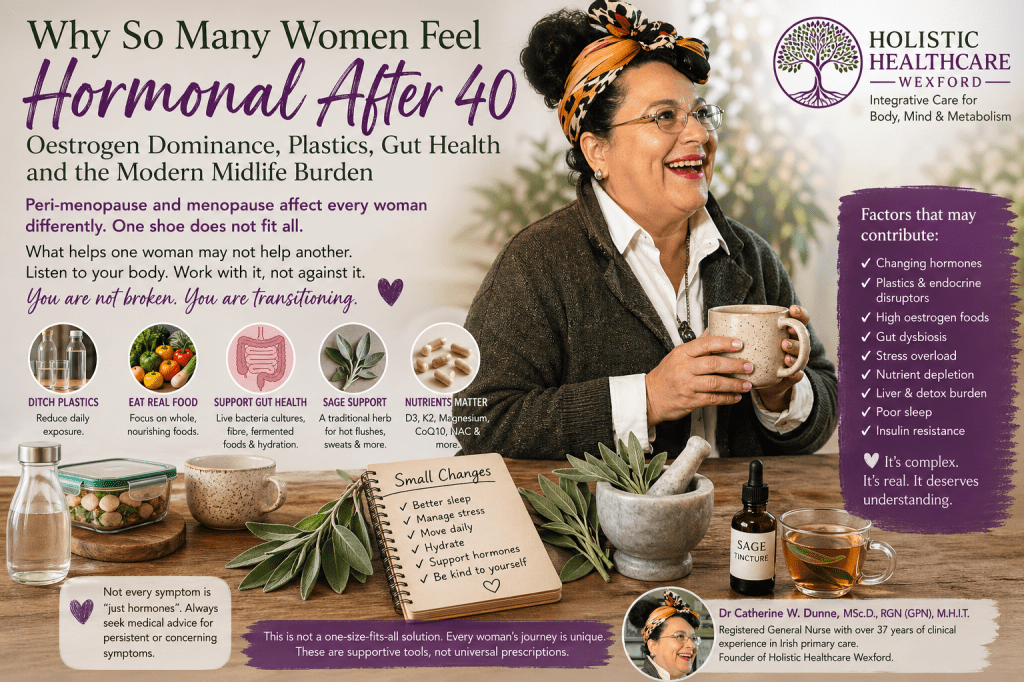
Why Women Feel Hormonal After 40 | Perimenopause, Oestrogen Dominance & Gut Health

You are tired, irritable, bloated, anxious, forgetful, not sleeping properly, gaining weight around the middle, and feeling unlike yourself.

Yet blood tests may come back “normal”.

For many women over 35, especially through peri-menopause, this is where frustration begins. They know something has changed, but often feel unheard or dismissed.

One common pattern behind these symptoms is what is often called Oestrogen Dominance.

This does not always mean high oestrogen on a blood test. More often, it means oestrogen is relatively stronger than progesterone, or the body is struggling to process and clear hormones efficiently.

By Dr Catherine W. Dunne, MSc.D., RGN (GPN)
Holistic Healthcare Wexford | Co-founder, Aumvedas Academy

What Does Oestrogen Dominance Mean?

Hormones work in balance, not isolation.

Oestrogen has many important roles. It supports bones, skin, mood, brain function, the cardiovascular system and reproductive health. But when it outweighs progesterone, symptoms can begin to appear.

This often happens during peri-menopause, when progesterone may fall sooner and faster than oestrogen.

The result can be a body that feels hormonally unsettled.

Common Signs Women Notice

  • heavier or irregular periods
  • breast tenderness
  • bloating and fluid retention
  • mood swings or irritability
  • anxiety or inner tension
  • poor sleep
  • headaches
  • brain fog
  • reduced stress tolerance
  • stubborn weight gain, especially midsection
  • feeling unlike yourself

And yes, many women simply know something is changing long before any test confirms it.

Walking into doorframes may also feature. We shall call that advanced hormonal navigation.

Many women enter their forties expecting a few hot flushes, some skipped periods, and perhaps the occasional mood swing. What they often get instead is a confusing collection of symptoms that seem to arrive all at once: bloating, weight gain around the middle, poor sleep, anxiety, breast tenderness, headaches, heavy or erratic periods, low mood, brain fog, irritability, and the unsettling feeling that they are somehow no longer themselves.

They go for blood tests. They are told everything is normal. They are advised to “manage stress” or accept that it is simply age.

Yet many women know in their bones that something has shifted.

One of the most common phrases used online to describe this experience is oestrogen dominance. It is not a formal medical diagnosis in the same way diabetes or hypothyroidism is, but it is often used to describe a very real pattern: when oestrogenic influence outweighs the balancing effects of progesterone, or when the body is carrying a broader hormonal burden that affects how a woman feels.

This does not always mean oestrogen is high on a blood test. More often, it means oestrogen is relatively stronger than progesterone, or the body is struggling to process, clear and regulate hormones efficiently. In other words, the issue may not be one hormone acting alone. It may be the whole terrain.

The Midlife Hormone Shift Begins Before Menopause

Many women assume menopause begins when periods stop. In reality, the turbulence often starts years earlier.

During perimenopause, ovulation becomes less predictable. Progesterone often declines first, while oestrogen may surge, dip or fluctuate wildly. This can create the classic picture associated with relative oestrogen excess: heavier periods, PMS-like symptoms, fluid retention, mood swings, poor sleep, breast tenderness, migraines and irritability.

When menopause arrives, periods cease, but symptoms do not necessarily vanish. Many women then face a new landscape of sleep disturbance, hot flushes, weight redistribution, vaginal dryness, anxiety, lowered resilience and fatigue.

Even post-menopause, hormones still matter. Fat tissue can continue to produce oestrogen through aromatase activity, lifestyle factors influence hormone metabolism, and environmental chemicals may continue to affect signalling pathways.

So no, the hormone story does not end at menopause. It simply changes chapter.

We Are the Plastic Container Generation

One part of the modern story that deserves far more attention is environmental exposure.

We became the convenience generation. We store food in plastic tubs, heat leftovers in plastic containers, drink water from bottles left in warm cars, wrap food in cling film, and begin our mornings with scalding tea or coffee in takeaway cups lined with plastic polymers and topped with plastic lids.

Many plastics contain compounds such as bisphenols, including BPA, BPS and BPF, as well as phthalates. These chemicals have been studied for their endocrine-disrupting potential, meaning they may interfere with natural hormone signalling.

The issue is not one takeaway coffee, one plastic lunchbox or one bottle of water. It is the small, repeated exposure over years.

Heat increases concern. Microwaving food in plastic, dishwashing worn containers repeatedly, pouring hot liquids into plastic-lined cups, or leaving bottles in sunlight may increase chemical migration. Even thermal till receipts have historically used bisphenol compounds, which can be absorbed through the skin.

This does not mean panic or perfectionism. It means awareness. Simple changes can reduce unnecessary load: use glass containers where possible, choose ceramic mugs, use stainless steel bottles, avoid heating food in plastic, and take a reusable cup for takeaway drinks.

Sometimes the body is not failing women. Sometimes the environment is working against them.

Food Quality Still Matters

Another overlooked area is the quality of the modern food supply.

One of the most significant concerns in discussions around oestrogen dominance is high-oestrogenic or hormonally disruptive food exposure. Commercially raised animals may be exposed to growth-promoting systems designed to increase size, speed of growth or milk production, depending on the country and farming system. Consumers are increasingly aware that what happens in the food chain does not magically stop at the plate.

Conventional produce may also carry residues from pesticides, herbicides and fungicides. Some of these compounds have been studied for endocrine-disrupting effects and may interfere with natural hormone activity, blood sugar regulation and metabolism. While residues may be present only in small amounts on individual fruits or vegetables, the concern is cumulative exposure over time.

This is why many people choose organic, local, pasture-raised or lower-intervention foods where feasible. Not out of fear, but because reducing the overall body burden makes sense.

Processed foods create a separate problem. Ultra-processed diets are often low in fibre, magnesium and protective plant compounds, while being high in refined sugars, additives, poor-quality fats and calorie density. This combination can worsen insulin resistance, inflammation and weight gain, all of which can influence hormone balance.

The real issue is rarely one “bad food”. It is the sum total of modern eating patterns.

Your Gut Helps Regulate Oestrogen

One of the most fascinating and under-discussed areas of women’s health is the gut-hormone connection.

The gut microbiome helps regulate circulating oestrogen through a group of bacterial genes often referred to as the estrobolome. These gut bacteria influence enzymes such as beta-glucuronidase, which are involved in whether oestrogens are eliminated from the body or reactivated and recirculated.

When gut flora is diverse and healthy, hormones are more likely to be processed and cleared efficiently. When gut balance is disturbed through repeated antibiotics, poor diet, chronic stress, constipation, alcohol excess, IBS-type patterns, dysbiosis or conditions such as SIBO, oestrogen recirculation may increase.

Many women with hormonal symptoms also report bloating, sluggish bowels, food sensitivities, recurrent thrush, IBS-type symptoms, and worsening PMS or peri-menopausal symptoms.

That is not coincidence.

Supporting gut health may include increasing fibre, vegetables, resistant starches, fermented foods where tolerated, adequate hydration and regular movement. In some cases, live bacteria cultures, often called probiotics, may help support gut flora and restore microbial balance, especially after antibiotics or periods of digestive disruption.

A healthy bowel habit is one of the least glamorous but most practical hormone tools available. Not glamorous, no. Useful? Absolutely.

Liver, Elimination and the Hormone Clearance Pathway

The liver plays a major role in processing hormones, including oestrogen. Once hormones have been metabolised by the liver, they still need to leave the body through bile and bowel elimination.

If a woman is constipated, inflamed, sleep deprived, nutrient depleted, drinking too much alcohol, under chronic stress or living on processed foods, the system can become less efficient. This does not mean the liver is “broken”. It means the workload is too high and the support is too low.

Good hormone clearance depends on the basics: enough protein, fibre, minerals, hydration, bowel regularity, sleep and reduced toxic load.

Simple, yes. Easy in modern life? Not always.

Where Sage Fits In

Sage is one of the old traditional women’s herbs that deserves renewed respect.

It has long been used for hot flushes, night sweats, excessive perspiration, digestive sluggishness, brain fog, and that overheated, unsettled feeling many women recognise during perimenopause and menopause.

Sage is not a magic hormone cure, and it should not be presented as something that “fixes” oestrogen dominance. Its value is more practical than that. It may support women through the symptoms of hormonal transition, especially where sweating, flushes and digestive heaviness are part of the picture.

The simplest form is sage tea. Use one teaspoon of dried sage leaf, or three to five fresh leaves, in a cup of hot water. Cover and steep for around ten minutes. One cup daily may offer gentle support, while up to two cups daily may be used during hot flush phases.

Sage tincture is another option, commonly taken as twenty to thirty drops in water once or twice daily, depending on product strength.

Regular culinary use also has value. Sage works beautifully in soups, roasted vegetables, stuffing, poultry dishes and savoury cooking. Small regular use often beats heroic one-off efforts.

Sage should be used cautiously in pregnancy, breastfeeding, seizure disorders, or where medications and health conditions require professional advice.

The Wild Yam Myth

For years, wild yam supplements were marketed as natural progesterone support.

Wild yam contains diosgenin, a plant compound used in laboratories as a starting material to manufacture steroid hormones. However, the human body does not naturally convert wild yam into progesterone. That conversion requires industrial processing.

So while some women may feel better using wild yam products, it should not be presented as equivalent to progesterone replacement.

Meanwhile, many women do not realise that in Ireland and Europe, regulated body-identical hormone therapies such as oestradiol and micronised progesterone are already available through licensed medical care and are generally preferred by professional menopause bodies over unregulated compounded alternatives.

That does not mean every woman needs HRT. It means women deserve accurate information rather than marketing fog.

Nutrients That Matter More Than Many Realise

Hormones do not work in isolation. They depend on healthy cells, nervous system balance, mineral sufficiency, mitochondrial energy and sleep.

This is why some women feel dramatically better when foundations are corrected.

Vitamin D3 is particularly relevant in Ireland, where low sunlight exposure is common. It functions more like a hormone messenger than a simple vitamin and influences mood, immunity and bone health.

Vitamin K2 is often paired with D3 to support healthy calcium handling.

Magnesium is one of the most important minerals for midlife women. It supports sleep, nervous system calm, muscle relaxation, blood sugar balance, vitamin D metabolism and stress resilience.

CoQ10 supports mitochondrial energy production and may be especially relevant in fatigue states, ageing and for women using statins.

NAC, or N-acetyl cysteine, supports glutathione pathways and antioxidant defence and is often discussed in relation to inflammation, metabolic health and resilience.

These are not magic pills. They are part of restoring the terrain in which hormones must function.

What Women Need Most

Many women do not need another lecture telling them to “just relax”.

They need a proper conversation that recognises the complexity of modern midlife health.

They may be dealing with changing hormones, sleep debt, stress overload, mineral depletion, low vitamin D, insulin resistance, environmental chemical burden, gut imbalance, caring responsibilities and years of putting everyone else first.

That is not a minor issue. That is a full-body systems load.

And yes, walking into doorframes, forgetting why you entered a room and losing your words mid-sentence may also feature. We shall call that advanced hormonal navigation.

What Can Help Practically?

The answer is rarely one tablet, one test or one buzzword. It is usually a return to fundamentals.

Eat enough protein. Build meals around real food. Increase fibre gradually. Support bowel regularity. Reduce plastic exposure where possible. Stop heating food in plastic. Choose better-quality food where feasible. Move daily. Strength train if able. Prioritise sleep. Correct nutrient deficiencies. Support gut flora. Reduce alcohol. Use herbs wisely. Seek medical support when symptoms are significant.

And most importantly, listen to the body before it has to shout.

One Size Does Not Fit All

It is also important to say this clearly: no two women experience perimenopause, menopause or post-menopause in exactly the same way.

One woman may struggle mainly with sleep and anxiety. Another may have heavy bleeding and migraines. Another may have hot flushes, joint aches, weight gain, vaginal dryness, low mood, or no major symptoms at all.

This is why the suggestions in this article should not be treated as a “one-for-all” prescription. They are general educational supports, not a personalised treatment plan. What helps one woman may not suit another, especially where medications, medical history, hormone-sensitive conditions, thyroid issues, diabetes, mental health concerns or other factors are involved.

Women deserve individualised care, not a conveyor-belt approach. Midlife health is not a template. It is a conversation.

Important Reality Check

Not every symptom in midlife is “just hormones”.

Persistent heavy bleeding, severe pain, sudden changes, unexplained weight loss, profound fatigue, depression, palpitations, post-menopausal bleeding or concerning symptoms deserve proper medical review.

Women should not be dismissed, but neither should everything be blamed on hormones without careful assessment.

Final Thought

Perimenopause and menopause do not create weakness. They reveal where the body has been carrying strain for years.

When women understand that, everything changes.

The body is not being dramatic. It is communicating.

Sometimes healing begins not with being told that everything is normal, but with finally being understood.

I hope you feel inspired. Look after your body, and it will keep you healthy.

Catherine

CWD | 25 April 2026 | Ireland

Holistic Healthcare Wexford
Integrative · Mindful · Patient-Centred

About the Author

Dr Catherine W. Dunne MSc.D. is a Registered General Nurse with over 37 years of clinical experience in primary care in Ireland. Alongside her work in General Practice Nursing, she is the founder of Holistic Healthcare Wexford and co-founder of Aumvedas Academy.

With a background that bridges conventional medicine and holistic practice, Catherine has a particular interest in the area where patients are often told “everything is normal,” yet still feel unwell. Her work focuses on helping people understand what their body is communicating, especially in relation to energy, stress, metabolic function, and recovery.

Through a combination of clinical knowledge and holistic support, she works with individuals to restore balance, improve resilience, and support long-term wellbeing.

Based in Wexford, Ireland.

Disclaimer

This article is for informational and educational purposes only and is not intended as medical advice. It does not replace consultation with a qualified healthcare professional. Patients should always seek appropriate medical guidance regarding their individual health needs and before making changes to treatment or care.

Why You Feel “Off” Even When Your Blood Tests Are Normal

By Dr Catherine W. Dunne, MSc.D., RGN (GPN), M.H.I.T.
Holistic Healthcare Wexford

YOU ARE NOT IMAGINING IT

Many people are told the same thing:
“Your blood tests are normal.”  And yet… you don’t feel normal.

Your energy is low.
Your sleep isn’t refreshing.
Your mood feels flat, anxious, or unpredictable.
Your body just doesn’t feel right.

This is more common than you might think.
And importantly:
It does not mean nothing is wrong.

NORMAL” DOES NOT MEAN OPTIMAL

Standard blood tests are designed to detect disease.
They are not designed to assess how well your body is functioning day to day.

A result can sit comfortably within range, yet still be:

  • low for your individual needs
  • poorly utilised by the body
  • insufficient during times of stress or recovery

This is where many people fall through the gap.

IT’S NOT JUST WHAT YOU TAKE, IT’S WHAT YOUR BODY CAN USE

You might be:

  • eating well
  • taking supplements
  • doing all the right things

And still feel depleted.

Why?

Because the body relies on multiple steps:

  • digestion
  • absorption
  • transport
  • cellular uptake

If any part of that chain is under strain, you can feel the effects long before anything shows up on a lab report.

THE MISSING PIECE IS OFTERN THE NERVOUS SYSTEM

One of the most overlooked factors is nervous system load.
Modern life keeps the body in a constant state of low-grade stress, ongoing alertness, and overstimulation.
Over time, this begins to affect energy production, sleep quality, digestion, and hormone balance.

Many people describe it simply as:
“I can’t switch off.”
That alone can keep the body from restoring properly.

THIS IS WHERE WHOLISTIC CARE COMES IN.

In practice at Holistic Healthcare Wexford, this pattern shows up more and more frequently.
People often arrive feeling dismissed, frustrated, and unsure where to turn next.
This work is not about replacing medical care.
It is about supporting the body’s function, identifying where things are under strain, and helping the system return to balance.

This may include nervous system support, targeted nutritional guidance, and gentle, body-led therapies.

YOU ARE NOT “FINE”. YOU ARE EARLY.

Feeling “off” is often an early signal, not a dead end.

Your body is communicating.
It just hasn’t reached the point of disease.
And that is exactly where the greatest opportunity for change exists.

WHAT YOU CAN DO NEXT

If this resonates with you, start simple:

  • Pause and acknowledge how you actually feel
  • Look at your sleep, stress, and daily load
  • Do not dismiss your symptoms just because tests are “normal”

If you feel you need support:

A holistic consultation can help you make sense of what your body is showing you and what to do next.

FINAL THOUGHT

You know your body.
If something feels off, it is worth listening.
Not everything shows up on paper.
But that does not make it any less real.

I hope you feel inspired. Look after your body, and it will keep you healthy.

Catherine

CWD 01 April 2026/Ireland

About the Author

Dr Catherine W. Dunne is a Registered General Nurse with over 37 years of clinical experience in primary care in Ireland. Alongside her work in General Practice Nursing, she is the founder of Holistic Healthcare Wexford and co-founder of Aumvedas Academy.

With a background that bridges conventional medicine and holistic practice, Catherine has a particular interest in the area where patients are often told “everything is normal,” yet still feel unwell. Her work focuses on helping people understand what their body is communicating, especially in relation to energy, stress, metabolic function, and recovery.

Through a combination of clinical knowledge and holistic support, she works with individuals to restore balance, improve resilience, and support long-term wellbeing.

Based in Wexford, Ireland.

Disclaimer

The information provided in this article is for educational purposes only and is not intended as medical advice. Always consult a qualified healthcare professional before starting any new supplement or health intervention.

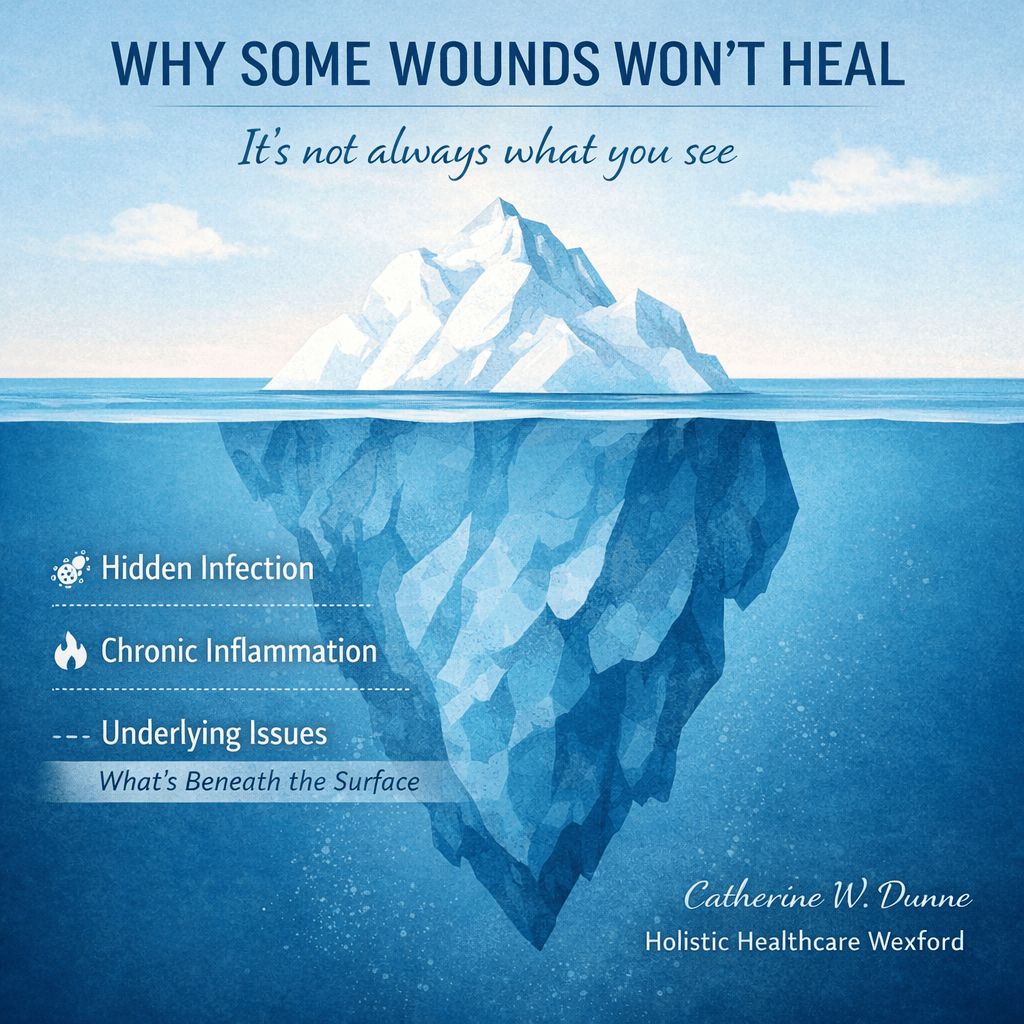
Why Some Wounds Just Won’t Heal: What Most People Are Missing

This article explores why some wounds become slow to heal, looking at common underlying factors such as hidden infection, inflammation, and the body’s internal healing environment, and how a more supportive, integrative approach may help restore the natural healing process.

By Dr Catherine W. Dunne, MSc.D., RGN (GPN)

If you’ve ever had a wound that seemed to linger far longer than it should, you’ll know how frustrating it can be.

It starts small.
A cut. A graze. A surgical site.
Then weeks pass… and it’s still there.

For some people, especially those with diabetes, circulatory issues, or ongoing inflammation, wounds can become slow, stubborn, and difficult to manage.

But here’s the part many people are never told:

👉 Not all wounds fail to heal because of the skin.

Very often, the issue lies beneath the surface.

The Hidden Problem: Why Healing Gets Stuck

In clinical practice, delayed wound healing is usually linked to three key factors:

1. Persistent Low-Level Infection

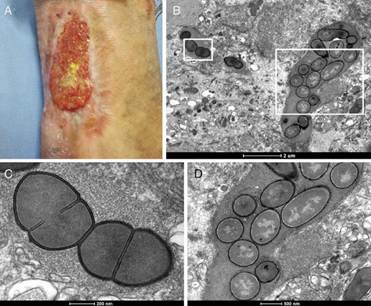
Even when a wound doesn’t look obviously infected, bacteria can still be present.

These microbes don’t always behave in the way we expect.
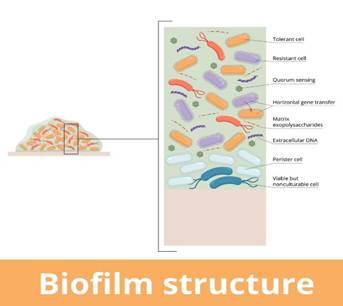
They don’t just sit on the surface, they organise themselves.

2. Biofilm Formation (The “Invisible Shield”)

Bacteria can form what’s known as a biofilm, a protective layer that acts like a shield.

Inside this structure:

  • bacteria become harder to kill
  • standard treatments may struggle to reach them
  • the wound remains in a prolonged inflammatory state

This is one of the main reasons wounds become chronic.

3. Ongoing Inflammation

When the body senses something isn’t right, it stays in “repair mode.”

But if that phase never switches off:

  • healing slows
  • tissue regeneration is impaired
  • the wound can stall completely

Why Standard Treatments Don’t Always Work

Modern wound care is excellent in many ways, particularly with:

  • advanced dressings
  • infection control
  • moisture balance

But even with the best care, some wounds:

  • plateau
  • re-open
  • or simply refuse to progress

This is where we begin to look at adjunctive approaches, methods that support the body rather than replace standard care.

A Quietly Powerful Tool: Silver in Wound Care

Silver has been used in wound care for centuries.
In modern practice, it is commonly found in specialised dressings used in hospitals and community settings.

Its value lies in its ability to:

  • reduce harmful bacteria in the wound
  • interfere with how bacteria grow and spread
  • support a cleaner environment for healing

This can be particularly helpful in wounds that appear clean but are not progressing.

More recently, there has been growing interest in colloidal silver, which contains very small (nano-sized) particles suspended in solution.

Research and clinical observation suggest it may:

  • help reduce the number of bacteria present
  • disrupt protective layers that bacteria form to shield themselves (known as biofilms)
  • support a more balanced healing environment

Importantly, when used appropriately, it is considered an adjunct, meaning it works alongside standard wound care rather than replacing it.

A Holistic View of Wound Healing

From a holistic perspective, wound healing is never just about the skin.
It involves:

  • circulation
  • immune function
  • how the body produces and uses energy, regulates blood sugar, and controls inflammation
  • balanced inflammation response

And sometimes, small supportive interventions can help the body return to a natural healing state.

Final Thoughts

If a wound is slow to heal, it does not mean the body has failed.
It usually means something is getting in the way.

Understanding factors such as infection, biofilm, and inflammation can make a significant difference in how we approach care.
When appropriate, integrating supportive therapies alongside standard treatment may help support the healing process.

This article is intended to support understanding and awareness of wound healing and does not replace individual clinical assessment or care.
It usually means something is getting in the way of the natural healing process.

I hope you feel inspired. Look after your body, and it will keep you healthy.

Catherine

CWD 20 March 2026/Ireland

ABOUT THE AUTHOR

Dr Catherine W. Dunne, MSc.D., RGN (GPN), is an experienced General Practice Nurse based in Ireland, with over 37 years of clinical experience, including more than three decades in Irish primary care.

She has a strong clinical background in chronic disease management and wound care, with a particular interest in community-based treatment approaches. Her early nursing training in Germany included exposure to both conventional and complementary wound-care practices, shaping her integrative clinical perspective.

In addition to her nursing work, Dr Dunne is the founder of Holistic Healthcare Wexford and co-founder of Aumvedas Academy, where she provides education in integrative health approaches.

Her work focuses on bridging evidence-based medicine with practical, patient-centred care in modern clinical practice.