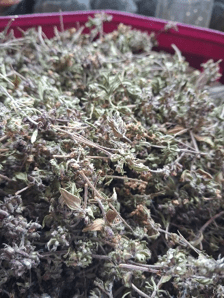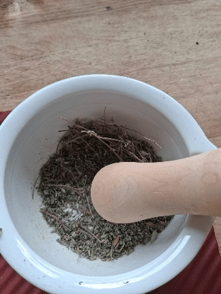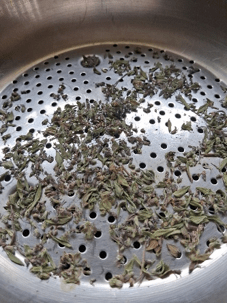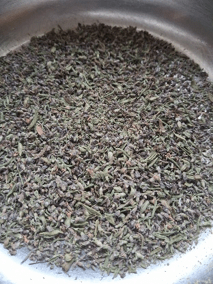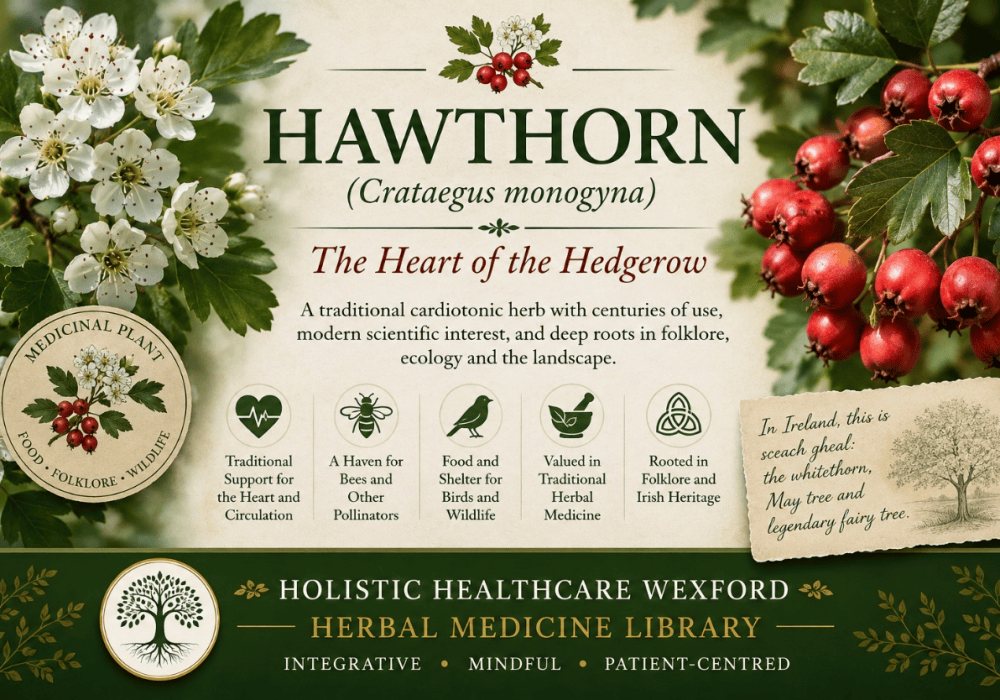
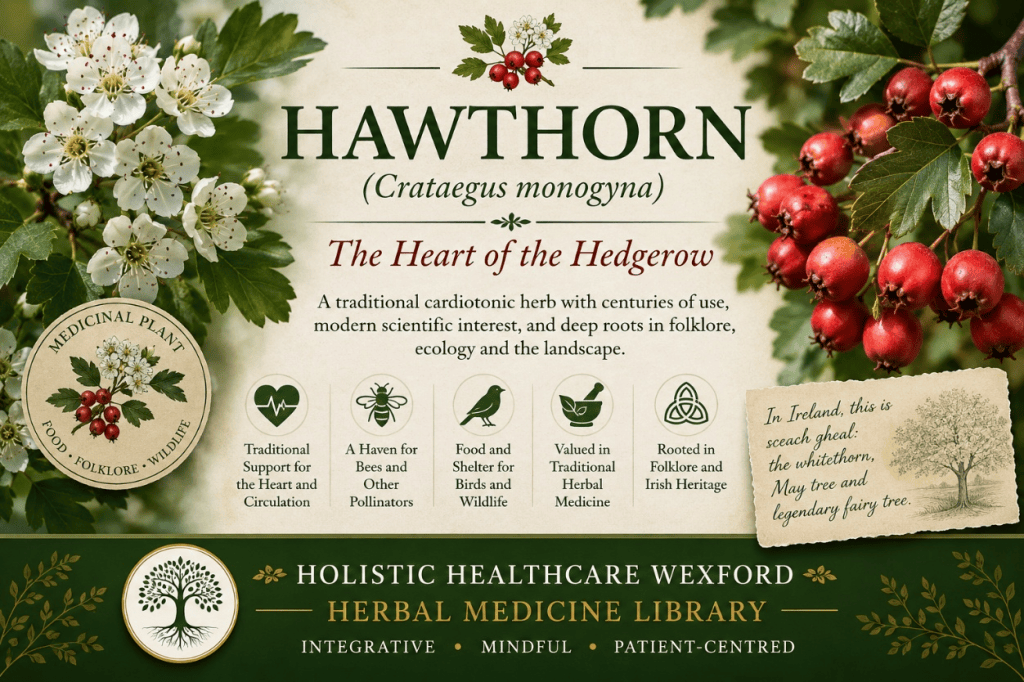
Hawthorn (Crataegus monogyna)
The Heart of the Hedgerow
Part of the Holistic Healthcare Wexford Herbal Medicine Library
By Dr Catherine W. Dunne, MSc.D., RGN (GPN), M.H.I.T., I.R.E.T.
Introduction
Few medicinal plants are as deeply rooted in both the landscape and traditional herbal medicine as Hawthorn.
Across Ireland, Crataegus monogyna forms part of the familiar architecture of the countryside. It grows through old hedgerows, along field boundaries and woodland margins, beside lanes and around farms. In May, its branches become covered with masses of creamy-white blossom; by autumn, the same tree carries clusters of deep red fruits known as haws.
It would be easy to overlook Hawthorn simply because it is so familiar.
Yet behind this ordinary hedgerow tree lies an extraordinary medicinal history.
Hawthorn has become particularly associated with the heart and circulation and is now one of the better-known cardiovascular plants within European herbal medicine. Its leaves, flowers and berries contain a complex mixture of flavonoids, oligomeric procyanidins and other phytochemicals that have attracted considerable scientific interest.
But Hawthorn cannot be understood through pharmacology alone.
In Ireland, this is also sceach gheal: the whitethorn, May tree and legendary fairy tree. Solitary Hawthorns have traditionally been treated with particular respect, and old specimens can still be found standing alone in fields where generations of farmers chose not to disturb them.
For wildlife, Hawthorn is equally valuable. Its spring blossom provides food for pollinating insects, its dense thorny growth offers shelter and nesting habitat, and its autumn fruits provide an important food source for birds.
Medicinal plant, food plant, wildlife habitat, ancient boundary tree and bearer of centuries of folklore, Hawthorn deserves considerably more than the simple description:
“A herb for the heart.”
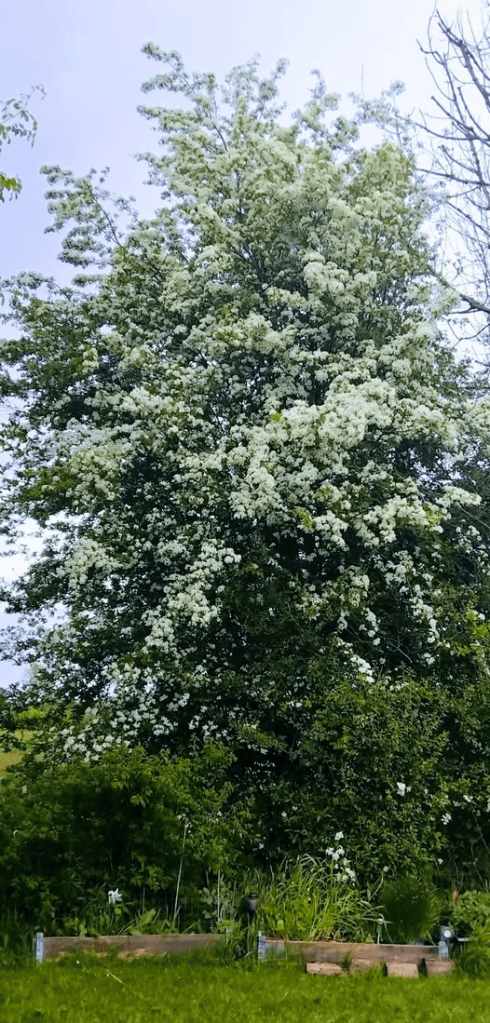
Pic 1
Hawthorn in full spring blossom, County Wexford.
Original photography: Dr Catherine W. Dunne © 2025–2026
Botanical Profile
Scientific name: Crataegus monogyna Jacq.
Family: Rosaceae
Common names: Hawthorn, Common Hawthorn, Whitethorn, May, May Tree, May Blossom, Quickthorn
Irish name: Sceach gheal
Plant type: Deciduous thorny shrub or small tree
Native range: Europe, north-western Africa and western Asia; introduced and naturalised in other temperate regions
Irish distribution: Widespread and extremely common throughout Ireland, particularly in hedgerows, field boundaries, scrub, woodland margins and roadsides
Flowering season: Usually April to June, with May traditionally regarded as the principal flowering period
Fruit: Small red fruits known as haws, generally ripening from late summer into autumn
Parts used medicinally: Leaves, flowers, flowering tops and ripe fruits
Main medicinal species: Crataegus monogyna and Crataegus laevigata are among the principal European Hawthorn species used medicinally
Getting to Know Hawthorn
Hawthorn belongs to the Rosaceae, the rose family, placing it among a remarkably diverse group of plants that also includes roses, apples, pears, cherries, plums, strawberries and raspberries.
It usually grows as a densely branched shrub or small tree, although an old Hawthorn left undisturbed can develop into a substantial and beautifully shaped tree.
Its ability to tolerate pruning, wind and exposed conditions, together with its dense growth and sharp thorns, made Hawthorn particularly valuable as a hedging plant. For generations it has been used to create living field boundaries capable of containing livestock while simultaneously providing shelter from the weather.
The bark of younger branches is generally smoother and brownish, becoming greyer, rougher and more fissured as the tree ages.
The branches bear sharp thorns, a feature that should never be forgotten when harvesting. Hawthorn may be generous with its medicine, but it does occasionally remind the enthusiastic herbalist to mind her fingers.
The Leaves
The leaves of Crataegus monogyna are alternate and characteristically divided into several deep lobes.
Young spring leaves are fresh, soft and bright green, becoming firmer and darker as the season progresses.
The depth of these lobes is one useful feature when distinguishing Common Hawthorn from the closely related Midland Hawthorn, Crataegus laevigata.
The Flowers
Hawthorn produces clusters of small, usually white flowers, each typically consisting of five petals surrounding numerous stamens.
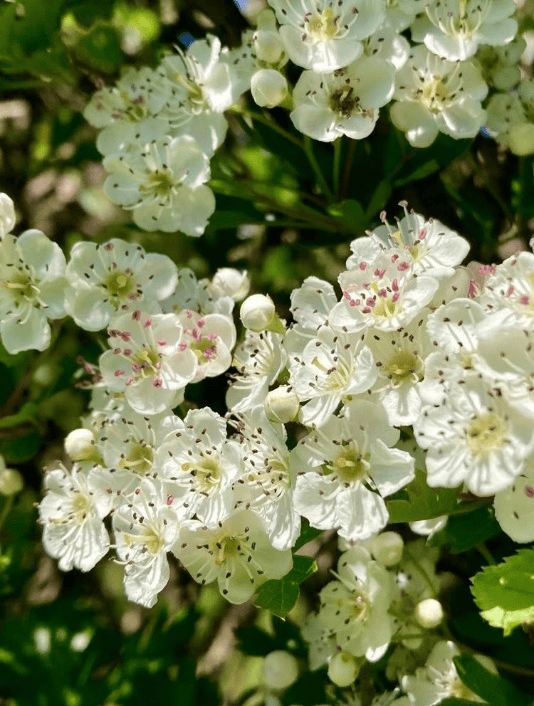
Pic 2
Fresh Hawthorn blossom, showing the characteristic clusters of five-petalled white flowers.
Original photography: Dr Catherine W. Dunne © 2025–2026
When a mature Hawthorn flowers heavily, the effect can be spectacular. Entire sections of hedgerow appear to turn white, and on warm days the blossom attracts a constant movement of insects.
The scent is unmistakable.
Some people describe Hawthorn blossom as sweet, rich and almost almond-like. Others find its heavier notes considerably less appealing. The distinctive fragrance comes from a complex mixture of volatile compounds and has contributed to some interesting folklore surrounding bringing Hawthorn blossom indoors.
Botanically, the centre of the flower also gives us an important identification clue.
Crataegus monogyna usually possesses one style.
This characteristic is reflected in its name: monogyna refers to the single female reproductive structure typically present in the flower.
The Haws
After pollination, the flowers gradually develop into the familiar Hawthorn fruits.
By late summer and autumn, clusters of small red haws appear among the leaves.
Although commonly called berries, botanically they are small pomes, making them structurally related to miniature apples.
Cutting a ripe Crataegus monogyna haw open usually reveals a single hard stone or pyrene containing the seed.
That single seed provides another useful clue to the identity of the species.
Common Hawthorn or Midland Hawthorn?
Two Hawthorn species are particularly important when discussing European herbal medicine:
Common Hawthorn – Crataegus monogyna
and
Midland Hawthorn – Crataegus laevigata.
They can look remarkably similar and may also hybridise where they grow together.
There are, however, several useful clues.
Crataegus monogyna
The leaves are generally more deeply lobed.
The flowers usually possess one style.
The mature haw generally contains one seed or stone.
Crataegus laevigata
The leaves tend to be more shallowly lobed.
The flowers commonly possess two or more styles.
The fruit generally contains two or more stones.
No single feature should be relied upon when identifying an unfamiliar plant. Leaf shape, flowers, fruits, growing location and the overall appearance of the tree should be considered together.
This becomes particularly important for anyone intending to harvest a wild plant medicinally.
Correct identification always comes before harvesting.
Hawthorn Around the World
Although Crataegus monogyna is the Hawthorn most familiar to us in Ireland, it belongs to a much larger and botanically complex genus.
The genus Crataegus contains numerous species distributed principally throughout temperate regions of the Northern Hemisphere. Hawthorns occur naturally across Europe, Asia, North Africa and North America, and several species have developed their own histories of medicinal or culinary use.
Crataegus monogyna – Common Hawthorn
This is the familiar Hawthorn of Ireland, Britain and much of Europe.
It is widespread in hedgerows, scrub, woodland margins and field boundaries and is one of the species most strongly associated with European traditional herbal medicine.
Crataegus laevigata – Midland Hawthorn
Also native to Europe, C. laevigata is closely related to C. monogyna and has likewise been used medicinally.
The two species may hybridise, making identification less straightforward where they grow together.
Crataegus pinnatifida – Chinese Hawthorn
In China and other parts of East Asia, Crataegus pinnatifida has a long history of use as both food and traditional medicine.
Its red fruits, commonly known as shan zha, have traditionally been associated particularly with digestion and food stagnation, illustrating something important about medicinal plants: different cultures may develop quite different therapeutic relationships with members of the same botanical genus.
North American Hawthorns
North America is home to a particularly rich diversity of Crataegus species.
Several were traditionally used by Indigenous peoples as foods and in local medicinal practices, although the species and preparations varied considerably between regions and communities.
This diversity is worth remembering whenever we encounter the word Hawthorn in a herbal text.
Hawthorn is not one single species growing everywhere in the world.
For this Herbal Medicine Library entry, our principal plant is the Hawthorn most familiar in Ireland:
Crataegus monogyna.
Hawthorn in Traditional Herbal Medicine
Hawthorn has a long relationship with humans, although its reputation as the quintessential European “heart herb” developed gradually.
The fruits have been eaten for generations, while different parts of Hawthorn have appeared in traditional preparations for a variety of purposes.
Its particularly strong association with cardiovascular medicine became increasingly established in European herbal practice during the nineteenth century and continued into the twentieth century, when Hawthorn preparations began attracting greater scientific and clinical interest.
Traditional Western herbalists came to regard Hawthorn as a cardiovascular tonic.
The word tonic can easily be misunderstood today.
Traditionally, a tonic was not necessarily expected to produce an immediate, dramatic pharmacological effect. Tonics were generally used over time to support the function or resilience of a particular body system.
Hawthorn consequently developed a reputation as a gentle, longer-term herb associated particularly with the heart and circulation.
Traditional uses have included support for the ageing heart, circulation and cardiovascular function, as well as use where awareness of the heartbeat occurred alongside nervousness or emotional tension.
These are traditional herbal uses and should not automatically be interpreted as modern clinical indications.
That distinction becomes particularly important with cardiovascular disease, where symptoms such as chest pain, breathlessness, fainting or persistent palpitations require appropriate clinical assessment.
Which Parts of Hawthorn Are Used?
One of Hawthorn’s interesting features is that herbal medicine uses the plant at two very different stages of its annual cycle.
Leaves and Flowers
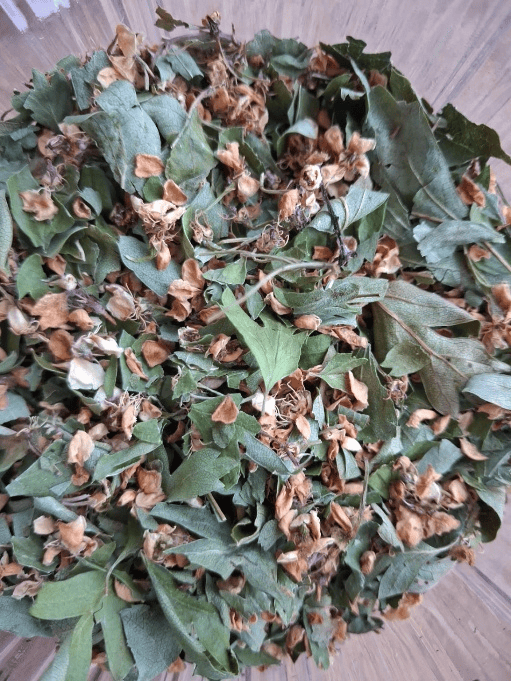
The leaves and flowers, usually harvested together as flowering tops, are among the most important medicinal materials in European phytotherapy.
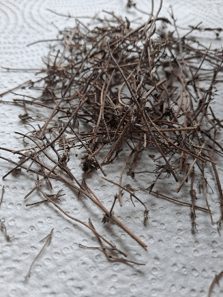
Pic 3
Dried Hawthorn leaf and flower, the herbal material traditionally known as Crataegi folium cum flore.
Original photography: Dr Catherine W. Dunne © 2025–2026
They are collected in spring when the plant is flowering and contain a characteristic range of flavonoids and oligomeric procyanidins.
In modern European herbal preparations, the flowering leafy tops have received considerable attention.
This matters because people sometimes assume that “Hawthorn” automatically means Hawthorn berries.
It does not.
When reading research, purchasing an extract or preparing Hawthorn medicinally, we need to know which part of the plant is actually being discussed.
Haws
The red autumn fruits have their own long history as both food and herbal material.
They contain polyphenolic compounds as well as sugars, organic acids, pectins and other constituents associated with fruit.
The haws can be dried, infused, tinctured or incorporated into culinary preparations.
They are valuable plant material in their own right, but their chemical profile is not identical to that of the flowering tops.
Using the Whole Seasonal Cycle
Traditional herbalists may work with both harvests.
The leaves and flowers can be collected in spring and the fruits later in the year. Some preparations combine material from different parts of the plant, while others deliberately keep them separate.
There is something appealing about using Hawthorn in this way.
The spring medicine captures the tree in flower.
The autumn medicine captures it in fruit.
Pic 4
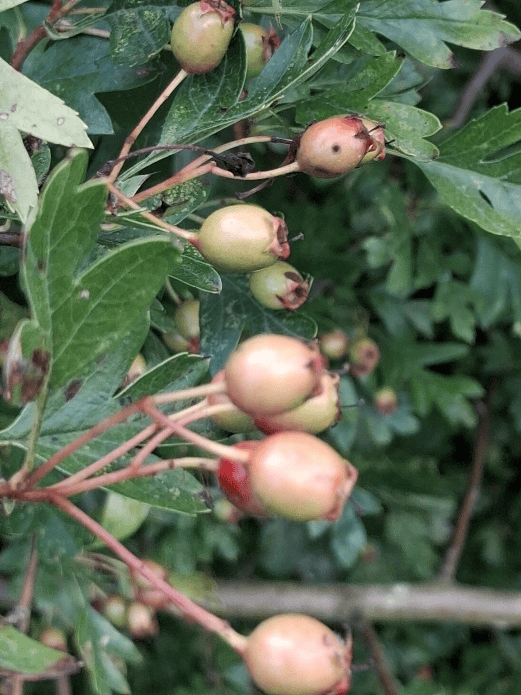
Developing Hawthorn haws beginning to colour, County Wexford, August 2026.
Original photography: Dr Catherine W. Dunne © 2025–2026
Pic 5
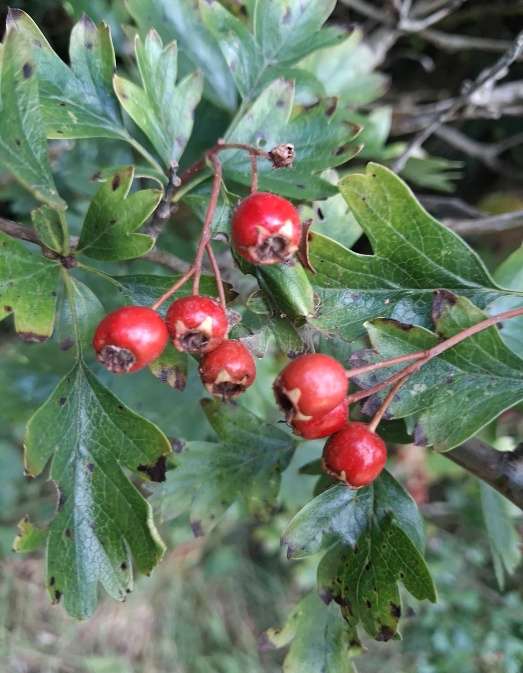
Ripening red haws of Crataegus monogyna, County Wexford, August 2026.
Original photography: Dr Catherine W. Dunne © 2025–2026
But from a phytochemical and research perspective, we should still resist treating them as though they were automatically identical.
Taste & Energetics
One of the simplest ways to begin understanding a medicinal plant is to experience it with the senses.
Hawthorn changes noticeably depending upon which part of the plant we are working with.
Leaves and Flowers
The young leaves and flowering tops are relatively mild compared with many strongly aromatic medicinal herbs. They have a fresh, green character with a gentle astringency rather than an immediately powerful flavour.
The flowers add another sensory dimension altogether.
Fresh Hawthorn blossom has a distinctive fragrance that people experience very differently. Some find it pleasantly sweet and floral; others detect a heavier, almost musky quality.
That unusual scent is part of Hawthorn’s character and may also help explain some of the old traditions surrounding bringing large quantities of May blossom indoors.
The Haws
The ripe red haws are quite different.
Their flavour is generally mild, slightly tart and gently astringent, while the texture of the flesh can be dry or somewhat mealy.
That mild astringency is not simply a culinary observation. It reflects, in part, the polyphenolic and tannin-containing nature of the fruit.
Haws are not usually the kind of fruit that makes someone stand beneath the tree eating handful after handful.
Their character makes considerably more sense once they are prepared: infused, gently simmered, tinctured, made into syrup or incorporated into preserves with other autumn fruits.
Traditional Energetics
Within Western herbal tradition, Hawthorn is generally regarded as a gentle, restorative cardiovascular tonic rather than a strongly heating, cooling or stimulating herb.
Its mild astringency gives it a subtly toning quality, while its traditional association with both cardiovascular function and the nervous or emotional heart gives Hawthorn an unusual position among medicinal plants.
This is also a useful reminder that traditional herbal energetics and modern phytochemistry describe plants in different ways.
One speaks through qualities such as taste, tone and traditional observation.
The other speaks through flavonoids, procyanidins, receptors and physiological mechanisms.
They are not interchangeable systems of description.
But when used carefully, each can help us look at the same plant from a different direction.
Key Constituents of Hawthorn
Hawthorn does not owe its medicinal reputation to one isolated chemical compound.
Instead, it contains a complex mixture of phytochemicals, with the precise composition varying according to species, plant part, stage of growth, environmental conditions and method of extraction.
Among the most important groups are:
Flavonoids
Hawthorn contains numerous flavonoids and flavonoid derivatives.
Compounds reported in Hawthorn include vitexin derivatives, hyperoside, rutin and quercetin-related compounds.
Flavonoids are widespread throughout the plant kingdom and are associated with a range of biological activities, including antioxidant and vascular effects.
Oligomeric Procyanidins – OPCs
The oligomeric procyanidins, often abbreviated to OPCs, are another important group of Hawthorn polyphenols.
They have been extensively investigated in relation to the cardiovascular actions of standardised Hawthorn extracts.
OPCs are also found in other familiar foods and plants, including grapes, apples and cocoa.
Phenolic Acids
Hawthorn contains several phenolic acids and related compounds that contribute to its overall phytochemical profile and antioxidant activity.
Triterpenoid Compounds
Various triterpenes have also been identified within Crataegus species.
Although they tend to receive less public attention than the flavonoids and procyanidins, they form part of the complex chemistry of the plant.
Organic Acids and Pectins
The fruits contain organic acids and pectic substances alongside their polyphenolic compounds.
These contribute not only to the chemistry of the haws but also to their behaviour when used as food.
Anyone who has made a fruit jelly will already understand the practical importance of pectin.
Why the Whole Plant Extract Matters
Herbal medicine often becomes distorted when we attempt to identify one constituent and declare:
“That is the active ingredient.”
Hawthorn provides a good example of why that approach can be too simplistic.
Its biological activity appears to involve numerous constituents and several physiological pathways rather than one single compound acting upon one single target.
This is also why preparation matters.
Water and alcohol do not extract every plant constituent equally. A tea, tincture, powdered herb and standardised commercial extract therefore cannot automatically be regarded as equivalent simply because each carries the name Hawthorn.
This distinction becomes particularly important when interpreting scientific research.
If a clinical study investigates a specifically manufactured extract standardised to particular constituents, we cannot assume that a homemade cup of Hawthorn tea will produce an identical pharmacological effect.
The tea may still be a perfectly valid traditional herbal preparation.
It is simply not the preparation that was studied.
That is an important principle throughout herbal medicine, not only with Hawthorn.
Traditional Herbal Actions
Within Western herbal practice, Hawthorn has traditionally been described using several overlapping herbal actions.
Cardiovascular Tonic
This is perhaps Hawthorn’s best-known traditional role.
Rather than being viewed as a rapidly acting cardiac remedy, Hawthorn has historically been associated with longer-term cardiovascular support.
Circulatory Support
Hawthorn has traditionally been used where gentle support of peripheral and coronary circulation was desired.
Modern research into vascular function and endothelial physiology has provided interesting avenues through which some of these traditional observations can now be explored.
Antioxidant Activity
The flavonoids and procyanidins found within Hawthorn demonstrate antioxidant activity in experimental systems.
Antioxidants help limit oxidative reactions involving reactive oxygen species, but the term should not be interpreted as though antioxidants simply “clean toxins” or prevent every disease associated with oxidative stress.
Human physiology is considerably more complicated than that.
Mild Astringent Action
The tannin and polyphenol content of Hawthorn contributes a degree of astringency, particularly noticeable in some preparations of the fruits.
Nervous Cardiovascular Support
Traditional herbal practice has also associated Hawthorn with the heart affected by emotional strain: the pounding, fluttering or heightened awareness of the heartbeat that may accompany nervous tension.
This traditional use provides an interesting bridge between herbal medicine and our modern understanding of the close relationship between the cardiovascular and autonomic nervous systems.
From Traditional Action to Modern Research
This is where Hawthorn becomes particularly interesting.
Many herbs acquire impressive lists of supposed actions simply because one website copies another. Hawthorn is different.
Specific Hawthorn preparations have actually undergone pharmacological and clinical investigation, particularly in relation to cardiovascular function. Research has explored their possible effects on cardiac muscle function, vascular tone and endothelial function, as well as coronary blood flow, oxidative stress and blood pressure. Clinical studies have also investigated Hawthorn preparations in relation to symptoms associated with certain forms of chronic cardiovascular disease.
However, the quality and relevance of that evidence vary considerably, and this is where careful interpretation becomes important. Some of the best-known studies used standardised extracts of Hawthorn leaf and flower, rather than ordinary Hawthorn tea or Hawthorn berry tincture. The results obtained with one specific preparation therefore cannot automatically be applied to every product made from the plant.
That distinction is essential.
Rather than simply asking “Does Hawthorn work for the heart?”, a more scientifically useful approach is to ask which Hawthorn species was studied, which part of the plant was used and how it was prepared. We also need to know the dose, the cardiovascular condition being investigated and what the Hawthorn preparation was compared with.
Those details may sound rather technical, but they determine what a study can actually tell us. Hawthorn tea, berry tincture and a standardised leaf-and-flower extract are all Hawthorn preparations, but they are not scientifically interchangeable.
And alongside which conventional treatment?
Those questions may sound less exciting than declaring Hawthorn “the ultimate heart herb”.
But they are the questions that allow traditional herbal medicine and modern clinical science to have a meaningful conversation.
What Modern Research Says About Hawthorn
Hawthorn occupies an interesting position in modern herbal medicine.
It is one of those plants whose traditional reputation has encouraged considerable scientific investigation, particularly into its possible effects on cardiovascular function. Yet the evidence is not as simple as saying that Hawthorn has now been “proven” to treat heart disease.
Different studies have examined different Crataegus species, different plant parts and, importantly, different preparations.
Some of the best-known cardiovascular research has involved standardised extracts of Hawthorn leaf and flower, particularly the proprietary extract known as WS 1442.
This is important throughout the following discussion.
Results obtained with a standardised pharmaceutical extract cannot automatically be applied to Hawthorn tea, homemade tincture or Hawthorn berries.
Hawthorn and Heart Failure
Some of the most extensive clinical research into Hawthorn has involved people with chronic heart failure.
Earlier controlled studies suggested that certain standardised Hawthorn extracts could improve symptoms or exercise tolerance when used in addition to conventional medical treatment in selected patients.
This led to considerable interest in Hawthorn as a possible adjunct to conventional heart-failure management.
One of the largest investigations was the SPICE trial, involving 2,681 adults with NYHA class II or III chronic heart failure and reduced left ventricular ejection fraction.
Participants received either 900 mg daily of the standardised Hawthorn extract WS 1442 or placebo for 24 months, alongside their conventional heart-failure treatment.
The main result is important because it prevents us from overstating Hawthorn’s benefits.
WS 1442 did not significantly reduce the study’s primary combined cardiac endpoint compared with placebo.
There were some potentially interesting findings within subgroups, including a reduction in sudden cardiac death among participants with less severely impaired left ventricular function, but this was not the trial’s primary outcome and should therefore be interpreted cautiously.
The study did, however, provide useful information about safety: adverse-event rates were similar between the Hawthorn and placebo groups despite participants receiving conventional cardiovascular medication.
So what does this mean for the Herbal Medicine Library?
It means Hawthorn should not be described as a treatment for heart failure.
It does mean that a particular standardised Hawthorn extract has been studied as an adjunct to conventional treatment in people with established chronic heart failure.
Those are two very different statements.
Hawthorn and Blood Pressure
Hawthorn has also attracted considerable interest in relation to hypertension.
Individual trials over the years have produced variable results, partly because studies have differed in their populations, Hawthorn preparations, doses and duration.
More recently, however, a 2025 meta-analysis examined randomised placebo-controlled clinical trials investigating Crataegus preparations in people with hypertension.
The pooled findings suggested that Hawthorn supplementation was associated with a statistically significant reduction in systolic blood pressure. A reduction in diastolic blood pressure was also observed, although the pooled effect did not reach statistical significance.
These findings are encouraging and support continued research into Hawthorn’s potential vascular effects.
However, they do not mean that Hawthorn should replace established hypertension treatment.
The available trials remain relatively limited, and hypertension is too important a cardiovascular risk factor to manage according to whether someone feels well while taking a herb.
Blood pressure needs to be measured.
And where antihypertensive medication is prescribed, it should not be stopped or altered simply because Hawthorn has been introduced.
Hawthorn and the Blood Vessels
Experimental studies provide several possible explanations for Hawthorn’s traditional association with circulation.
Hawthorn extracts and their constituent polyphenols have been investigated for effects upon vascular tone and endothelial function.
The endothelium is the thin layer of cells lining the interior of our blood vessels. Far from being merely a passive lining, it participates actively in regulating vascular tone, inflammation, coagulation and blood flow.
Research suggests that Hawthorn may influence pathways involved in vasodilation, including mechanisms associated with nitric oxide.
This could help explain why Hawthorn has attracted interest in relation to blood pressure and circulation.
Again, however, laboratory mechanisms should not be confused with clinical outcomes.
Showing that a plant extract affects a biological pathway is not the same as proving that drinking the herb prevents cardiovascular disease.
Hawthorn and Cardiac Rhythm
Hawthorn is traditionally associated with palpitations and the sensation of a nervous or unsettled heart.
This is an area where language matters enormously.
Palpitations are a symptom, not a diagnosis.
They may accompany anxiety, stress, caffeine consumption or benign ectopic beats, but they can also occur with atrial fibrillation, thyroid disease, anaemia, electrolyte abnormalities or other cardiac conditions.
Interestingly, recent observational research has examined the standardised extract WS 1442 in relation to cardiac rhythm disorders. A large German retrospective cohort study reported associations between WS 1442 use and lower recorded rates of atrial fibrillation/flutter, tachycardia and other arrhythmias compared with a magnesium/potassium comparator group.
These findings are interesting but cannot establish that Hawthorn prevented the arrhythmias.
Observational studies can identify associations.
They cannot prove cause and effect.
That distinction is particularly important when discussing cardiac rhythm.
What Does the European Medicines Agency Say?
The European Medicines Agency (EMA) provides a useful reality check because its herbal monographs distinguish between well-established medicinal use and traditional use.
For Hawthorn leaf and flower, the EMA recognises traditional use for the relief of temporary nervous cardiac complaints, such as palpitations or the perception of extra heartbeats associated with mild anxiety, after serious medical causes have been excluded.
The EMA also recognises traditional use of Hawthorn leaf and flower for mild symptoms of mental stress and to aid sleep.
The wording matters.
These indications are based on long-standing traditional use, not on sufficient clinical-trial evidence to establish a well-established medicinal indication.
That is considerably more restrained than many claims encountered online.
And it is probably a much better representation of where Hawthorn currently sits between traditional herbal practice and modern evidence.
The Nervous Heart
This traditional association between Hawthorn and the “nervous heart” is particularly fascinating.
We now understand much more about the relationship between the autonomic nervous system and cardiovascular function than earlier herbalists could possibly have known. During stress or anxiety, sympathetic nervous system activity increases. Heart rate and blood pressure may rise, breathing changes, and the force of cardiac contraction can become more noticeable. Even an occasional ectopic beat that might otherwise pass unnoticed can suddenly feel enormously significant when someone becomes anxious and begins monitoring every heartbeat.
This can create a self-perpetuating cycle. The sensation causes anxiety, the anxiety increases sympathetic activity, and the heartbeat becomes still more noticeable. What began as a fleeting physical sensation can therefore become increasingly prominent simply because the nervous system is now paying very close attention to it.
Traditional herbal medicine did not speak in terms of sympathetic activation, vagal tone or heart-rate variability, but herbalists certainly recognised something fundamental: emotion and the heart were connected.
Hawthorn became one of the plants associated with this territory and was sometimes combined with calming herbs such as Lemon Balm (Melissa officinalis). Modern physiology gives us a new vocabulary for an observation that is actually very old.
Catherine’s Nursing Perspective
Hawthorn is one of the medicinal plants where my nursing background and my work with herbal medicine meet very naturally.
After many years in General Practice Nursing, I cannot look at a herb described as “good for the heart” without asking another set of questions. What is the person’s blood pressure and pulse, and is that pulse regular? Are the palpitations new? What medication are they taking? Do they have diabetes, abnormal lipids, impaired renal function, anaemia or thyroid dysfunction? Most importantly, are there symptoms such as chest pain, breathlessness, dizziness or syncope that require further investigation?
Because the heart does not exist in isolation.
And neither does Hawthorn.
A person interested in taking Hawthorn may already be taking antihypertensive medication, beta-blockers, diuretics, anticoagulants or several other prescribed medicines. That does not automatically mean that Hawthorn cannot be considered. It means that the herb needs to be treated as something pharmacologically relevant enough to disclose and discuss.
I find that an important principle in integrative healthcare. We cannot argue that medicinal plants possess meaningful physiological activity and then, in the next breath, behave as though they are too harmless to mention when prescribed medicines are being reviewed.
If a plant is powerful enough for us to value medicinally, it is important enough to put on the medication list.
When Palpitations Need More Than a Herb
I am particularly cautious when Hawthorn is discussed for palpitations.
There is an enormous difference between someone occasionally becoming aware of their heartbeat during stress and someone developing a previously undiagnosed arrhythmia. New, persistent or worsening palpitations deserve assessment, particularly when accompanied by dizziness, fainting, chest discomfort, breathlessness or unusual fatigue.
Sometimes the cause is relatively benign, and sometimes it isn’t. The herb cupboard can wait until we know which one we are dealing with.
Where I Think Hawthorn Belongs
For me, Hawthorn’s greatest value is not found in exaggerated promises that it will “fix” the heart. Its value lies in something much more interesting.
Here is a plant with centuries of traditional cardiovascular use whose phytochemistry has proved sufficiently intriguing to generate genuine pharmacological research, randomised clinical trials and continuing scientific investigation. Not every traditional claim has survived that scrutiny. Some remain plausible but unproven, some clinical findings are encouraging, and others have been neutral.
That is exactly how evidence develops.
We do traditional herbal medicine no favours by pretending the science is stronger than it is, but neither do we do modern healthcare any favours by pretending that centuries of accumulated plant knowledge are unworthy of investigation.
Hawthorn sits rather beautifully between those two worlds.
Hawthorn in Irish History and Folklore
Few native trees carry quite the cultural weight of Hawthorn in Ireland.
Known in Irish as sceach gheal, Hawthorn has long been associated with field boundaries, old pathways, holy wells, ancient sites and, perhaps most famously, the fairy tradition.
For generations, a distinction was often made between Hawthorn growing as part of an ordinary hedge and a solitary Hawthorn standing alone in a field or near an ancient site.
The latter could command considerable respect.
These lone trees became associated with the Aos Sí, the supernatural people of Irish tradition, and were often described simply as fairy trees. Cutting or damaging one was traditionally regarded as something best avoided.
Whatever our personal interpretation of those beliefs today, their influence upon the Irish landscape is undeniable.
Old Hawthorns can still be found standing alone where the land around them has been cultivated, grazed or otherwise altered. In some places, roads, boundaries and agricultural activity have accommodated an old tree rather than removing it.
Folklore may therefore have achieved something that modern conservation frequently struggles to accomplish:
it made people leave the tree alone.
The May Tree
Hawthorn has also been known as the May Tree, reflecting its characteristic flowering period.
Its appearance in blossom marked an important seasonal transition. Dense green hedges suddenly became covered in white flowers, signalling that spring was giving way to early summer. Hawthorn consequently became intertwined with older seasonal traditions surrounding May, fertility, protection and the changing agricultural year.
There is an important lesson hidden here for anyone learning medicinal plants. Our ancestors did not identify the seasons solely by dates printed on calendars; they watched what the land was doing. Plants flowered, birds returned, fruits ripened and leaves changed. These natural rhythms helped people recognise where they were in the agricultural and seasonal year.
The natural world was the calendar, and Hawthorn blossom was one of its pages.
Hawthorn Blossom in the House
An old tradition found in Ireland and Britain warned against bringing Hawthorn blossom into the home.
Depending upon place and period, it could be associated with bad luck, illness or even death.
Interestingly, the unusual reputation of Hawthorn blossom may have had a sensory component as well as a supernatural one.
The flowers produce a distinctive scent that people perceive very differently. Some find it sweet and pleasant, while others detect heavier, less agreeable notes.
Modern chemistry can investigate the volatile compounds responsible for that fragrance.
Folklore tells us what generations of people made of the experience.
The two explanations do not have to compete.
For the Herbal Medicine Library, both are part of the story of the plant.
A Tree Between Worlds
Hawthorn is repeatedly associated with boundaries.
That seems remarkably appropriate.
Physically, Hawthorn has divided fields and marked roads and properties for generations.
Ecologically, the hedgerow forms a boundary between open spaces while simultaneously providing a corridor through which wildlife can move.
In folklore, the tree could mark another kind of boundary: between the ordinary human world and the unseen one.
And medicinally, Hawthorn eventually became associated with another boundary altogether:
the physical heart and the emotional heart.
Perhaps this is partly why Hawthorn has accumulated such a rich cultural identity.
It has spent centuries growing at the edges of things.
Harvesting Hawthorn
Hawthorn offers two principal medicinal harvests during the year.
In spring, we have the young leaves, flowers and flowering tops.
In autumn, we have the ripe haws.
Pic 6
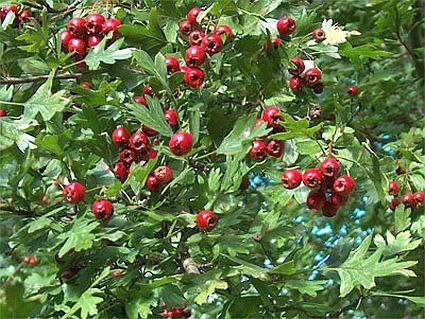
Ripe Hawthorn haws on the tree, ready for the autumn harvest.
Original photography: Dr Catherine W. Dunne © 2025–2026
Each should be harvested at the appropriate stage rather than treating the tree as though its medicinal material remains unchanged throughout the year.
Harvesting the Leaves and Flowers
Flowering tops are generally gathered when the Hawthorn is in bloom and the flowers are fresh and healthy.
In Ireland, this is commonly around May, although weather and location can shift the flowering period considerably.
Choose a dry day once surface moisture or morning dew has evaporated.
Select clean, healthy flowering growth and take small amounts from different parts of the tree rather than heavily stripping individual branches.
The flowers are being visited by pollinating insects and every flower also represents a potential autumn fruit.
There is no need to harvest every perfect blossom simply because it is there.
Harvesting the Haws
The fruits are harvested later in the year once they have developed their characteristic red colour and are fully ripe.
They should be firm but mature, without obvious mould, disease or deterioration.
I prefer to harvest from places I know.
A beautiful Hawthorn beside a heavily trafficked road may be easy to reach, but convenience is not my first consideration when collecting material that will eventually become tea, tincture or food.
Avoid sites exposed to obvious pollution, chemical spraying or other potential contamination.
And always leave a substantial proportion of the crop on the tree.
The autumn berries are not waiting exclusively for the herbalist.
Harvesting With Wildlife in Mind
Hawthorn makes sustainable harvesting particularly easy to understand because we can actually see who else depends upon the plant. In spring, insects visit the flowers, while later in the year birds feed upon the haws. Its dense branches also provide shelter and nesting habitat throughout the seasons.
For that reason, when harvesting Hawthorn I do not work according to a rigid percentage such as “take exactly this much and leave that much.” Instead, I look at the individual tree and its surroundings. I consider how heavily it is flowering or fruiting, whether pollinators are actively feeding, whether there are many Hawthorns nearby or only one, and whether the autumn fruit crop is abundant or relatively poor. If wildlife is already feeding from the tree, that also becomes part of the decision.
Those observations tell us far more than a mathematical harvesting rule ever could. Some years a tree may offer an extraordinary abundance; in another year, or in another location, the responsible harvest may be very small indeed.
And sometimes, when we already have enough stored from a previous harvest, the responsible harvest is no harvest at all.
A good wild harvest should be difficult to detect once you have finished.
Drying Hawthorn Leaves and Flowers
Hawthorn flowering tops can be dried for later use.
Spread the freshly harvested material loosely in a thin layer on a clean drying surface with good air circulation.
Keep it away from direct sunlight and excessive heat.
The purpose is to remove moisture efficiently while preserving the quality of the plant material, not to cook it.
Turn or gently redistribute the material as necessary so that damp pockets do not remain trapped beneath leaves or flowers.
Once thoroughly dry, the material should feel crisp rather than cool, soft or damp.
Any plant material showing mould, unusual discolouration or an unpleasant musty smell should be discarded.
Drying the Haws
The fruits contain considerably more moisture than the leaves and flowers and therefore require more careful drying.
Whole haws can take a long time to dry naturally, particularly in Ireland’s humid climate.
They may be carefully prepared for drying and dried using gentle controlled warmth or a dehydrator where appropriate.
Whichever method is used, the important point is that the fruits must be completely dry before storage.
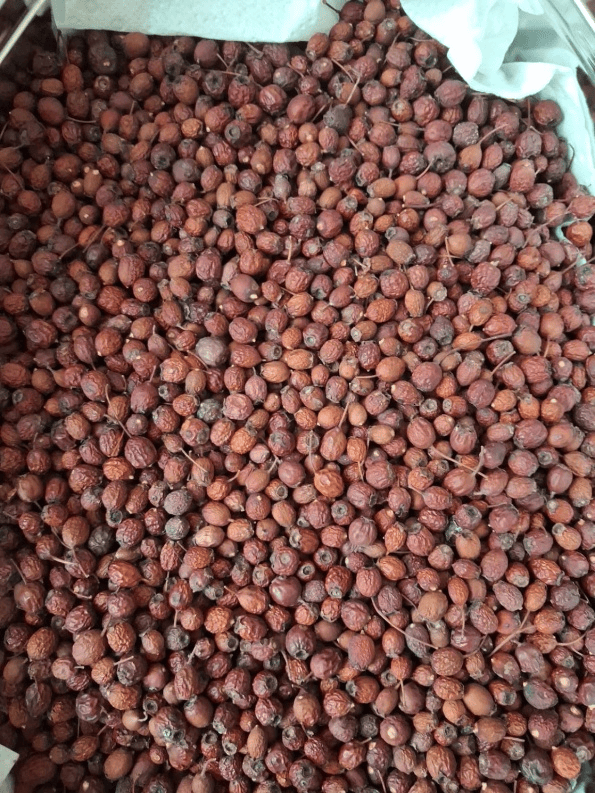
Pic 7
Dried Hawthorn haws prepared for storage and later use.
Original photography: Dr Catherine W. Dunne © 2025–2026
A berry that looks dry on the outside may still retain moisture internally.
And moisture sealed into a storage jar is an invitation to mould.
Storing Dried Hawthorn
Once completely dry, Hawthorn should be stored in clean, dry, well-sealed containers away from direct sunlight, heat and moisture.
Label everything.
At minimum, I like a herbal label to identify:
- Plant name
- Plant part
- Date harvested
- Location harvested
That may seem unnecessary when you have just filled the jar.
Six months later, when several jars contain different brown-green dried plants, confidence has an extraordinary habit of disappearing.
Good herbal practice begins long before we administer anything.
Identification, harvesting, drying, labelling and storage are all part of the medicine.
Preparing Hawthorn
Hawthorn can be prepared in several ways, and the appropriate preparation depends partly upon which plant material is being used.
Hawthorn Leaf and Flower Tea
Dried Hawthorn leaves and flowers make a straightforward herbal infusion.
The flavour is relatively gentle compared with many medicinal herbs, making Hawthorn suitable for blending with other plants where appropriate.
A simple infusion also allows us to experience Hawthorn in one of its least complicated forms.
Not every medicinal plant needs to become a concentrated extract.
Hawthorn Berry Tea
Dried haws can also be used for tea, although their harder structure means they benefit from being broken or gently crushed before preparation.
Berry preparations may be simmered rather than simply infused, allowing water more time to penetrate the tougher fruit material.
Care should be taken not to deliberately pulverise the hard seeds.
Hawthorn Tincture
Hawthorn lends itself particularly well to tincture making. The fresh flowering tops can be tinctured during spring, while the ripe berries can be tinctured separately when autumn arrives, giving the herbalist an opportunity to work with two distinct stages of the same plant.
Some practitioners keep the spring and autumn tinctures separate, while others combine them. From a traditional herbal perspective, there is something rather lovely about bringing both harvests together in a single preparation.
Spring blossom. Autumn fruit. One tree captured at two moments in its medicinal year.
Hawthorn Berry Syrup
The ripe fruits can also be incorporated into syrups.
These preparations sit comfortably at the old boundary between herbal medicine and food, particularly when berries are combined with other traditional autumn fruits.
As always, the preservation method matters. Water-rich homemade syrups have a much shorter shelf life than alcoholic tinctures and require appropriate preparation, storage and monitoring for spoilage.
Hawthorn in the Kitchen
Haws have a history as food as well as medicine. Their flavour is mild, slightly tart and somewhat mealy, and the fruits contain relatively little flesh around the hard centre. Nevertheless, they have traditionally found their way into jellies, syrups, fruit sauces, chutneys and mixed hedgerow preserves, where their natural pectin content can be particularly useful.
There is one important distinction to make when preparing the fruit. The hard seeds should not be deliberately crushed and consumed because, as with several members of the Rosaceae family, they contain cyanogenic glycosides. Using the fleshy fruit in ordinary culinary preparations is quite different from grinding and consuming quantities of the kernels.
This is another example of why traditional food preparation methods matter. Our ancestors may not have described cyanogenic glycosides at the kitchen table, but they knew which parts of plants they ate and how they prepared them.
A Haven for Bees and Other Pollinators
Long before I consider harvesting Hawthorn blossom, somebody else has usually found it: the insects.
A flowering Hawthorn can become an extraordinary feeding station, attracting bees, hoverflies, beetles and numerous other insects. Its ecological value continues long after flowering has finished. The foliage supports invertebrate life, the dense branching structure provides shelter, refuge and nesting opportunities, and later in the year the autumn haws become an important food source for birds and other wildlife.
This makes Hawthorn much more than an individual medicinal species. It is part of the infrastructure of the hedgerow.
When a mature Hawthorn disappears, we do not simply lose one tree. We also lose its flowers and fruits, along with the food, shelter, nesting opportunities and habitat it provides throughout the year.
That is why I believe medicinal-plant education should include ecology. Learning what a plant can do for us is only half of learning the plant. We should also understand what that plant is doing for the living community around it.
Safety, Contraindications and Interactions
Hawthorn has a long history of traditional use and is generally regarded as well tolerated when used appropriately.
However, its association with cardiovascular function means that safety deserves more than the usual one-line instruction to “consult your doctor if taking medication.”
When considering Hawthorn, several questions matter: Who is taking it, why are they taking it, which preparation are they using, and what medicines or medical conditions are already present?
These considerations become particularly important when Hawthorn is being used specifically because someone is experiencing cardiovascular symptoms.
Possible Side Effects
Reported adverse effects from Hawthorn preparations are generally mild and may include:
- dizziness
- headache
- gastrointestinal discomfort
- nausea
- increased awareness of the heartbeat in some individuals
Individual responses vary, and a new symptom should not automatically be dismissed as a harmless effect of the herb.
This is particularly important if dizziness, palpitations or changes in exercise tolerance develop in someone with known cardiovascular disease.
Hawthorn and Cardiovascular Medicines
Hawthorn is frequently accompanied by broad warnings about interactions with “heart medication”.
The reality requires more nuance.
Because Hawthorn preparations may influence cardiovascular physiology, there is a potential for additive effects when they are used alongside medicines that also affect blood pressure, vascular tone or cardiac function.
This does not mean that every combination has been proven dangerous.
Indeed, some clinical trials of standardised Hawthorn extracts have included patients who were also receiving conventional cardiovascular treatment.
But it does mean that medicinal Hawthorn use should be disclosed, particularly in people taking several cardiovascular medicines.
Blood Pressure Medication
If Hawthorn contributes to vasodilation or blood-pressure reduction, combining it with antihypertensive medication could potentially produce an additive effect in some individuals.
For someone already taking treatment for hypertension, blood pressure should therefore be monitored rather than assuming that the addition of Hawthorn is clinically irrelevant.
Medication should never be reduced or stopped simply because blood-pressure readings improve after introducing a herbal preparation.
Medicines Affecting Cardiac Function
People taking medicines for heart failure, angina, arrhythmias or other established cardiovascular conditions should seek appropriately qualified advice before beginning regular medicinal doses of Hawthorn.
The issue is not that Hawthorn has been demonstrated to interact dangerously with every cardiac medicine.
The issue is that established cardiovascular disease deserves supervised care.
A herb should be integrated into that picture rather than added invisibly alongside it.
Anticoagulants and Antiplatelet Medicines
Hawthorn is sometimes included on internet lists of herbs that supposedly interact with anticoagulants such as warfarin or with antiplatelet medicines.
Evidence for clinically significant interactions is not as clear as those lists often imply.
Nevertheless, anyone taking anticoagulant or antiplatelet therapy should disclose regular herbal and supplement use to the healthcare professional managing their treatment.
This is particularly important when several products are being taken together or before surgery and invasive procedures.
Digoxin: An Important Example of Internet Confusion
Hawthorn is also frequently described online as interacting with digoxin.
This claim deserves careful interpretation.
Experimental research has raised questions about possible interactions, and Hawthorn may also interfere with certain laboratory methods used to measure digoxin concentrations.
That is not the same as demonstrating a predictable dangerous interaction in every person taking the medicine.
However, digoxin has a narrow therapeutic range and is used in people with significant cardiovascular conditions.
For that reason alone, regular medicinal use of Hawthorn alongside digoxin should be discussed with the clinician or pharmacist responsible for the person’s medication.
This is a good example of why interaction information should not be reduced to lists labelled simply:
SAFE or DANGEROUS.
Clinical context matters.
Pregnancy and Breastfeeding
There is insufficient reliable safety information to recommend medicinal Hawthorn routinely during pregnancy or breastfeeding.
Culinary exposure and medicinal dosing are not necessarily equivalent.
In the absence of adequate evidence, concentrated preparations should therefore be approached cautiously during pregnancy and breastfeeding unless appropriately advised by a qualified healthcare professional.
Children and Adolescents
Medicinal Hawthorn preparations should not automatically be assumed suitable for children simply because Hawthorn is a plant.
Different preparations have different concentrations, and some tinctures also contain significant quantities of alcohol.
Where Hawthorn is being considered medicinally for a child or adolescent, particularly for symptoms involving the heart, medical assessment should come first.
A child complaining of palpitations does not need a cardiac herb before somebody has established why the palpitations are occurring.
When Hawthorn Is NOT the Answer
There is perhaps no more important safety message in this entire Hawthorn entry.
Hawthorn is not an emergency cardiac treatment.
Seek urgent medical assessment for symptoms such as:
- new or severe chest pain or pressure
- chest discomfort spreading to the arm, shoulder, back, neck or jaw
- sudden or significant shortness of breath
- fainting or collapse
- a new sustained rapid or markedly irregular heartbeat
- palpitations accompanied by chest pain, breathlessness or faintness
- sudden severe weakness or unexplained deterioration
The presence of a medicinal plant traditionally associated with the heart should never delay appropriate emergency care.
There is a time for the herb cupboard.
There is also a time for modern medicine.
Knowing the difference is part of responsible herbal practice.
A Note on Long-Term Use
Hawthorn has traditionally been regarded as a plant suited to longer-term use rather than a short, dramatic intervention.
That does not mean that everyone should take Hawthorn indefinitely “for prevention”.
Whether regular medicinal use is appropriate depends upon the individual, the preparation, the reason for taking it and any concurrent medical treatment.
There is also an important difference between incorporating Hawthorn occasionally as food or tea and taking a concentrated standardised extract every day.
Dose and preparation matter.
That simple principle is easily forgotten when discussing medicinal plants.
Catherine’s Herbal Notes
Harvest season:
I associate Hawthorn with two beautiful harvesting periods: the flowering tops in spring, usually around May in Ireland, and the ripe red haws from late summer into autumn.
Parts used:
Leaves, flowers and flowering tops in spring; ripe haws in autumn.
Favourite preparation:
I particularly like working with Hawthorn across the seasons.
The flowering tops can be tinctured in spring and the berries tinctured separately when they ripen later in the year. They may remain as two distinct preparations or be combined depending upon how I intend to use them.
There is something rather satisfying about having both stages of the tree preserved: Hawthorn in flower and Hawthorn in fruit. I also enjoy Hawthorn as part of seasonal herbal blends, particularly when the berries can sit alongside other autumn hedgerow fruits.
Growing location:
Hawthorn grows abundantly throughout County Wexford and across Ireland. I prefer harvesting from clean, familiar locations away from heavily trafficked roads and areas that may have been sprayed.
Personal observation:
Hawthorn is one of those plants that can become almost invisible because we see it everywhere.
Then May arrives.
Suddenly the hedgerow is covered in blossom, insects are moving from flower to flower and the tree we barely noticed a few weeks earlier has become one of the busiest places in the landscape.
By autumn, it has transformed again.
The white blossom has disappeared and the branches are carrying red haws, with birds now taking the place of the spring pollinators.
That seasonal transformation has changed the way I harvest Hawthorn.
I never see a heavily flowering or fruiting tree simply as an abundance of medicinal material waiting for me to collect.
I see a living food source that I am sharing.
So I take what I need. And I leave considerably more than I take.
For me, that is as much a part of herbal medicine as knowing the constituents in the plant.
Final Thoughts
Hawthorn is frequently called the heart herb, but after exploring the plant properly, that description begins to feel almost inadequate.
It certainly has an extraordinary relationship with the history of cardiovascular herbal medicine. Its leaves and flowers contain flavonoids and oligomeric procyanidins that have attracted serious pharmacological investigation, standardised Hawthorn extracts have entered clinical trials, and researchers continue to explore their effects upon vascular and cardiovascular physiology.
But Hawthorn is far more than its clinical research.
It is the spring blossom of the Irish hedgerow, sceach gheal, the old boundary tree and the legendary fairy tree that generations thought twice about disturbing. Its flowers feed pollinating insects in spring, its haws provide food for birds in autumn and winter, and its dense thorny branches offer shelter and nesting places throughout the year. As the tree moves from blossom to fruit and eventually into winter dormancy, it quietly marks the changing seasons around us.
For me, this is part of what makes Hawthorn such an important plant for the Herbal Medicine Library. Medicinal plants are not simply collections of active constituents waiting to be extracted. Their botany, chemistry, traditional uses, history and ecology all belong to the story of the medicine.
Modern research gives us increasingly sophisticated ways of examining Hawthorn and asking whether some of the observations made by generations before us can be explained through phytochemistry and physiology. Sometimes the evidence supports those traditions, sometimes it asks us to be more cautious, and sometimes the questions remain unanswered.
I do not believe we need to choose between traditional herbal knowledge and modern science. The greater value lies in understanding both: respecting what generations before us learned through observation and experience while being equally willing to examine those traditions through the evidence available to us today.
And perhaps Hawthorn illustrates that relationship particularly well. Long before anyone spoke of flavonoids, oligomeric procyanidins or endothelial function, people knew this tree, harvested from it, ate its fruits, incorporated it into traditional medicine and, here in Ireland, sometimes simply knew when to leave it alone.
Hawthorn is not only a tree associated with the heart. It is a tree that has earned its place at the heart of the hedgerow.
The information in The Herbal Medicine Library is intended for educational purposes and should not replace personalised medical advice from your healthcare professional.
I hope you feel inspired to step outside, notice the remarkable plants growing around you and continue exploring the wonderful world of herbal medicine.
Look after your body, and it will help look after you.
Catherine

CWD | 23 Aug 2026 | Ireland
Holistic Healthcare Wexford
Integrative · Mindful · Patient-Centred
About the Author
Dr Catherine W. Dunne MSc.D. is a Registered General Nurse with over 37 years of clinical experience in primary care in Ireland. Alongside her work in General Practice Nursing, she is the founder of Holistic Healthcare Wexford and co-founder of Aumvedas Academy.
With a background that bridges conventional medicine and holistic practice, Catherine has a particular interest in the area where patients are often told “everything is normal,” yet still feel unwell. Her work focuses on helping people understand what their body is communicating, especially in relation to energy, stress, metabolic function, and recovery.
Through a combination of clinical knowledge and holistic support, she works with individuals to restore balance, improve resilience, and support long-term wellbeing.
Based in Wexford, Ireland.
Disclaimer
This article is for informational and educational purposes only and is not intended as medical advice. It does not replace consultation with a qualified healthcare professional. Patients should always seek appropriate medical guidance regarding their individual health needs and before making changes to treatment or care.
Original photography: Dr Catherine W. Dunne © 2025–2026
AI-Disclaimer:
About the images: Unless otherwise stated, the photographs used throughout this library are the author’s own. AI-assisted design tools may be used to create educational layouts, improve presentation, and incorporate Holistic Healthcare Wexford branding. The botanical content and educational purpose remain those of the author.