Nature’s Traditional Stomach Soother — Why Meadowsweet Was Used Long Before Antacids

The Fragrance of Summer

Long before I learned about salicylates, herbal medicine, or the traditional uses of Meadowsweet, I fell in love with its fragrance.

Every summer, as the creamy flower heads begin to open along the roadsides, ditches and damp meadows of Wexford, the air fills with a scent unlike any other native plant.
Some describe it as honey-like.

Others detect hints of almond, vanilla, or marzipan.

To me, it simply smells like summer has arrived.

Our ancestors appreciated this fragrance too. In times before air fresheners and scented candles, Meadowsweet was often gathered and brought indoors. Bundles were hung in homes, churches, and gathering places, not necessarily for drying, but simply to perfume the air. The flowers were also strewn across floors during celebrations and special occasions, releasing their sweet scent whenever they were walked upon.

It is easy to understand why.

Even today, I find myself pausing whenever I pass a stand of flowering Meadowsweet. Its perfume is unmistakable, and once recognised, it is never forgotten.
By Dr Catherine W Dunne MSc.D | M.H.I.T. | Registered Nurse

Meeting Meadowsweet

Meadowsweet (Filipendula ulmaria) is a member of the Rose family (Rosaceae) and has been treasured throughout Europe for centuries. It thrives in damp habitats, favouring meadows, ditches, riverbanks and wet roadside verges.

In Ireland, it is one of the plants that quietly announces the arrival of midsummer.
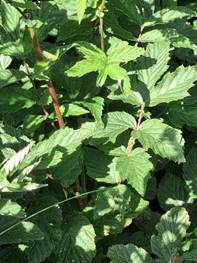
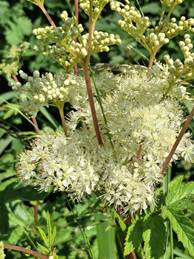
The plant grows tall, often reaching well over a metre in height. Its reddish stems support clusters of creamy-white flowers that appear almost frothy from a distance. Beneath them are deeply veined, serrated leaves that are often overlooked in favour of the spectacular blooms.

For me, Meadowsweet is one of the most recognisable wild plants of summer. Once you learn to identify it, you begin to notice it everywhere.

The Queen of the Meadow

Few wild plants have been held in such high regard as Meadowsweet.
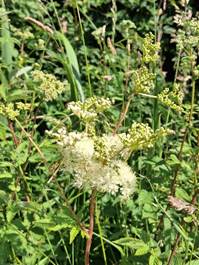
Among Celtic peoples, Meadowsweet was considered one of the sacred herbs. It was associated with celebration, abundance and hospitality, and often featured in seasonal gatherings and ceremonies. Some traditions place it among the most revered plants of the ancient Druids, valued not only for its beauty and fragrance but also for the comfort it brought to everyday life.

Its common name reflects the habitats in which it thrives. Growing in damp meadows and along waterways, it often forms large, striking stands that seem to glow in the summer sunshine. When in full bloom, entire roadsides can become awash with creamy-white flowers, creating a spectacle that is difficult to ignore.
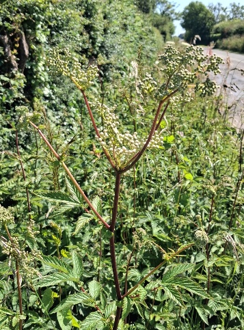
Meadowsweet growing along a roadside verge in County Wexford. Its sweet fragrance often reaches you before the flowers come into view.

Historically, Meadowsweet was known as a strewing herb. Before the days of modern cleaning products and air fresheners, fragrant plants were scattered across floors in homes, halls and churches. As people walked across them, the flowers released their scent into the air, helping to freshen living spaces and mask less pleasant odours.

Bundles were also gathered and hung indoors simply for their perfume. While many herbs were dried for medicinal use, Meadowsweet was often appreciated for the fragrance it brought into the home.

Standing beside a flowering patch today, it is easy to understand why our ancestors valued it so highly. The scent drifts on the breeze long before the flowers come fully into view.

Even now, whenever I harvest Meadowsweet, I find myself bringing a few stems indoors. The fragrance lingers gently in the room, connecting us to a tradition that stretches back hundreds of years.

Traditional Uses

Beyond its beauty and fragrance, Meadowsweet has a long history of medicinal use throughout Europe.

Traditional herbalists valued the flowering tops for supporting comfort during fevers, colds and seasonal illnesses. It was also widely used for digestive complaints, including indigestion, heartburn and stomach discomfort.

The herb’s gentle nature made it particularly popular as a tea. In many households, Meadowsweet was considered a comforting plant to turn to when feeling under the weather.

Historically, it was also used to support aching joints and general discomfort. Long before modern medicines existed, people relied on plants such as Meadowsweet to help ease the ordinary aches and pains of daily life.

Today, herbalists continue to appreciate Meadowsweet for many of these traditional uses, particularly in teas, tinctures and seasonal herbal preparations.

While modern science seeks to understand the compounds responsible for these effects, generations of herbal practice have already left us with a rich history of experience and observation.

The Aspirin Connection

One of the reasons Meadowsweet is so often mentioned in herbal literature is its historical connection to aspirin.

The plant contains naturally occurring salicylate compounds, and its traditional use for discomfort, fevers and aches attracted the attention of early researchers. In fact, Meadowsweet played a role in the story that eventually led to the development of aspirin as we know it today.

This connection often becomes the headline whenever Meadowsweet is discussed.

Yet I sometimes feel that focusing solely on aspirin overlooks something important.

For centuries, people valued Meadowsweet not because they understood its chemistry, but because they understood its effects. They gathered it, brewed it, shared it and passed their knowledge from one generation to the next.

The science is fascinating, but the relationship between people and this plant existed long before laboratories became involved.

As with all herbs, Meadowsweet is not suitable for everyone. People with aspirin sensitivity should avoid it, and those who are pregnant, taking medications, or living with specific health conditions should seek appropriate professional advice before use.

My Experience with Meadowsweet

Every herbalist has certain plants that earn a permanent place in their apothecary.

Meadowsweet is one of mine.
As someone who has lived with asthma for many years, respiratory infections have always commanded my respect. Like many people, I have experienced winters where a simple viral illness seemed determined to linger far longer than welcome.

It was during one such winter that I found myself returning repeatedly to Meadowsweet.

The cough was persistent.

The temperature was exhausting.

Recovery felt frustratingly slow.

During that time, Meadowsweet became one of the herbs I reached for most often. Whether taken as a tea or prepared in herbal formulations, it became a trusted companion throughout that period.

Of course, every person is different, and herbs affect individuals in different ways. What works well for one person may not suit another.

Yet some plants leave an impression that stays with you.

For me, Meadowsweet earned its place not through theory, but through experience.

It supported me during a difficult season and has remained one of the herbs I value most ever since.

Why I Continue to Harvest Meadowsweet

Each summer I find myself returning to the same roadsides and damp meadows in search of those familiar creamy flower heads.

I enjoy watching the plant’s journey from tightly packed buds to full flowering clouds of white blossoms.

I admire the rich reddish stems rising above the surrounding grasses.

I appreciate the beauty of the leaves, which are often overlooked in favour of the flowers.

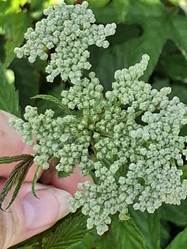
Looking closely at the flowers, I was struck by how much each tiny blossom resembles a miniature Hawthorn flower. Individually delicate and easily overlooked, together they create the creamy clouds that make Meadowsweet one of the most recognisable plants of the Irish summer.
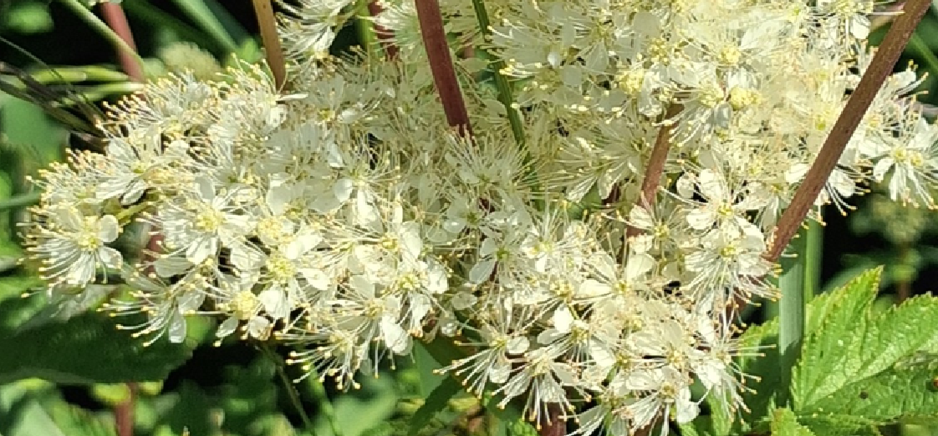

It is only when you pause and examine a flower head closely that you realise you are not looking at one flower at all, but hundreds of tiny blossoms working together.

But more than anything, I look forward to that fragrance.
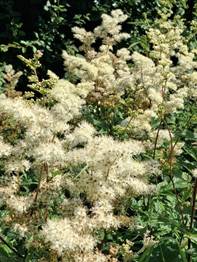
The scent of freshly cut Meadowsweet is difficult to describe adequately. It is sweet without being overpowering. Delicate yet unmistakable. A fragrance that seems to belong entirely to the Irish summer landscape.

Perhaps that is why our ancestors brought it indoors.

Perhaps that is why it has remained loved for so many centuries.

And perhaps that is why, despite all the modern books, research papers and scientific explanations, I still think of Meadowsweet first as a plant that brings simple pleasure.

Some herbs earn our respect.

Others earn our affection.

Meadowsweet has earned both.

Final Thoughts

Every year, as the first flowers begin to open, I am reminded that some of the most valuable plants are often growing quietly along the roadsides we pass every day.

Meadowsweet asks for little attention.
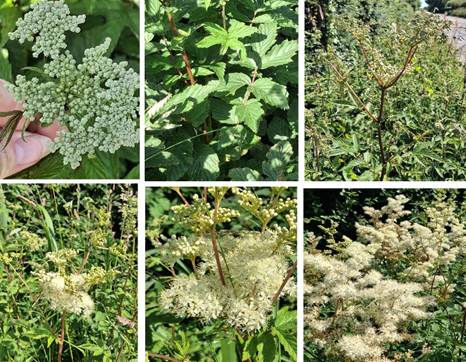
It simply flowers, perfumes the air, supports pollinators, and continues a relationship with people that stretches back hundreds of years.

For me, it remains one of the true treasures of the Irish summer.

And each year, when that familiar fragrance drifts across a meadow or roadside verge, I know summer has truly arrived.

I hope you feel inspired. Look after your body, and it will keep you healthy.

Catherine

CWD | 24 June 2026 | Ireland

Holistic Healthcare Wexford
Integrative · Mindful · Patient-Centred

About the Author

Dr Catherine W. Dunne MSc.D. is a Registered General Nurse with over 37 years of clinical experience in primary care in Ireland. Alongside her work in General Practice Nursing, she is the founder of Holistic Healthcare Wexford and co-founder of Aumvedas Academy.

With a background that bridges conventional medicine and holistic practice, Catherine has a particular interest in the area where patients are often told “everything is normal,” yet still feel unwell. Her work focuses on helping people understand what their body is communicating, especially in relation to energy, stress, metabolic function, and recovery.

Through a combination of clinical knowledge and holistic support, she works with individuals to restore balance, improve resilience, and support long-term wellbeing.

Based in Wexford, Ireland.

Disclaimer

This article is for informational and educational purposes only and is not intended as medical advice. It does not replace consultation with a qualified healthcare professional. Patients should always seek appropriate medical guidance regarding their individual health needs and before making changes to treatment or care.
Ancient Civilizations – Ancient Human Life on this Planet

Sources suggest that human life began on this planet 5.5 – 10.5 million years ago, though the first “humans” did not have physical bodies.

There is a suggestion that the Sphinx may date back about 5 million years.

Some of the sources include:

The first root race was Polarian, followed by Hyperboean – both these races where non-corporeal.

The third root race were the Lemurians, and had physical bodies like us.

These early races created bodies because they wanted to experience life in physical form, and some of these bodies may not have been human – the mythical centaurs (half man, half horse) may have been result of some of their experiments.

This is how Dr Joshua David Stone describes the seven root races (A Complete Ascension Manual, page 5):

Root raceContinentAttunementChakraYoga
1 PolarianThe imperishable sacred landPhysical attunement1Hatha
2 HyperboreanHyperboreaPhysical attunement1Hatha
3 LemurianLemuriaPhysical attunement2Hatha
4 AtlanteanAtlantisEmotional attunement3Bhakti
5 AryanEurope, Asia Minor, AmericaMental attunement4Raja
6 MeruvianNorth AmericaPersonality integration5Agni
7 ParadisianTaraSoul attunement6Unknown


Dr. Stone says that the first race appeared about 18.5 million years ago.

We are the Aryan race, and the Meruvian race is just starting to appear in North America and Australasia. The Paradisian race and the continent of Tara are yet to appear on the planet.

Dr. Doreal describes how the first beings inhabited the polar regions (Polarian and Hyperboean), which where warm and tropical at that time. Also, around 500,000 years ago, the earth was covered in a thick water mist and the beings had gill like extensions in the throat for breathing.

A serpent-like civilization inhabited the South polar region and was constantly at war with the other beings (the serpent sign is also used to indicate Sirians – see later).

There is other evidence of ancient inhabitation by intelligent life:

  • grooved metal spheres in rock which is 2.8 billion years old. Hundreds of these artificial objects have been found in South African mines.
  • shoe prints in Cambrian rocks, alongside fossils of marine arthropods. One imprint was of a sandal worn on the right foot, alongside fossils dating back 590 million years.
  • polished square cubes and a block of silver in a coal deposit dating 280 – 320 million years old.
  • carved bell-shaped metallic vessel basted out of rock 600 million years old.
  • a gold thread embedded in stone 320 – 360 million years old

These finds are quietly ignored by science because there is absolutely no explanation for them according to the current theory of human evolution.

References

  • Edgar Cayce
  • The Tibetan Foundation
  • Joshua David Stone: The Complete Ascension Manual
  • Drunvalo Melchizedek: Flower of Life workshop material
  • Dr. Doreal (Brotherhood of the White Temple): Mysteries of the Gobi, and other publications on Atlantis and Lemuria. (Dr. Doreal apparently received a lot of his information from Tibet shortly after World War II).
  • The Urantia Book, Urantia Foundation (Urantia is the Earth)
  • The Tibetan Foundation, Sedona


Shamballa

I am using the term Shamballa to refer to civilizations in the Gobi desert region. There was certainly a great civilization there in the past, and indications are that it predated Lemuria and Atlantis. The term Shamballa has been used.

Dr. Doreal has an image which was unearthed from a temple in the Gobi desert, and he dates it back about 50,000 years.

It shows short stocky men, with long thin arms and legs, grass skirts, strange shells, and an image of something he calls the Kraken. The hair and facial features of the men are unlike any race known on the planet today.

The booklet explains that the man on the right is covering his pineal gland, showing the separation of men from the governing incorporeal beings – which is in keeping with the Rosicrucian explanations.

Gobi, Sahara, and the Australian deserts have all been populated in the past, and these regions where not deserts a few thousand years ago.


References

–  Elizabeth Claire Prophet: Ascended Master teachings

–  Baird T. Spalding: Life and Teaching of the Ascended Masters

   (5 Volumes)

–  Alice Bailey writings.


Lemuria (Mu)

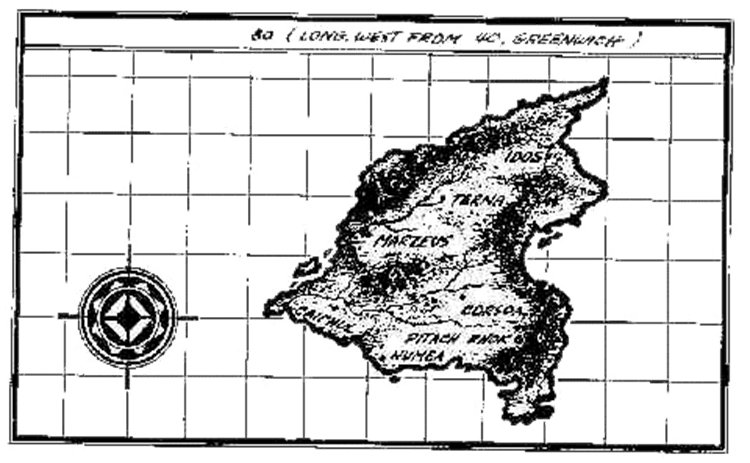
MAP OF INDIA IN 30,000 B.C. Modified after a map in “Ancient World”, North Mahalingam.
International Society for Investigation of Ancient Civilization.
101 Mount Road, Guindy, Madras, India 50032

Mu is another name for Lemuria.

The Lemurians were apparently a short, stocky, dark-skinned Matriachal race. There is good evidence for the land of Lemuria – much better than evidence for Atlantis.

It is placed in the Pacific Ocean, covering from India, across Australia, New Zealand, the Pacific Islands to Hawaii in the north and Easter Island in the east. There are coral reefs in deep water off the coast of some of the Pacific Islands, suggesting that at one time the land was higher (or that the sea level was much lower).

Govindam’s “Babaja and the 18 Siddha Kriya Yoga Tradition” shows a map of India in 30,000 BC, joining India to Australia (it also shows Mt Meru as one of the mountain peaks – other sources put Mt Meru at the north pole, or as another name for the Great Pyramid in Egypt!).

References

–  http://www.salemctr.com/newage.html  Salem New Age Centre

–  Doreal, Dr. M.Mysteries of the Gobi, and other booklets, from the Brotherhood of the White Temple, PO Box 966, Castle Rock, Colorado 80104.

Atlantis

Atlantis is one of the best known mythical continents, referred to by Plato and other legends.

Many people have theorized where it may have been – from the middle of the Atlantic, to Antarctica, Indonesia, Greenland, and a volcanic island near Greece which erupted a few thousand years before Plato’s time.

Some sources suggest that there is evidence of structures on the sea floor off the east coast of northern USA, but no hard evidence has been produced.

It may well be that there were Homo Sapiens Sapiens civilizations living in a number of different continents (archaeological evidence certainly supports this), and the people of this era could generically be called “Atlantians”.


References

–  http://www.atlan.org/

–  Dialogues of Plato

–  Phylos the Thibetan: A Dweller on Two Planets

–  Graham Hancock: Footprints of the Gods

–  Drunvalo Melchizedek: Flower of Life workshop material

–  Garudas: Flower Essences and Vibrational Healing, PO Box 868, San Rafael, CA 94915.

(From A Dweller on Two Planets, Phylos the Thibetan)
 

Most sources agree that Atlantis existed in parallel with Lemuria but was colonized later.

It had developed technology somewhat in advance of the present day, and it was through misuse of the technology in some way which attributed to the fall of Atlantis and the entire continent descending into the sea.

Some sources say that the sea level rose as the ice age came to a close, others attribute it to a meteorite strike, a volcanic eruption, misuse of their technology – maybe it was a combination of factors.

Around 11,600 BC Atlantis disappear to the ocean floor somewhere. This coincides with the end of the ice age (known fact) and is supposed to be the mythical flood in the bible.


Other Perspectives

In his book “The Masters and The Path”, CW Leadbeater (of the Theosophical Society) describes (page 30) the residence of Kuthumi, Master Morya and Djwhal Khul in a ravine in Tibet.

Nearby, he describes the entrance to an occult museum which these masters protect on behalf of the Great White Brotherhood.

The museum houses images of every type of man which has existed on the planet,

“…from gigantic loose-jointed Lemurians to pigmy remains of even earlier and less human races.”

Also original manuscripts written by Lord Buddha, and the Book of Dzyan, and scripts from other worlds.


Inner Earth Societies

At the time of the flood, the intelligent beings on the planet either (a) went underground, or (b) build boats (collectively called “Noah” – not one person, but many individuals).

As the waters receded, many of the underground people emerged, but some stayed underground.

Those underground are said to still have large civilizations there – they are said to be quiet, peace-loving people, with technology, who live long lives. The Ascended Masters are said to belong to these races.

The humans who emerged from underground (Hopi legends tell how they came out of the ground) began the following races:

–  Hopi (American Indians)

–  Aborigines (Australia)

–  Druids (England)

–  Ainu (Japan)

–  Snake people (of 5,000 – 6,000 BC, now extinct. Note that the snake/serpent is a sign of Sirian energy)

–  Dravidians (India)

The skin colours of the races were originally:

–  red –        Atlantis, North America

–  black –    Sudan, West Africa

–  brown –   Andes, Lemuria

–  yellow –  Gobi desert

–  white –    Iran, Europe

Ice Ages on Earth

The great ages of the earth are labelled by archaeologists as follows:

–  Pre-Cambrian – 3.9 billion to 540 million years ago

–  Paleozoic – 540 million – 245 million years ago

–  Mesozoic – 245 million – 66.4 million years ago

–  Cenozoic – 66.4 million years ago to present

The Cenozoic era is divided into epochs:

a)  Tertiary, composed of:

–  Palaeocene –   66.4 – 57.8 million years ago

–  Eocene –         57.8 – 36.6 millions years ago

–  Oligocene –      33.6 – 23.7 million years ago

–  Miocene –        23.7 – 5.3 million years ago

–  Pliocene –         5.3 – 1.6 million years ago

b)  Quaternary, composed of:

–  Pleistocene – 1.6 million years ago to 10,000 years ago

–  Holocene –     10,000 years ago until present

These time periods are arbitrarily assigned by humans, designed to coincide with major changes which took place on the planet.

The last ice age was during the Pleistocene period, and technically we are still in it, or just coming out of it. Currently about 11% of the land area of the world is covered by ice/glaciers, holding about three-quarters of all the fresh water of the planet.

If it were all to melt the sea level would rise 90 meters.

During the height of the ice age of the Pleistocene period, up to 30% of the land area was covered with ice, and the sea level was 35 meters lower about 13,000 years ago when a sudden warming occurred, and the ice abruptly receded.

Somewhere 10,000 – 12,000 years ago there certainly was a great flood of a lot of land area. Human evolution seems to have occurred during this ice age period when the majority of the world was cooler than in previous times (this could be a concern if global warming is a reality).

There was a small ice age during 1500 – 1850 – this is known as the “Little Ice Age”.

Thank you for showing an interest.

Warm Wishes,
Catherine