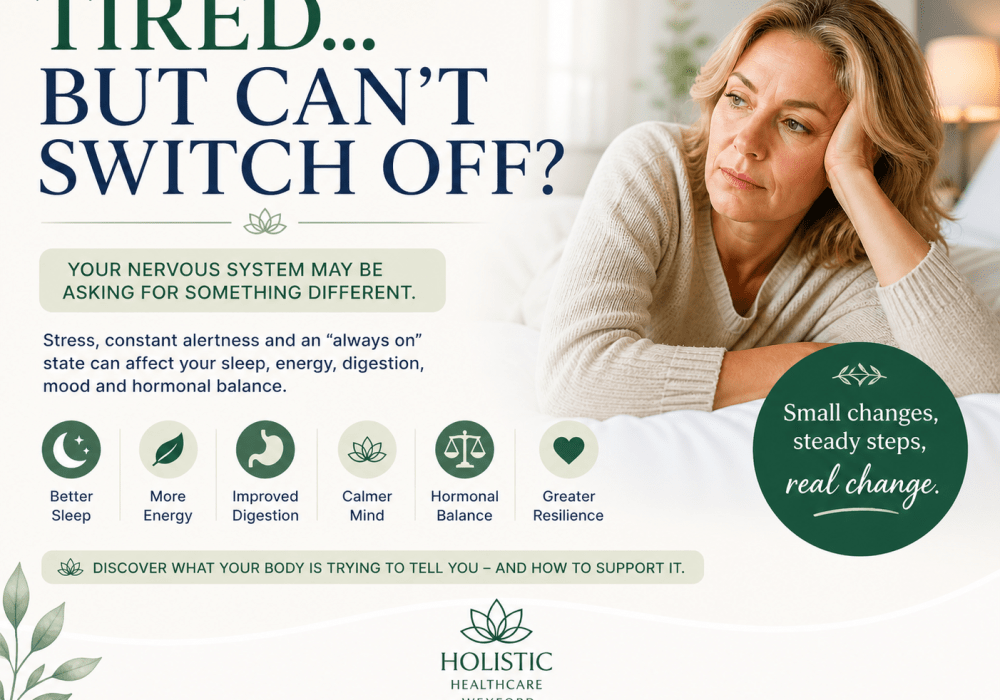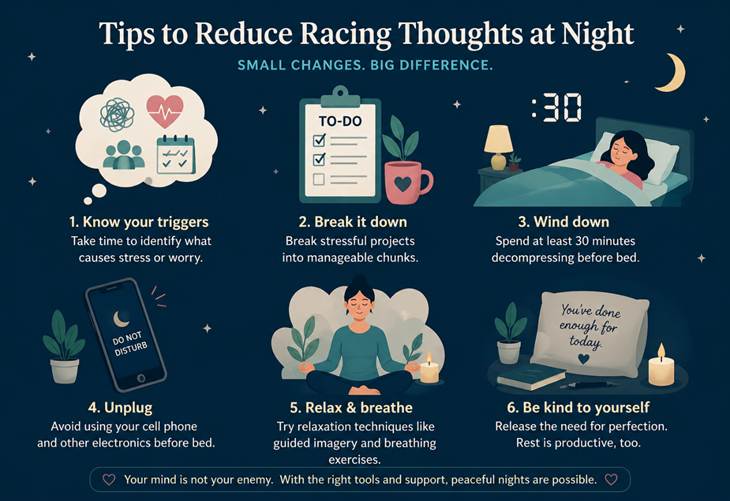
“I’m tired, but I can’t switch off.” “My mind keeps going.” “I feel on edge for no real reason.”
You might not call it your nervous system. But that is often exactly where this begins.
The body is not designed to stay “on” all the time
The nervous system has one very important job: to respond to what is happening around you, and then help the body return to a state of rest once the moment has passed.
In today’s world, that second part is often missing.
Instead, the body remains in a low level of alertness for much of the day. Not dramatic.
“Not obvious. Just constant.”
That constant background tension can slowly wear people down without them fully realising it.
By Dr Catherine W. Dunne, MSc.D., RGN (GPN), M.H.I.T. Holistic Healthcare Wexford
What that can feel like
It does not always show up as “stress” in the way people expect. More often, it can feel like:
difficulty switching off
light or broken sleep
waking tired
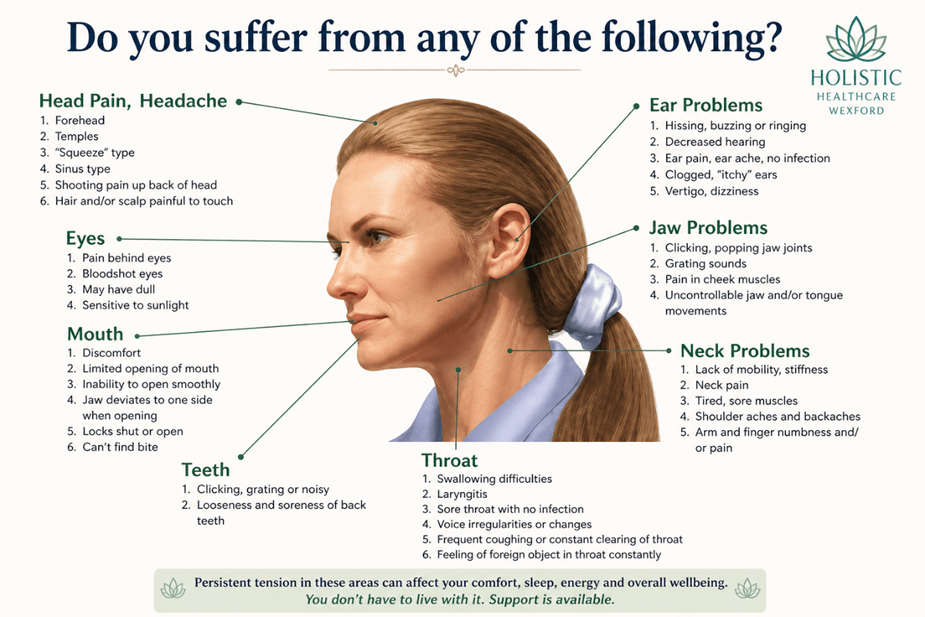
tension in the shoulders, jaw, or chest
digestive discomfort
feeling overwhelmed by small things
irritability or low patience
feeling unlike yourself
Many people simply say:
“I don’t feel like myself.”
Why this matters more than people realise
When the body stays in this state for too long, it begins to affect how everything else functions.
Energy begins to dip. Sleep becomes lighter and less restorative. Digestion may slow or become unsettled. Hormonal balance can begin to shift. Focus and resilience may drop.
Over time, the body is no longer recovering properly. That is often when people begin to feel persistently off.
This is where things get missed
Standard tests can still come back as “normal”.
Because this is not always about disease. It is often about how the system is functioning.
The nervous system plays a central role in sleep, digestion, stress tolerance, hormones, mood, and overall resilience. When it is under strain, the whole body can feel the effects.
What the body may be asking for
Often, it is not asking for more pressure, pushing, or stimulation.
It may be asking for:
regular quiet moments
proper rest without guilt
less constant input
steadier routines
movement that calms rather than exhausts
deeper breathing
support and reassurance
time to recover
This is not weakness. It is physiology.
How this is supported in practice
In clinic at Holistic Healthcare Wexford, this is a pattern I see often. People arrive believing they need to “try harder”, when in truth many need the opposite.
The focus is often on helping the body feel safe enough to settle again. When that begins to happen, people commonly notice:
deeper sleep
clearer thinking
improved energy
less internal tension
better coping capacity
a sense of calm returning
Sometimes later life is when we finally notice the patterns that were there all along.
What you can start doing now
Keep it simple. The nervous system responds well to consistency, not perfection.
Step away from stimulation for short periods during the day
Get morning daylight where possible
Reduce doom-scrolling and late-night screen time
Eat regularly and stay hydrated
Walk outdoors, especially in nature
Notice jaw and shoulder tension and consciously release it
Protect sleep as a priority, not a luxury
Build small moments of peace into ordinary days
You do not need to overhaul your life overnight. Small steady changes often bring the greatest shift.
Final thought
Your body is not working against you.
It is responding to the load it is under.
When the nervous system is supported, everything else often begins to follow.
I hope you feel inspired. Look after your body, and it will keep you healthy.
Dr Catherine W. Dunne MSc.D. is a Registered General Nurse with over 37 years of clinical experience in primary care in Ireland. Alongside her work in General Practice Nursing, she is the founder of Holistic Healthcare Wexford and co-founder of Aumvedas Academy.
With a background that bridges conventional medicine and holistic practice, Catherine has a particular interest in the area where patients are often told “everything is normal,” yet still feel unwell. Her work focuses on helping people understand what their body is communicating, especially in relation to energy, stress, metabolic function, and recovery.
Through a combination of clinical knowledge and holistic support, she works with individuals to restore balance, improve resilience, and support long-term wellbeing.
Based in Wexford, Ireland.
Disclaimer
This article is for informational and educational purposes only and is not intended as medical advice. It does not replace consultation with a qualified healthcare professional. Patients should always seek appropriate medical guidance regarding their individual health needs and before making changes to treatment or care.
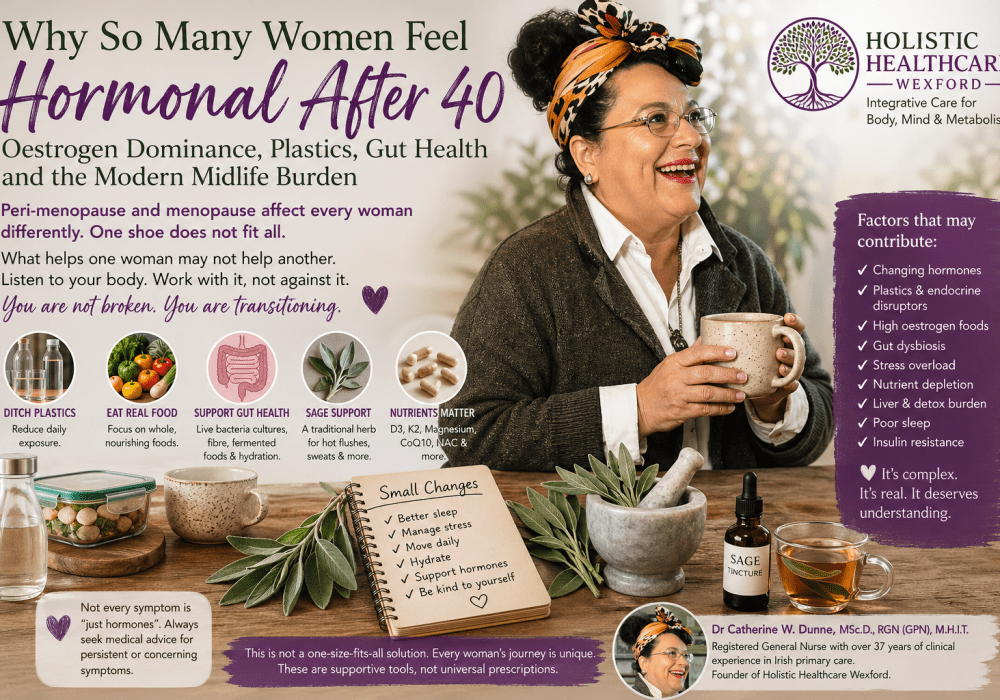
You are tired, irritable, bloated, anxious, forgetful, not sleeping properly, gaining weight around the middle, and feeling unlike yourself.
Yet blood tests may come back “normal”.
For many women over 35, especially through peri-menopause, this is where frustration begins. They know something has changed, but often feel unheard or dismissed.
One common pattern behind these symptoms is what is often called Oestrogen Dominance.
This does not always mean high oestrogen on a blood test. More often, it means oestrogen is relatively stronger than progesterone, or the body is struggling to process and clear hormones efficiently.
By Dr Catherine W. Dunne, MSc.D., RGN (GPN) Holistic Healthcare Wexford | Co-founder, Aumvedas Academy
What Does Oestrogen Dominance Mean?
Hormones work in balance, not isolation.
Oestrogen has many important roles. It supports bones, skin, mood, brain function, the cardiovascular system and reproductive health. But when it outweighs progesterone, symptoms can begin to appear.
This often happens during peri-menopause, when progesterone may fall sooner and faster than oestrogen.
The result can be a body that feels hormonally unsettled.
Common Signs Women Notice
heavier or irregular periods
breast tenderness
bloating and fluid retention
mood swings or irritability
anxiety or inner tension
poor sleep
headaches
brain fog
reduced stress tolerance
stubborn weight gain, especially midsection
feeling unlike yourself
And yes, many women simply know something is changing long before any test confirms it.
Walking into doorframes may also feature. We shall call that advanced hormonal navigation.
Many women enter their forties expecting a few hot flushes, some skipped periods, and perhaps the occasional mood swing. What they often get instead is a confusing collection of symptoms that seem to arrive all at once: bloating, weight gain around the middle, poor sleep, anxiety, breast tenderness, headaches, heavy or erratic periods, low mood, brain fog, irritability, and the unsettling feeling that they are somehow no longer themselves.
They go for blood tests. They are told everything is normal. They are advised to “manage stress” or accept that it is simply age.
Yet many women know in their bones that something has shifted.
One of the most common phrases used online to describe this experience is oestrogen dominance. It is not a formal medical diagnosis in the same way diabetes or hypothyroidism is, but it is often used to describe a very real pattern: when oestrogenic influence outweighs the balancing effects of progesterone, or when the body is carrying a broader hormonal burden that affects how a woman feels.
This does not always mean oestrogen is high on a blood test. More often, it means oestrogen is relatively stronger than progesterone, or the body is struggling to process, clear and regulate hormones efficiently. In other words, the issue may not be one hormone acting alone. It may be the whole terrain.
The Midlife Hormone Shift Begins Before Menopause
Many women assume menopause begins when periods stop. In reality, the turbulence often starts years earlier.
During perimenopause, ovulation becomes less predictable. Progesterone often declines first, while oestrogen may surge, dip or fluctuate wildly. This can create the classic picture associated with relative oestrogen excess: heavier periods, PMS-like symptoms, fluid retention, mood swings, poor sleep, breast tenderness, migraines and irritability.
When menopause arrives, periods cease, but symptoms do not necessarily vanish. Many women then face a new landscape of sleep disturbance, hot flushes, weight redistribution, vaginal dryness, anxiety, lowered resilience and fatigue.
Even post-menopause, hormones still matter. Fat tissue can continue to produce oestrogen through aromatase activity, lifestyle factors influence hormone metabolism, and environmental chemicals may continue to affect signalling pathways.
So no, the hormone story does not end at menopause. It simply changes chapter.
We Are the Plastic Container Generation
One part of the modern story that deserves far more attention is environmental exposure.
We became the convenience generation. We store food in plastic tubs, heat leftovers in plastic containers, drink water from bottles left in warm cars, wrap food in cling film, and begin our mornings with scalding tea or coffee in takeaway cups lined with plastic polymers and topped with plastic lids.
Many plastics contain compounds such as bisphenols, including BPA, BPS and BPF, as well as phthalates. These chemicals have been studied for their endocrine-disrupting potential, meaning they may interfere with natural hormone signalling.
The issue is not one takeaway coffee, one plastic lunchbox or one bottle of water. It is the small, repeated exposure over years.
Heat increases concern. Microwaving food in plastic, dishwashing worn containers repeatedly, pouring hot liquids into plastic-lined cups, or leaving bottles in sunlight may increase chemical migration. Even thermal till receipts have historically used bisphenol compounds, which can be absorbed through the skin.
This does not mean panic or perfectionism. It means awareness. Simple changes can reduce unnecessary load: use glass containers where possible, choose ceramic mugs, use stainless steel bottles, avoid heating food in plastic, and take a reusable cup for takeaway drinks.
Sometimes the body is not failing women. Sometimes the environment is working against them.
Food Quality Still Matters
Another overlooked area is the quality of the modern food supply.
One of the most significant concerns in discussions around oestrogen dominance is high-oestrogenic or hormonally disruptive food exposure. Commercially raised animals may be exposed to growth-promoting systems designed to increase size, speed of growth or milk production, depending on the country and farming system. Consumers are increasingly aware that what happens in the food chain does not magically stop at the plate.
Conventional produce may also carry residues from pesticides, herbicides and fungicides. Some of these compounds have been studied for endocrine-disrupting effects and may interfere with natural hormone activity, blood sugar regulation and metabolism. While residues may be present only in small amounts on individual fruits or vegetables, the concern is cumulative exposure over time.
This is why many people choose organic, local, pasture-raised or lower-intervention foods where feasible. Not out of fear, but because reducing the overall body burden makes sense.
Processed foods create a separate problem. Ultra-processed diets are often low in fibre, magnesium and protective plant compounds, while being high in refined sugars, additives, poor-quality fats and calorie density. This combination can worsen insulin resistance, inflammation and weight gain, all of which can influence hormone balance.
The real issue is rarely one “bad food”. It is the sum total of modern eating patterns.
Your Gut Helps Regulate Oestrogen
One of the most fascinating and under-discussed areas of women’s health is the gut-hormone connection.
The gut microbiome helps regulate circulating oestrogen through a group of bacterial genes often referred to as the estrobolome. These gut bacteria influence enzymes such as beta-glucuronidase, which are involved in whether oestrogens are eliminated from the body or reactivated and recirculated.
When gut flora is diverse and healthy, hormones are more likely to be processed and cleared efficiently. When gut balance is disturbed through repeated antibiotics, poor diet, chronic stress, constipation, alcohol excess, IBS-type patterns, dysbiosis or conditions such as SIBO, oestrogen recirculation may increase.
Many women with hormonal symptoms also report bloating, sluggish bowels, food sensitivities, recurrent thrush, IBS-type symptoms, and worsening PMS or peri-menopausal symptoms.
That is not coincidence.
Supporting gut health may include increasing fibre, vegetables, resistant starches, fermented foods where tolerated, adequate hydration and regular movement. In some cases, live bacteria cultures, often called probiotics, may help support gut flora and restore microbial balance, especially after antibiotics or periods of digestive disruption.
A healthy bowel habit is one of the least glamorous but most practical hormone tools available. Not glamorous, no. Useful? Absolutely.
Liver, Elimination and the Hormone Clearance Pathway
The liver plays a major role in processing hormones, including oestrogen. Once hormones have been metabolised by the liver, they still need to leave the body through bile and bowel elimination.
If a woman is constipated, inflamed, sleep deprived, nutrient depleted, drinking too much alcohol, under chronic stress or living on processed foods, the system can become less efficient. This does not mean the liver is “broken”. It means the workload is too high and the support is too low.
Good hormone clearance depends on the basics: enough protein, fibre, minerals, hydration, bowel regularity, sleep and reduced toxic load.
Simple, yes. Easy in modern life? Not always.
Where Sage Fits In
Sage is one of the old traditional women’s herbs that deserves renewed respect.
It has long been used for hot flushes, night sweats, excessive perspiration, digestive sluggishness, brain fog, and that overheated, unsettled feeling many women recognise during perimenopause and menopause.
Sage is not a magic hormone cure, and it should not be presented as something that “fixes” oestrogen dominance. Its value is more practical than that. It may support women through the symptoms of hormonal transition, especially where sweating, flushes and digestive heaviness are part of the picture.
The simplest form is sage tea. Use one teaspoon of dried sage leaf, or three to five fresh leaves, in a cup of hot water. Cover and steep for around ten minutes. One cup daily may offer gentle support, while up to two cups daily may be used during hot flush phases.
Sage tincture is another option, commonly taken as twenty to thirty drops in water once or twice daily, depending on product strength.
Regular culinary use also has value. Sage works beautifully in soups, roasted vegetables, stuffing, poultry dishes and savoury cooking. Small regular use often beats heroic one-off efforts.
Sage should be used cautiously in pregnancy, breastfeeding, seizure disorders, or where medications and health conditions require professional advice.
The Wild Yam Myth
For years, wild yam supplements were marketed as natural progesterone support.
Wild yam contains diosgenin, a plant compound used in laboratories as a starting material to manufacture steroid hormones. However, the human body does not naturally convert wild yam into progesterone. That conversion requires industrial processing.
So while some women may feel better using wild yam products, it should not be presented as equivalent to progesterone replacement.
Meanwhile, many women do not realise that in Ireland and Europe, regulated body-identical hormone therapies such as oestradiol and micronised progesterone are already available through licensed medical care and are generally preferred by professional menopause bodies over unregulated compounded alternatives.
That does not mean every woman needs HRT. It means women deserve accurate information rather than marketing fog.
Nutrients That Matter More Than Many Realise
Hormones do not work in isolation. They depend on healthy cells, nervous system balance, mineral sufficiency, mitochondrial energy and sleep.
This is why some women feel dramatically better when foundations are corrected.
Vitamin D3 is particularly relevant in Ireland, where low sunlight exposure is common. It functions more like a hormone messenger than a simple vitamin and influences mood, immunity and bone health.
Vitamin K2 is often paired with D3 to support healthy calcium handling.
Magnesium is one of the most important minerals for midlife women. It supports sleep, nervous system calm, muscle relaxation, blood sugar balance, vitamin D metabolism and stress resilience.
CoQ10 supports mitochondrial energy production and may be especially relevant in fatigue states, ageing and for women using statins.
NAC, or N-acetyl cysteine, supports glutathione pathways and antioxidant defence and is often discussed in relation to inflammation, metabolic health and resilience.
These are not magic pills. They are part of restoring the terrain in which hormones must function.
What Women Need Most
Many women do not need another lecture telling them to “just relax”.
They need a proper conversation that recognises the complexity of modern midlife health.
They may be dealing with changing hormones, sleep debt, stress overload, mineral depletion, low vitamin D, insulin resistance, environmental chemical burden, gut imbalance, caring responsibilities and years of putting everyone else first.
That is not a minor issue. That is a full-body systems load.
And yes, walking into doorframes, forgetting why you entered a room and losing your words mid-sentence may also feature. We shall call that advanced hormonal navigation.
What Can Help Practically?
The answer is rarely one tablet, one test or one buzzword. It is usually a return to fundamentals.
Eat enough protein. Build meals around real food. Increase fibre gradually. Support bowel regularity. Reduce plastic exposure where possible. Stop heating food in plastic. Choose better-quality food where feasible. Move daily. Strength train if able. Prioritise sleep. Correct nutrient deficiencies. Support gut flora. Reduce alcohol. Use herbs wisely. Seek medical support when symptoms are significant.
And most importantly, listen to the body before it has to shout.
One Size Does Not Fit All
It is also important to say this clearly: no two women experience perimenopause, menopause or post-menopause in exactly the same way.
One woman may struggle mainly with sleep and anxiety. Another may have heavy bleeding and migraines. Another may have hot flushes, joint aches, weight gain, vaginal dryness, low mood, or no major symptoms at all.
This is why the suggestions in this article should not be treated as a “one-for-all” prescription. They are general educational supports, not a personalised treatment plan. What helps one woman may not suit another, especially where medications, medical history, hormone-sensitive conditions, thyroid issues, diabetes, mental health concerns or other factors are involved.
Women deserve individualised care, not a conveyor-belt approach. Midlife health is not a template. It is a conversation.
Important Reality Check
Not every symptom in midlife is “just hormones”.
Persistent heavy bleeding, severe pain, sudden changes, unexplained weight loss, profound fatigue, depression, palpitations, post-menopausal bleeding or concerning symptoms deserve proper medical review.
Women should not be dismissed, but neither should everything be blamed on hormones without careful assessment.
Final Thought
Perimenopause and menopause do not create weakness. They reveal where the body has been carrying strain for years.
When women understand that, everything changes.
The body is not being dramatic. It is communicating.
Sometimes healing begins not with being told that everything is normal, but with finally being understood.
I hope you feel inspired. Look after your body, and it will keep you healthy.
Dr Catherine W. Dunne MSc.D. is a Registered General Nurse with over 37 years of clinical experience in primary care in Ireland. Alongside her work in General Practice Nursing, she is the founder of Holistic Healthcare Wexford and co-founder of Aumvedas Academy.
With a background that bridges conventional medicine and holistic practice, Catherine has a particular interest in the area where patients are often told “everything is normal,” yet still feel unwell. Her work focuses on helping people understand what their body is communicating, especially in relation to energy, stress, metabolic function, and recovery.
Through a combination of clinical knowledge and holistic support, she works with individuals to restore balance, improve resilience, and support long-term wellbeing.
Based in Wexford, Ireland.
Disclaimer
This article is for informational and educational purposes only and is not intended as medical advice. It does not replace consultation with a qualified healthcare professional. Patients should always seek appropriate medical guidance regarding their individual health needs and before making changes to treatment or care.
We often hear the phrase “keep hoping”. It is offered with kindness, especially during difficult times. Illness, grief, uncertainty, financial strain, heartbreak. Hope is handed out like a warm blanket.
But lately I have been wondering if hope, on its own, is always as powerful as we think.
Hope can sometimes leave a person waiting.
“I hope things improve. I hope I feel better. I hope someone helps. I hope life changes.“
By Dr Catherine W. Dunne, MSc.D., RGN (GPN) Holistic Healthcare Wexford | Co-founder, Aumvedas Academy
There is nothing wrong with hope in itself. It can be a spark in dark times. It can carry someone through a difficult night. But hope often contains uncertainty. It leans on something outside ourselves. It waits for tomorrow.
Faith feels different.
Faith is steadier. Faith is deeper. Faith says:
I trust there is a way forward. I believe I can meet what comes. I know I will not be broken by this. I trust that even in difficulty, something meaningful can grow.
This matters in modern life because many people are left in a state of constant waiting. Waiting for better news. Waiting for better health. Waiting for the perfect moment. Waiting for someone else to fix what feels broken.
Faith does not always require religion. Faith can be spiritual, personal, practical, or deeply human. It can be faith in God, faith in life, faith in truth, faith in your own resilience.
Hope asks for a result. Faith strengthens the person.
Waiting can quietly drain the spirit.
Faith, by contrast, invites movement.
A person with faith still takes action. They rest when needed. They seek help when needed. They change habits. They keep walking. They do not sit frozen at the roadside asking life for permission.
This can apply to health as much as anything else.
Many people say, “I hope I get better.”
A more powerful shift may be:
I believe my body can respond to support. I trust small steps matter. I know healing often begins quietly.
That change in language can change posture, mindset, and energy.
Hope may light the candle. Faith keeps it burning when the wind arrives.
Perhaps what many people need today is not less hope, but deeper foundations beneath it.
Hope with action. Hope with courage. Hope supported by faith.
Because when life becomes uncertain, faith helps us stand while hope alone may keep us seated.
And sometimes standing is where healing begins.
I hope you feel inspired. Look after your body, and it will keep you healthy.
Dr Catherine W. Dunne MSc.D. is a Registered General Nurse with over 37 years of clinical experience in primary care in Ireland. Alongside her work in General Practice Nursing, she is the founder of Holistic Healthcare Wexford and co-founder of Aumvedas Academy.
With a background that bridges conventional medicine and holistic practice, Catherine has a particular interest in the area where patients are often told “everything is normal,” yet still feel unwell. Her work focuses on helping people understand what their body is communicating, especially in relation to energy, stress, metabolic function, and recovery.
Through a combination of clinical knowledge and holistic support, she works with individuals to restore balance, improve resilience, and support long-term wellbeing.
Based in Wexford, Ireland.
Disclaimer
This article is for informational and educational purposes only and is not intended as medical advice. It does not replace consultation with a qualified healthcare professional. Patients should always seek appropriate medical guidance regarding their individual health needs and before making changes to treatment or care.
Back in 2022 I wrote the original post “Who Heals the Healer?” Doctors, Nurses, Therapists, Clergy, and other Healing Providers
CWD 25/10/2022 Ireland
Who heals the Healers?
We are all in danger of burnouts, but Doctors and us Nurses really do “feel” that pulling at the very essence of our being.
These are very stressful times and many are sick. Physically and emotionally. Usually you would attend your Family Doctor – GP for physical or organic help, or you may attend a Clergy or Therapist for emotional help … or, God forbid you end up on the hospital trolley in A&E (ER). And as you are now in their presence, looking for help, have you given the Healthcare Provider – Doctors, Nurses, Therapists, Clergy – a Thought of Your Time? Who Heals the Healer?
We are by no means immune to cases coming in and some touch us profoundly and we “bring it home”; something we were all taught, never to do. And to quote Rag’n’Bone Man: “I’m only human after all” – at the end of the day, that is exactly who we all are: Human.
Healing for Healers is a unique approach to address compassion fatigue, to listen to your body, and to connect to your inheritance. This includes both your inherited burdens and the true gifts of your lineage. You learn how to release what does not serve you, repair deep wounds, restore balance to the body, and replenish your energy and life force. As healers and care providers it is imperative to have a safe and containing place to receive this kind of support. It is possible to give and care for others while still honouring and providing for your own needs and health. …
Now, 4 years on, nothing really has changed, yet something shifted.
By Dr Catherine W. Dunne, MSc.D., RGN (GPN) Holistic Healthcare Wexford | Co-founder, Aumvedas Academy
Caring for Those Who Carry Everyone Else
There is a quiet group of people in society who are often praised, relied upon, and leaned upon… yet rarely asked a simple question:
How are you, really?
They are the nurses finishing a shift while carrying the weight of three others. The carers supporting ageing parents while raising children. The therapists holding space for grief, trauma, and fear. The doctors making decisions under pressure. The clergy listening to pain few others ever hear. The mothers, fathers, partners, neighbours, and friends who are always “the strong one.”
They are the helpers.
And too often, the helpers are exhausted.
The Cost of Always Being the One Who Copes
Many caring people become experts at functioning while depleted.
They keep going through tiredness. They smile through stress. They minimise their own needs. They tell themselves others have it worse. They postpone rest until “things calm down.”
But the body keeps score.
Stress may begin to show itself through:
poor sleep
anxiety
irritability
fatigue
headaches
muscle tension
lowered resilience
emotional numbness
feeling detached from work once loved
Sometimes it is not weakness. Sometimes it is overload.
“Healers are uniquely vulnerable to burnout because they constantly hold space for others’ pain, regulate heavy emotions, and witness trauma without always receiving the same support in return.”
Burnout Is Not a Personal Failure
We live in a culture that often rewards self-sacrifice and calls it strength.
Yet there comes a point where constant output without replenishment becomes unsustainable. Burnout is not laziness. It is often the natural consequence of prolonged stress, responsibility, and emotional labour without enough recovery.
Even the strongest nervous system has limits.
Who Holds the Holder?
This is the real question.
Who listens to the one who is always listening? Who comforts the one who comforts others? Who notices when the capable one is quietly sinking?
Many healers, carers, and professionals do not need grand solutions.
Often they need:
permission to pause
somewhere safe to speak honestly
rest without guilt
support without judgement
practical help
human kindness
time in nature
space to breathe again
Healing the Healer
Healing does not always mean leaving everything behind and moving to a mountain hut with goats. Though tempting.
Sometimes healing begins with small acts:
A proper meal. An early night. A walk by the sea. Turning the phone off for an hour. Massage. Prayer. Silence. Laughter. Boundaries. Saying no. Asking for help.
Small repairs done consistently can save a structure.
A Message to Every Helper Reading This
You are allowed to matter too.
You do not need to collapse before you deserve care. You do not need to prove your exhaustion. You do not need to earn rest through breaking point.
The world needs good healers, carers, nurses, therapists, parents, and kind-hearted people.
But it also needs them well.
Final Thought:
Restoration for healers relies on four key pillars: grounding the body through gentle movement, restoring mental and emotional balance through breathwork, nature walks, reflective practice, or quiet recovery time, nourishing the system with rest and wholesome food, and ensuring they are supported by others through therapy, supervision, or peer circles. Ignoring these needs can lead to depletion, where healers operate from a state of exhaustion rather than resilience, ultimately compromising their ability to care for others effectively.
So perhaps the question is no longer only Who heals the healer?
Perhaps it is:
When will the healer allow healing in?
I hope you feel inspired. Look after your body, and it will keep you healthy.
Dr Catherine W. Dunne is a Registered General Nurse with over 37 years of clinical experience in primary care in Ireland. Alongside her work in General Practice Nursing, she is the founder of Holistic Healthcare Wexford and co-founder of Aumvedas Academy.
With a background that bridges conventional medicine and holistic practice, Catherine has a particular interest in the area where patients are often told “everything is normal,” yet still feel unwell. Her work focuses on helping people understand what their body is communicating, especially in relation to energy, stress, metabolic function, and recovery.
Through a combination of clinical knowledge and holistic support, she works with individuals to restore balance, improve resilience, and support long-term wellbeing.
Based in Wexford, Ireland.
Disclaimer
This article is for informational and educational purposes only and is not intended as medical advice. It does not replace consultation with a qualified healthcare professional. Patients should always seek appropriate medical guidance regarding their individual health needs and before making changes to treatment or care.
By Dr Catherine W. Dunne, MSc.D., RGN (GPN) Holistic Healthcare Wexford | Co-founder, Aumvedas Academy
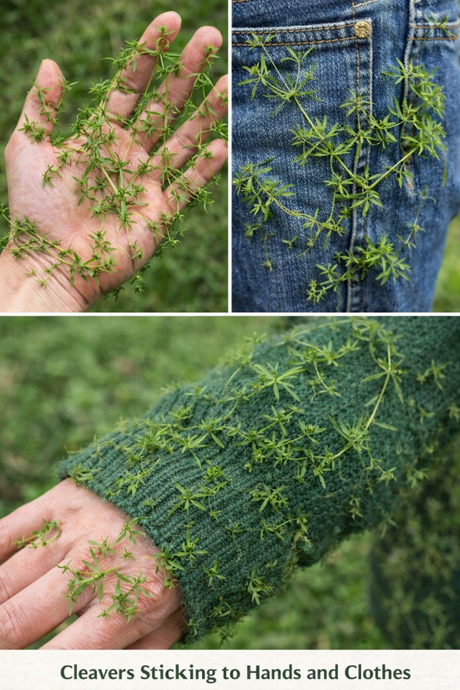
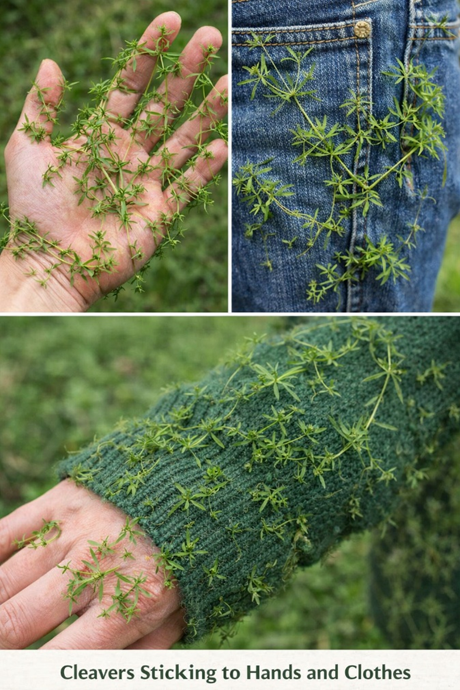
At this time of year, cleavers starts appearing everywhere. It weaves its way through hedgerows, climbs over other plants, and sticks to your clothes as you pass.
Most people know it as “that clingy weed” and cut it back without a second thought.
It’s a pity – because it’s one of the most useful seasonal herbs growing right outside the door.
Cleavers (Galium aparine) has a long history of traditional use, particularly in supporting the lymphatic and urinary systems. While modern research is still developing, there is enough evidence, combined with long-standing herbal practice, to show it has a valuable role when used correctly.
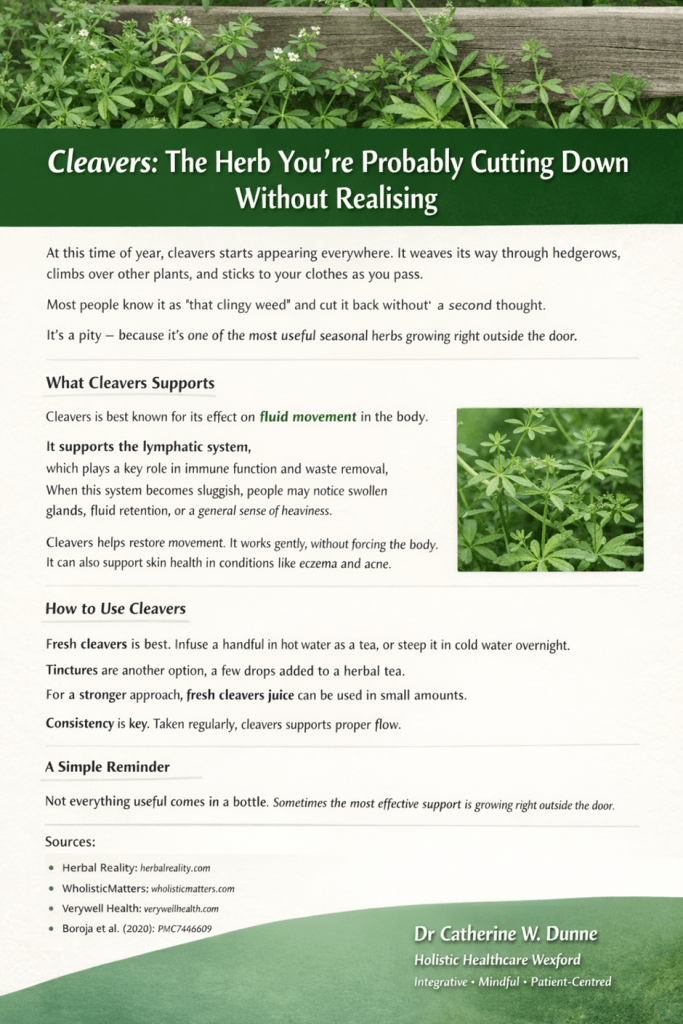
What Cleavers Supports
Cleavers is best known for its effect on fluid movement in the body.
It supports the lymphatic system, which plays a key role in immune function and waste removal. When this system becomes sluggish, people may notice swollen glands, fluid retention, or a general sense of heaviness.
Cleavers helps restore movement. It works gently, without forcing the body, making it suitable for ongoing use over a period of time.
There is also a clear link between lymphatic congestion and skin health. Conditions such as eczema, acne, and psoriasis can sometimes reflect what is happening internally. Supporting lymphatic flow may help improve these from the inside out.
In addition, cleavers has mild diuretic properties, helping the kidneys process and eliminate excess fluid. It is also recognised for its anti-inflammatory and antioxidant compounds, which contribute to its overall supportive role.
How to Use Cleavers
Fresh cleavers is always the best option when available.
A simple way to use it is as a tea. A handful of fresh herb can be infused in hot water and taken once or twice daily. It can also be prepared as a cold infusion, which preserves some of its more delicate constituents and is particularly suitable in warmer or more inflammatory conditions.
Cleavers can also be taken as a tincture. A few drops added to a warm herbal tea such as nettle or red clover is an easy and practical way to take it.
For those who prefer a stronger approach, fresh cleavers juice has traditionally been used in small amounts.
As with any herb, consistency matters more than intensity. Taken regularly over time, cleavers supports the body in restoring proper flow.
Cleavers Benefits:
Strong, consistent evidence:
Lymphatic support
Diuretic action
Skin link
Anti-inflammatory properties
Emerging / suggestive:
Immune modulation
A Simple Reminder:
Not everything useful comes in a bottle.
Sometimes the most effective support is already growing nearby – unnoticed and often removed before it’s ever given a chance.
Dr Catherine W. Dunne is a Registered General Nurse with over 37 years of clinical experience in primary care in Ireland. Alongside her work in General Practice Nursing, she is the founder of Holistic Healthcare Wexford and co-founder of Aumvedas Academy.
With a background that bridges conventional medicine and holistic practice, Catherine has a particular interest in the area where patients are often told “everything is normal,” yet still feel unwell. Her work focuses on helping people understand what their body is communicating, especially in relation to energy, stress, metabolic function, and recovery.
Through a combination of clinical knowledge and holistic support, she works with individuals to restore balance, improve resilience, and support long-term wellbeing.
Based in Wexford, Ireland.
Disclaimer
This article is for informational and educational purposes only and is not intended as medical advice. It does not replace consultation with a qualified healthcare professional. Patients should always seek appropriate medical guidance regarding their individual health needs and before making changes to treatment or care.
“Moringa tea won’t fix you – but it will quietly support you.”
Moringa has been called everything from a “miracle tree” to a “superfood powerhouse.” And like most things that get that level of attention, the truth sits somewhere in the middle.
So let’s strip it back – no hype, no dismissal – just what actually matters.
By Dr Catherine W. Dunne, MSc.D., RGN (GPN) Holistic Healthcare Wexford | Co-founder, Aumvedas Academy
Let us look at what generalised information is given to us, when we see their ads flashing past us on Social Media Posts:
Moringa oleifera is a plant with numerous health benefits that have withstood the test of time. The leaves have been utilized as food medicine for thousands of years. (There are, however, side-effects with the root and the bark (listed below), so avoid them.)
Moringa leaves and flowers were first discovered around 2,000 BC in northern India where traditional physicians quickly became aware of the therapeutic value. As a result of the leave’s high levels of valuable nutrients, moringa was diligently used by members of royal families and other aristocrats.
Moringa, the “Miracle Tree” contains over 92 Nutritional Values – all in perfect balance! Vitamins: A (Alpha and Beta-Carotene), A B-Complex, C, D, E, K, Folate, Biotin, and many more.
All 18 Amino Acids and many other beneficial nutrients, like Chlorophyll, Carotenoids, Flavonoids, Omega (3,6,9) Oils, Plant Sterols, Polyphenols, and still more.
While this sounds impressive, the presence of nutrients does not automatically translate into a therapeutic effect in the body.
Multiple studies show consuming moringa can improve blood sugar response. This is likely, at least in part, due to its fibre and protein content. This nutritional profile helps lower and level out blood sugar spikes. And balanced blood sugar is crucial for hormonal health, a healthy weight, and energy levels.
Antibacterial properties: This plant produces substances to protect itself from bacteria in its environment. We receive these same antibacterial properties when we eat or apply it topically. In fact, in a 2011 study, researchers discovered that moringa extract inhibits the growth of S. aureus, V. parahaemolyticus, E. faecalis, and A. caviae.
Speeds healing: Traditionally, many use moringa as a poultice to speed wound healing. We now have research to support that: Applying moringa to wounds can enhance wound healing. Moringa encourages blood clotting at the site of a wound. This shortens the time it takes to repair damage and speeds wound healing time.
Facilitates sleep: As a protein-rich food, moringa packs an assortment of amino acids, some of which (most notably tryptophan) are the backbone of sleep-inducing hormones, like melatonin, priming the body for improved and more restful sleep.
Lowers cholesterol: Moringa may also lower cholesterol, thanks to high levels of fibre and plant sterols. In a rabbit study, it lowered cholesterol and reduced plaque in the arteries as effectively as medication, without the side-effects.
Reduces severity of asthma: In one of the few human clinical trials on the plant, adults with asthma took 3 grams of moringa twice daily (added to food) for three weeks. Moringa not only reduced asthma symptoms, but also reduced the severity of asthma attacks.
Reduces inflammation: As with all plant-based foods, a number of studies show moringa contains phytochemicals that act as anti-inflammatories. Because inflammation is at the root of many diseases, the plant may help protect the body from long-term issues like arthritis, Crohn’s disease, and even chronic pain. (https://pmc.ncbi.nlm.nih.gov/articles/PMC9916933/)
This PubMed study states: “While the entire tree has antitumor activity, the sex hormone-related property is attributable to its ROOT, folk medicine use has also proven.” (I hear the root has been used as an abortifacent in India). “This plant has been studied in relation to diabetes and thyroid function.” (https://pmc.ncbi.nlm.nih.gov/articles/PMC12003216/)
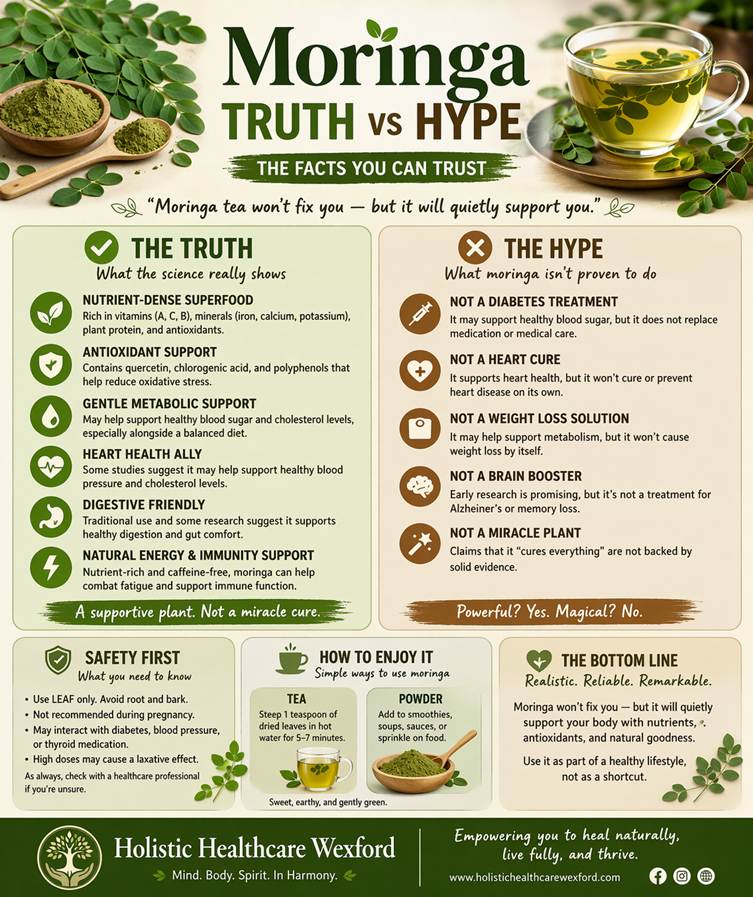
Moringa: Truth vs Hype
What Moringa Actually Is
Moringa (Moringa oleifera) is a leafy plant traditionally used as both food and medicine, particularly in parts of India and Africa.
The leaves are the part most commonly used and importantly, the safest.
They contain:
Plant protein
Minerals like calcium, iron, and magnesium
Vitamins (especially beta-carotene and vitamin C)
Antioxidants such as quercetin and chlorogenic acid
👉 In simple terms: It’s a very nutrient-dense green.
Where the Hype Comes From
You’ll often see claims like:
lowers blood sugar
reduces cholesterol
boosts immunity
aids weight loss
supports brain health
Now, here’s the important part:
👉 Most of these claims come from:
small studies
animal research
or early-stage trials
That doesn’t make them false, but it does mean they are not strong enough to stand as treatments.
What Moringa Can Genuinely Do
When you remove the exaggeration, moringa sits in a very useful place:
1. Nutritional Support
It can help in:
fatigue
recovery
low nutrient intake
Think of it as: 👉 “filling in the gaps” rather than correcting disease
2. Antioxidant Support
Its plant compounds help:
reduce oxidative stress
support the body’s natural repair processes
Not dramatic — but quietly helpful over time.
3. Gentle Metabolic Support
There is some evidence it may:
support blood sugar balance
assist lipid (cholesterol) profiles
But: 👉 this is supportive, not therapeutic
What It Does NOT Do
Let’s be clear — because this is where people get misled.
Moringa does not:
treat diabetes
replace cholesterol medication
cause weight loss
“boost” immunity in any direct way
If something claims to do all of the above…
👉 it’s being oversold.
Who It May Suit
Moringa tea or powder can be useful for:
people feeling run down or depleted
those recovering from illness
general nutritional support
mild inflammatory states
It fits best as part of: 👉 a wider approach — not a standalone solution
Safety – What You Need to Know
Use leaf only (avoid root and bark)
Avoid in pregnancy as a precaution
Be mindful if taking:
diabetes medication
blood pressure medication
thyroid medication
As always: 👉 more is not better
How to Use It
Simple and effective:
Tea: 1 teaspoon dried leaf Steep 5–7 minutes
Powder: Add to smoothies, soups, or food
👉 Consistency matters more than dose.
Final Thought
Moringa doesn’t need exaggeration.
It’s not a miracle. It’s not a cure.
But it is:
👉 a steady, supportive plant that earns its place quietly
And in a world full of noise…
that’s often exactly what the body needs.
I hope you feel inspired. Look after your body, and it will keep you healthy.
Dr Catherine W. Dunne is a Registered General Nurse with over 37 years of clinical experience in primary care in Ireland. Alongside her work in General Practice Nursing, she is the founder of Holistic Healthcare Wexford and co-founder of Aumvedas Academy.
With a background that bridges conventional medicine and holistic practice, Catherine has a particular interest in the area where patients are often told “everything is normal,” yet still feel unwell. Her work focuses on helping people understand what their body is communicating, especially in relation to energy, stress, metabolic function, and recovery.
Through a combination of clinical knowledge and holistic support, she works with individuals to restore balance, improve resilience, and support long-term wellbeing.
Based in Wexford, Ireland.
Disclaimer
This article is for informational and educational purposes only and is not intended as medical advice. It does not replace consultation with a qualified healthcare professional. Patients should always seek appropriate medical guidance regarding their individual health needs and before making changes to treatment or care.
By Dr Catherine W. Dunne, MSc.D., RGN (GPN), M.H.I.T. Holistic Healthcare Wexford
There’s a short window in spring when stinging nettle is at its best.
The young shoots are tender, vibrant, and full of life. They haven’t toughened yet, and interestingly, they’re far less “stingy” to handle when picked correctly.
This is when nettle shifts from being a nuisance in the garden… to one of the most useful plants you can bring into your daily routine.
Why Spring Nettles Are Different
Young nettle leaves are rich in:
Natural enzymes
Vitamin C
Iron
Magnesium
Calcium
Chlorophyll
Plant compounds that help reduce oxidative stress
At this stage, the plant is in active growth. Everything is moving, building, and regenerating.
And that’s exactly what it offers the body.
WHAT NETTLE TEA SUPPORTS
A simple cup of nettle tea, taken regularly, can do far more than most people expect. It works quietly in the background, supporting the body where it needs it most.
Antioxidant support
Nettle helps reduce free radical activity in the body.
This matters more than people realise. Oxidative stress is linked to fatigue, inflammation, skin issues, and slower recovery.
A daily nettle tea is a quiet way of supporting the body at that level.
Support for heavy periods (young girls & women)
This is one of the old uses and still one of the most relevant.
Nettle:
Supports iron levels
Helps maintain energy
Provides minerals needed during blood loss
Nettle provides natural support for iron levels, helping maintain energy during heavier menstrual cycles. It also supplies key minerals the body draws on during blood loss.
Taken as a tea, it offers gentle support without complication.
Skin support – especially teenagers
When skin is flaring, spots, congestion, breakouts, the body is often:
Under pressure
Slightly inflamed
Not clearing waste efficiently
The body often reflects internal imbalance rather than just surface issues.
Nettle supports the body by helping reduce inflammatory load, improving nutrient availability, and encouraging natural internal “clearing.”
It’s not a quick fix, but taken daily and over time, it brings a steadiness the skin responds well in a noticeable way, too.
Bladder and urinary support
Even as a simple tea, nettle supports normal kidney and urinary function.
It gently encourages fluid movement through the body without being harsh or depleting. This makes it particularly useful when the system feels sluggish or under strain.
It’s not harsh. It doesn’t deplete.
It supports the body in doing what it’s meant to do anyway.
How to Use It
Nettle doesn’t need complicated preparation. In fact, its strength lies in its simplicity.
A teaspoon or two of dried nettle steeped in hot water for 10–15 minutes is enough to create a mineral-rich infusion.
Taken once or twice daily, it becomes a steady support rather than a quick intervention.
Fresh young nettle in spring can also be used in soups or lightly steamed, offering the same benefits in a more food-based form.
With nettle, consistency matters far more than quantity.
RECAP:
✔️ Fresh nettle (spring)
Pick young tops (gloves recommended)
Use in soups, broths, or lightly steamed
Can also be used fresh for tea
✔️ Tea
1–2 teaspoons dried nettle per cup
Steep 10–15 minutes
Drink 1–3 cups daily
Consistency matters more than quantity.
A few practical notes
Avoid picking near roadsides or sprayed areas
If on diuretics or blood pressure medication, just be mindful
Pick young leaves in spring, when the plant is at its most vibrant
Avoid roadside or sprayed areas
Use gloves when harvesting fresh nettle
In most cases, nettle as a tea is safe and well tolerated
Final Thought
Nettle isn’t exotic. It’s not expensive. It doesn’t come in a glossy package.
And yet, every spring, it shows up offering exactly what the body often needs:
👉 nourishment 👉 support 👉 balance
Sometimes the simplest plants are the ones worth paying attention to.
I hope you feel inspired. Look after your body, and it will keep you healthy.
Dr Catherine W. Dunne is a Registered General Nurse with over 37 years of clinical experience in primary care in Ireland. Alongside her work in General Practice Nursing, she is the founder of Holistic Healthcare Wexford and co-founder of Aumvedas Academy.
With a background that bridges conventional medicine and holistic practice, Catherine has a particular interest in the area where patients are often told “everything is normal,” yet still feel unwell. Her work focuses on helping people understand what their body is communicating, especially in relation to energy, stress, metabolic function, and recovery.
Through a combination of clinical knowledge and holistic support, she works with individuals to restore balance, improve resilience, and support long-term wellbeing.
Based in Wexford, Ireland.
Disclaimer The information provided in this article is for general educational purposes only and is not intended as medical advice, diagnosis, or treatment. While every effort is made to ensure accuracy, individual health needs can vary. Always consult your GP or a qualified healthcare professional before making changes to your health routine, especially if you have an existing condition, are taking medication, or are pregnant.
By Dr Catherine W. Dunne, MSc.D., RGN (GPN), M.H.I.T. Holistic Healthcare Wexford | Co-founder, Aumvedas Academy
In everyday clinical practice, there is a quiet shift happening.
Patients are no longer relying solely on conventional medical care. Alongside prescribed treatments, many are turning to mindfulness, herbal medicine, traditional systems such as Ayurveda, and other complementary approaches to support their health.
What is striking is not that this is happening but that it is often happening without discussion.
Patients frequently do not disclose these choices. Not because they are careless, but because they anticipate dismissal. Over time, this has created a subtle but important gap in care, one where clinical oversight is absent, not by design, but by disconnect.
Patients Are Already There
This shift is not theoretical.
It is visible in daily practice:
Patients using breathing techniques to manage anxiety
People adopting dietary patterns based on traditional systems
A growing reliance on self-guided health approaches
Whether acknowledged or not, this is now part of modern healthcare behaviour.
The question is no longer if patients are engaging with these approaches, but whether healthcare is willing to recognise it.
Mindfulness: A Practical Clinical Tool
Mindfulness has moved beyond the realm of “wellness” and into something far more practical.
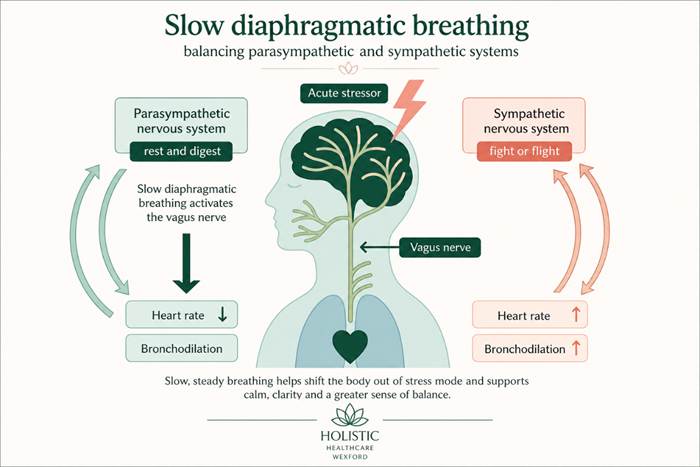
At its core, it supports regulation of the nervous system.
In clinical terms, this translates to:
Reduced sympathetic overdrive
Improved vagal tone
Better emotional regulation
Support in chronic stress, pain, and fatigue
For many patients, it is not an abstract concept. It is a tool that helps them cope, function, and stabilise.
And as one colleague recently put it: ‘sometimes it is the very thing that keeps a person steady in the middle of overwhelming pressure.’
Ayurveda and Observational Medicine
Long before laboratory diagnostics, systems such as Ayurveda developed structured ways of understanding human health.
These systems observed:
Individual constitution and variability
Digestive strength and metabolic patterns
The impact of routine, environment, and rhythm
While the language differs from modern medicine, the underlying principle is familiar:
People respond differently.
In clinical practice, we see this every day; variability in response to medication, recovery time, tolerance, and resilience.
Ancient systems simply approached this from a different starting point.
Where Metaphysics Meets Physiology
There is also a layer of health that is harder to measure, but impossible to ignore.
Thought patterns influence stress responses. Beliefs shape behaviours. Emotional states affect physiology.
We see this reflected in:
Chronic stress conditions
Sleep disturbance
Immune function
Recovery outcomes
We may not yet quantify every aspect of this, but its impact is visible in patient presentation and progression.
Ignoring it does not make it irrelevant.
The Irish Context: A Growing Divide
In Ireland, there remains a cautious, at times resistant, stance toward complementary approaches within formal healthcare structures.
Meanwhile, patients are moving in a different direction.
Patients are seeking:
Holistic support
Preventative approaches
Greater involvement in their own care
In contrast, other healthcare systems, such as in parts of Europe, have begun integrating complementary medicine into training and practice.
This creates an uncomfortable reality:
Patients are moving forward. Healthcare policy, in many cases, is standing still.
The Role of the Practitioner
This is not about replacing conventional medicine.
It is about acknowledging what is already happening and responding responsibly.
The role of the practitioner is to:
Create a space where patients feel safe to disclose
Understand potential interactions and risks
Offer grounded, evidence-informed guidance
Support without dismissing
Because when communication is absent, risk increases.
And when patients feel heard, care improves.
Closing Reflection
Patients are not waiting for permission to explore these approaches, they are already doing so.
The real question is whether healthcare chooses to ignore this shift, or to engage with it in a way that is safe, informed, and grounded in practice.
I hope you feel inspired. Look after your body, and it will keep you healthy.
Catherine

CWD 03 April 2026/Ireland
About the Author
Dr Catherine W. Dunne, MSc.D., RGN (GPN), M.H.I.T., is a Registered General Nurse with over 37 years of clinical experience in primary care in Ireland. Alongside her work in General Practice Nursing, she is the founder of Holistic Healthcare Wexford and co-founder of Aumvedas Academy.
With a background that bridges conventional medicine and holistic practice, Catherine has a particular interest in the area where patients are often told “everything is normal,” yet still feel unwell. Her work focuses on chronic disease management, metabolic health, and integrative approaches to patient care, combining clinical knowledge with evidence-informed complementary therapies.
She works with individuals to better understand what their body is communicating, particularly in relation to stress, energy, recovery, and overall resilience, supporting long-term wellbeing through a grounded, patient-centred approach.
Based in Wexford, Ireland.
Disclaimer
This article is for informational and educational purposes only and is not intended as medical advice. It does not replace consultation with a qualified healthcare professional. Patients should always seek appropriate medical guidance regarding their individual health needs and before making changes to treatment or care.
By Dr Catherine W. Dunne, MSc.D., RGN (GPN), M.H.I.T. Holistic Healthcare Wexford
YOU ARE NOT IMAGINING IT
Many people are told the same thing: “Your blood tests are normal.” And yet… you don’t feel normal.
Your energy is low. Your sleep isn’t refreshing. Your mood feels flat, anxious, or unpredictable. Your body just doesn’t feel right.
This is more common than you might think. And importantly: It does not mean nothing is wrong.
NORMAL” DOES NOT MEAN OPTIMAL
Standard blood tests are designed to detect disease. They are not designed to assess how well your body is functioning day to day.
A result can sit comfortably within range, yet still be:
low for your individual needs
poorly utilised by the body
insufficient during times of stress or recovery
This is where many people fall through the gap.
IT’S NOT JUST WHAT YOU TAKE, IT’S WHAT YOUR BODY CAN USE
You might be:
eating well
taking supplements
doing all the right things
And still feel depleted.
Why?
Because the body relies on multiple steps:
digestion
absorption
transport
cellular uptake
If any part of that chain is under strain, you can feel the effects long before anything shows up on a lab report.
THE MISSING PIECE IS OFTERN THE NERVOUS SYSTEM
One of the most overlooked factors is nervous system load. Modern life keeps the body in a constant state of low-grade stress, ongoing alertness, and overstimulation. Over time, this begins to affect energy production, sleep quality, digestion, and hormone balance.
Many people describe it simply as: “I can’t switch off.” That alone can keep the body from restoring properly.
THIS IS WHERE WHOLISTIC CARE COMES IN.
In practice at Holistic Healthcare Wexford, this pattern shows up more and more frequently. People often arrive feeling dismissed, frustrated, and unsure where to turn next. This work is not about replacing medical care. It is about supporting the body’s function, identifying where things are under strain, and helping the system return to balance.
This may include nervous system support, targeted nutritional guidance, and gentle, body-led therapies.
YOU ARE NOT “FINE”. YOU ARE EARLY.
Feeling “off” is often an early signal, not a dead end.
Your body is communicating. It just hasn’t reached the point of disease. And that is exactly where the greatest opportunity for change exists.
WHAT YOU CAN DO NEXT
If this resonates with you, start simple:
Pause and acknowledge how you actually feel
Look at your sleep, stress, and daily load
Do not dismiss your symptoms just because tests are “normal”
If you feel you need support:
A holistic consultation can help you make sense of what your body is showing you and what to do next.
FINAL THOUGHT
You know your body. If something feels off, it is worth listening. Not everything shows up on paper. But that does not make it any less real.
I hope you feel inspired. Look after your body, and it will keep you healthy.
Catherine
CWD 01 April 2026/Ireland
About the Author
Dr Catherine W. Dunne is a Registered General Nurse with over 37 years of clinical experience in primary care in Ireland. Alongside her work in General Practice Nursing, she is the founder of Holistic Healthcare Wexford and co-founder of Aumvedas Academy.
With a background that bridges conventional medicine and holistic practice, Catherine has a particular interest in the area where patients are often told “everything is normal,” yet still feel unwell. Her work focuses on helping people understand what their body is communicating, especially in relation to energy, stress, metabolic function, and recovery.
Through a combination of clinical knowledge and holistic support, she works with individuals to restore balance, improve resilience, and support long-term wellbeing.
Based in Wexford, Ireland.
Disclaimer
The information provided in this article is for educational purposes only and is not intended as medical advice. Always consult a qualified healthcare professional before starting any new supplement or health intervention.
You can take Vitamin D, Magnesium, and Calcium—and still not get the results you expect. Sometimes, the missing piece is not what you take, but what helps your body use it.
By Dr Catherine W. Dunne, MSc.D., RGN (GPN) Holistic Healthcare Wexford
Boron is one of those nutrients.
It may only be required in trace amounts, but its impact on bone health, hormones, inflammation, and Vitamin D function makes it a valuable addition to a well-structured health plan.
Bone Health: More Than Just Calcium
When it comes to bones, most people think of Calcium. But Calcium alone is only part of the picture.
Boron helps the body to improve Calcium retention, enhance Magnesium utilisation, and support Vitamin D activation. This creates a more efficient system for maintaining bone density and strength.
Emerging research also suggests Boron may help reduce joint discomfort and stiffness, particularly in osteoarthritis, by supporting a balanced inflammatory response.
In clinical practice, this is often seen in patients whose bone markers or symptoms do not improve despite adequate Calcium and Vitamin D intake.
A Natural Anti-Inflammatory Support
Chronic, low-grade inflammation is at the root of many modern health concerns.
Boron has been shown to reduce inflammatory markers such as CRP, modulate immune responses, and support tissue recovery.
This makes it a useful addition in cases of joint pain, post-viral fatigue, and general inflammatory states.
In clinical settings, this may be relevant in patients presenting with persistent low-grade inflammatory symptoms.
Hormonal Balance: A Quiet Regulator
One of Boron’s most interesting roles is its influence on hormones.
It has been shown to influence free testosterone levels, support healthy oestrogen metabolism, and reduce sex hormone binding globulin (SHBG).
This means more hormones are available in their active form, which may benefit perimenopause, menopause, and low energy states.
Boron and Vitamin D: A Powerful Partnership
Boron plays a supportive role in how the body uses Vitamin D.
It helps extend the half-life of Vitamin D, improve Magnesium efficiency, and support proper Calcium direction alongside Vitamin K2.
Together, Vitamin D, Magnesium, Vitamin K2, and Boron create a more balanced and effective system.
Boron may also play a supportive role in thyroid function through its interaction with mineral balance and hormone regulation.
This is how these nutrients work together in the body:
Cognitive and Nervous System Support
Low Boron intake has been associated with reduced concentration, slower cognitive processing, and brain fog.
Adequate levels may support mental clarity and neurological function.
Dietary Sources of Boron
Boron is found naturally in avocados, raisins, prunes, nuts (especially almonds), and leafy green vegetables.
However, modern diets often provide lower than optimal intake.
Supplementation
Typical intake ranges from 3 mg daily for general support, with 6 mg often used in short-term therapeutic protocols.
There is rarely a need to exceed this range.
Safety Considerations
Avoid high doses in pregnancy and use caution in kidney disease. As with all nutrients, balance is key.
Clinical Perspective
Boron is often the missing link in protocols where bone support, Vitamin D response, hormonal balance, or inflammation management are not progressing as expected.
Final Thoughts
Boron helps the body use what is already there more efficiently. In many cases, health does not improve because something is missing but because what is already there is not being used properly.
Boron does not replace your core nutrients, it helps them work properly.
I hope you feel inspired. Look after your body, and it will keep you healthy.
Catherine
CWD 27 March 2026/Ireland
About the Author
Dr Catherine W. Dunne MSc.D., RGN, M.H.I.T. is a nurse, holistic practitioner, and educator based in Wexford, Ireland. With over 35 years of experience in healthcare and energy-based healing modalities, she integrates conventional medical knowledge with holistic approaches to support whole-person well-being.
Catherine is the founder of Holistic HealthCare Wexford and co-founder of Aumvedas Academy, where she teaches courses in holistic health, energy medicine, and integrative healing practices.
Her work focuses on empowering people to understand the body as an intelligent system capable of healing when supported with the right knowledge, nutrition, and energetic balance.
Learn more: Holistic HealthCare Wexford Aumvedas Academy
Disclaimer
The information provided in this article is for educational purposes only and is not intended as medical advice. Always consult a qualified healthcare professional before starting any new supplement or health intervention.